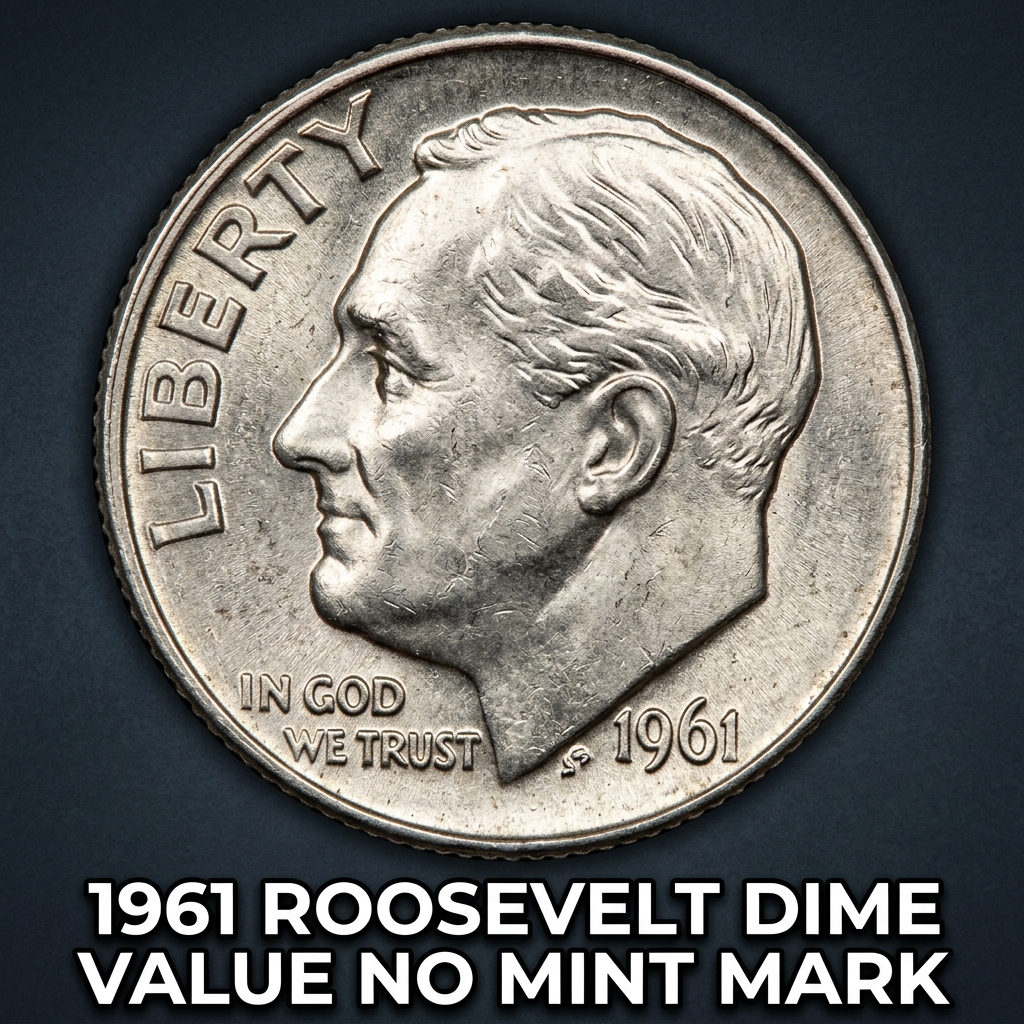
The 1961 Roosevelt Dime with no mint mark is worth anywhere from $2 in well-worn condition to over $20 or more in pristine mint state — and silver melt value alone gives every single one a built-in floor price worth knowing about.
If you just found one of these dimes in an old jar, a drawer, or a coin collection you inherited, you’re in the right place. This guide will walk you through exactly what determines the value of your 1961 Roosevelt Dime, what to look for, and whether yours might be worth holding onto. To get a quick ID on any coin in your pocket or collection, a coin identifier and value app can save you a lot of time and guesswork before you head to a dealer.
What Is the 1961 Roosevelt Dime No Mint Mark?
The 1961 Roosevelt Dime with no mint mark was struck at the Philadelphia Mint, which did not use a mint mark at that time. This coin is part of the long-running Roosevelt Dime series, which began in 1946 following the death of President Franklin D. Roosevelt. The series was intended to honor his support of the March of Dimes polio foundation.
The 1961 Philadelphia issue had a mintage of over 96 million coins, making it a relatively common date. However, “common” doesn’t mean worthless — especially since this coin is made of 90% silver. That silver content alone gives it real intrinsic value, regardless of its condition.
Each 1961 Roosevelt Dime contains 0.07234 troy ounces of pure silver. When silver trades around $25 per ounce, your coin has a melt value of roughly $1.80 just from the metal. That’s already more than its ten-cent face value, which is pretty cool for a coin sitting in a junk drawer.
How Condition Affects the 1961 Roosevelt Dime Value
Like all coins, the value of a 1961 Roosevelt Dime no mint mark depends heavily on its grade — meaning how well it has been preserved over the decades. Coins are graded on the Sheldon scale from 1 to 70, with higher numbers indicating better condition.
A heavily circulated coin with flat details and visible wear on Roosevelt’s cheek and hair will fall into the Good (G-4) to Fine (F-12) range and is generally worth its silver melt value or just slightly above. Once you get into Extremely Fine (EF-40) or About Uncirculated (AU-50) territory, premiums start to climb.
The real excitement kicks in at Mint State (MS-60 and above). A well-struck, lustrous 1961 Roosevelt Dime graded MS-65 or higher by a professional grading service like PCGS or NGC can fetch $20 to $40 or more. Full Band (FB) examples — meaning the horizontal bands on the torch reverse are fully struck and separated — command a significant premium. For the most current market data, check out detailed 1961 Roosevelt Dime mint state price records that track real auction results.
1961 Roosevelt Dime Value Chart
Here’s a quick reference table to help you estimate what your coin might be worth based on its grade:
| Grade | Description | Estimated Value |
|---|---|---|
| G-4 (Good) | Heavy wear, outline visible | ~$1.80 (melt) |
| VF-20 (Very Fine) | Moderate wear, some detail | $2 – $3 |
| EF-40 (Extremely Fine) | Light wear, sharp features | $3 – $5 |
| MS-63 (Mint State) | No wear, some contact marks | $8 – $12 |
| MS-65 (Gem) | Strong luster, minor blemishes | $15 – $25 |
| MS-65 FB (Full Bands) | Gem with full torch bands | $30 – $60+ |
Key Things to Look For on Your 1961 Dime
Before you decide whether to sell or hold your coin, take a close look at a few key areas. First, examine the torch bands on the reverse — if the horizontal lines are fully separated and crisp, you may have a Full Band specimen, which adds significant premium value.
Next, check for any doubling on the obverse (front) of the coin. While major doubled die errors are not widely documented for the 1961 Philadelphia issue, minor RPM (repunched mint mark) and die varieties do exist and can attract collector interest. Even small die cracks or off-center strikes can add value to the right buyer.
Also consider the coin’s storage history. A coin kept in a soft plastic flip or original mint bag is far more likely to have retained its luster than one rattling around loose in a drawer for 60 years. For a reliable estimate of your specific coin’s worth, the 1961 Roosevelt Dime value breakdown at CoinValueApp gives a helpful detailed look at pricing by grade and variety.
Should You Sell, Hold, or Grade Your 1961 Roosevelt Dime?
If your coin is heavily circulated, the most practical move is to either spend it (it spends fine as ten cents), melt it for silver value with a dealer, or keep it in a silver stack. Circulated Roosevelt Dimes are bought in bulk by silver dealers every day.
If the coin looks sharp, bright, and untouched — with no cleaning, no scratches, and strong luster — it’s worth getting a second opinion. Submit it to PCGS or NGC for professional grading if you believe it might be MS-65 or above, especially with Full Bands. The grading fee can be worth it for high-grade examples.
A fast and easy first step is to use CoinHix to scan and identify your coin. CoinHix helps everyday collectors quickly assess condition and look up current values before deciding whether professional grading makes sense. It’s free to try and works right from your phone.
FAQ About the 1961 Roosevelt Dime No Mint Mark
Q: Is a 1961 dime with no mint mark rare?
A: No, it is not rare. Over 96 million were minted in Philadelphia that year. However, high-grade examples — especially those with Full Bands — are harder to find and do carry a premium among collectors.
Q: How do I know if my 1961 Roosevelt Dime has been cleaned?
A: Look for unnatural brightness, hairline scratches under magnification, or a dull, washed-out appearance. Cleaned coins lose significant collector value. If it looks “too shiny” for a 60-year-old coin, it has likely been polished. CoinHix can help you identify visual red flags quickly.
Q: Does the 1961 dime contain real silver?
A: Yes. The 1961 Roosevelt Dime is composed of 90% silver and 10% copper. This gives every example an intrinsic melt value based on the current silver spot price, typically between $1.50 and $2.50 depending on the market.