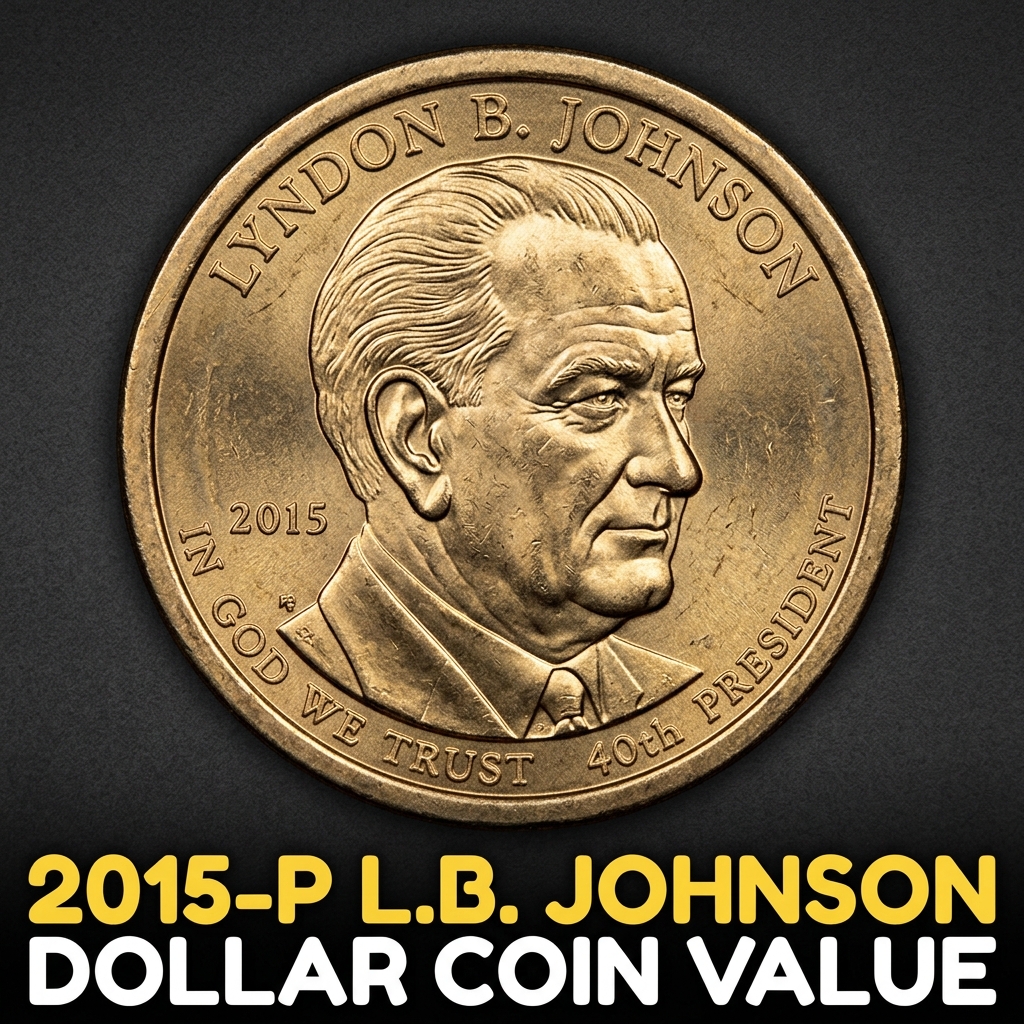
The 2015-P Lyndon B. Johnson Presidential Dollar is worth anywhere from $1 in circulated condition to $10 or more in pristine mint state, with certain error coins fetching significantly higher prices. If you found one of these golden-colored dollars in your change or tucked away in a drawer, you’re in the right place to find out exactly what you’ve got.
What Is the 2015-P LBJ Dollar Coin?
The 2015-P Lyndon B. Johnson Dollar is part of the United States Presidential Dollar series, which ran from 2007 to 2016. Each coin honors a former U.S. president in the order they served, and LBJ — the 36th president — got his turn in 2015. The “P” in the name tells you it was struck at the Philadelphia Mint.
These coins are made of a manganese-brass clad composition, giving them that distinctive golden color. They measure 26.5mm in diameter and weigh 8.1 grams — the same specs as every other Presidential Dollar in the series.
Around 46.2 million 2015-P LBJ dollars were minted for general circulation, making them relatively common. However, that doesn’t mean they’re all worth face value. Condition, errors, and collector demand all play a role in determining what someone will actually pay for one. If you want a quick and easy way to identify your coin and get an instant value estimate, try using a coin identifier and value app right from your phone.
How Much Is a 2015-P LBJ Dollar Worth Today?
For most people who find a 2015-P LBJ dollar in average circulated condition, the coin is worth its face value — $1. Vending machines and banks won’t pay you extra just because the coin is older or gold-colored.
That said, coins in uncirculated or mint state condition are a different story. Collectors are willing to pay premiums for coins that show no signs of wear, have strong luster, and were never put into general circulation. A coin graded MS65 (Mint State 65) can sell for $5 to $15, and top-graded examples at MS67 or higher have sold for $30 to $50 or more at auction.
Here’s a quick value breakdown based on grade:
| Condition / Grade | Estimated Value |
|---|---|
| Circulated (Fine–XF) | $1.00 (face value) |
| Uncirculated (MS60–MS64) | $2 – $6 |
| Choice Uncirculated (MS65–MS66) | $6 – $20 |
| Gem Uncirculated (MS67+) | $30 – $100+ |
| Proof (PR69–PR70) | $15 – $50+ |
You can check real-time price data for 2015 Presidential and Native American dollar coins by grade to see how the market is moving right now. Prices can shift based on recent auction results, so it’s always smart to look at current data before buying or selling.
Error Coins and Special Varieties
Error coins are where things get really exciting for collectors. The 2015-P LBJ dollar has a few known errors that can dramatically increase its value beyond the typical market price.
Edge Lettering Errors are among the most sought-after. Presidential Dollars have inscriptions on their edge — including “IN GOD WE TRUST,” the date, and the mint mark. Sometimes coins are struck without this edge lettering, making them “plain edge” errors. These so-called “Godless Dollars” can sell for $50 to $200 depending on condition.
Double Die Errors and off-center strikes also show up occasionally in this series. A significantly off-center LBJ dollar in nice condition could bring $100 or more from the right buyer. Always examine your coin closely under good lighting — or better yet, use CoinHix to help identify unusual characteristics on your coin before you assume it’s ordinary.
Proof Versions and Mint Sets
The Philadelphia Mint also produced proof versions of the 2015 LBJ Dollar, sold directly to collectors through the U.S. Mint. These coins were never released into circulation and feature a mirror-like background with frosted design elements — what collectors call “cameo” contrast.
Proof coins graded PR69 Deep Cameo (DCAM) typically sell in the $15 to $35 range, while perfect PR70 examples have sold for $50 or more. Coins still in their original Mint packaging are generally more desirable to buyers.
If you want a detailed look at how 2015 dollar coin values break down across different grades and varieties, that resource gives you a solid overview of what the market currently supports. Knowing the difference between a proof and a business strike can save you from undervaluing what you have.
How to Find Out What Your Coin Is Really Worth
The best starting point is always condition. Hold your coin under a bright light and look for scratches, wear on the high points, and any discoloration. A coin with bag marks or heavy contact scratches will never grade high, no matter how old it is.
For a more precise answer, consider submitting your coin to a third-party grading service like PCGS or NGC. Professionally graded coins sell for more because buyers trust the grade. It costs money upfront, but for potentially valuable error coins, it’s absolutely worth it.
You can also download CoinHix, a handy app that helps you identify coins, look up current market values, and track your collection — all from your smartphone. It’s a great tool for beginners and serious collectors alike.
—
Frequently Asked Questions
Q: Is the 2015-P LBJ dollar coin rare?
A: Not particularly. With over 46 million minted, the 2015-P LBJ dollar is a common coin in circulated grades. However, high-grade mint state examples and error coins with missing edge lettering or striking flaws can be quite scarce and valuable to collectors.
Q: Why does my LBJ dollar coin look gold? Is it made of real gold?
A: No, the coin is not made of gold. It has a manganese-brass clad composition that gives it a gold-like appearance. This was intentional to help people distinguish Presidential Dollars from regular quarters and other coins. There is no gold content in these coins.
Q: How do I sell my 2015-P LBJ dollar if it might be valuable?
A: Start by getting a sense of its condition and whether it has any errors. You can use CoinHix to research its value quickly. For high-value coins, consider having it graded by PCGS or NGC before selling. Then list it on eBay, visit a local coin dealer, or sell through a coin auction house for the best return.