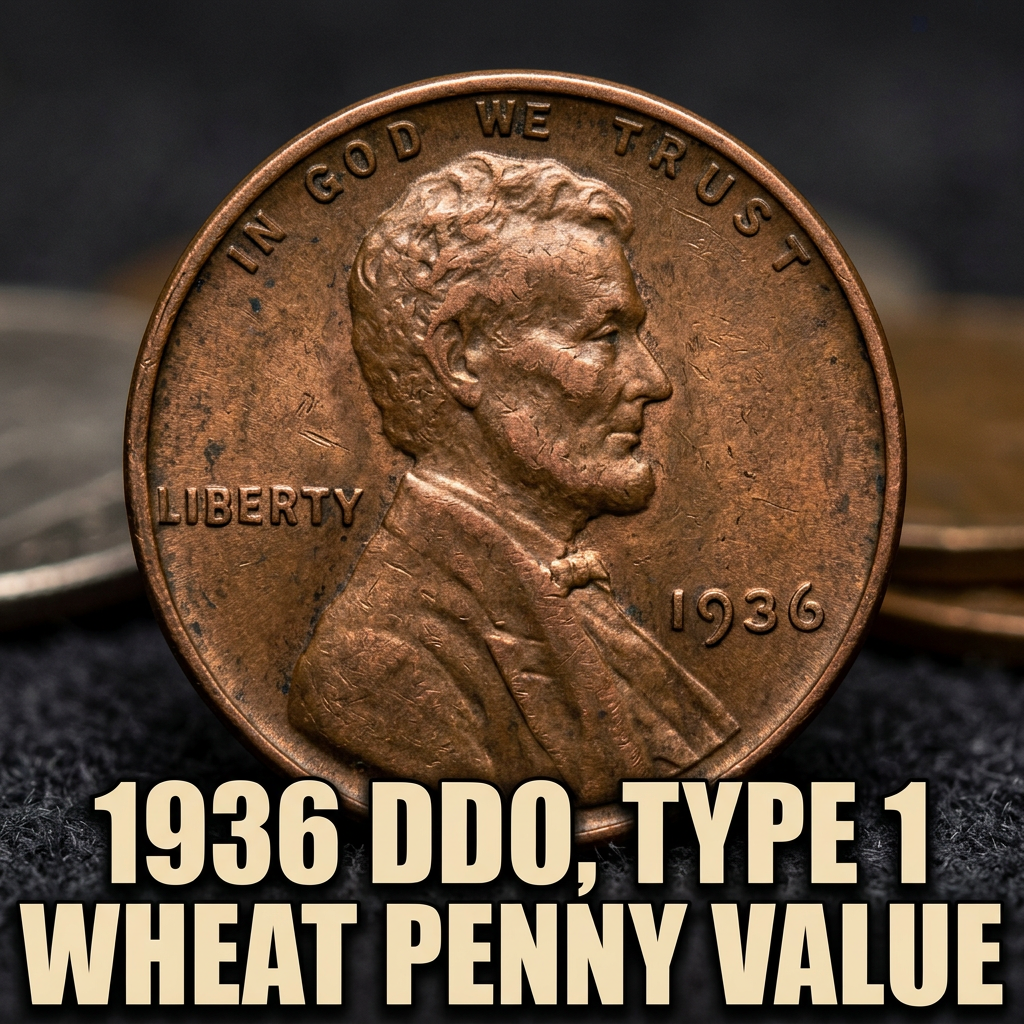
The 1936 DDO (Doubled Die Obverse) Type 1 Wheat Penny is worth anywhere from $5 in lightly worn condition to well over $150 or more in higher mint state grades — and if you’ve got one sitting in an old jar or drawer, that’s definitely worth a second look.
What Makes the 1936 DDO Type 1 So Special?
If you’ve stumbled across an old Lincoln Wheat Penny dated 1936, you might be holding something more valuable than it appears. The 1936 DDO Type 1 is a variety coin — meaning it has a small manufacturing error that happened right at the U.S. Mint. During the die production process, the hub pressed the design onto the die twice, but at a slightly different angle each time.
The result? A subtle but visible doubling on the obverse (front) side of the coin, particularly noticeable around Lincoln’s portrait, the date, and the lettering. This kind of error is exactly what coin collectors go wild for.
It’s not the easiest variety to spot with the naked eye, but once you know what to look for, it becomes unmistakable. Using a coin identifier and value app is one of the easiest ways to confirm whether you’ve got the real deal — just snap a photo and let the technology do the heavy lifting.
1936 DDO Type 1 Wheat Penny Value by Grade
Coin value is almost entirely driven by condition. A heavily worn penny from 1936 might fetch a few dollars, while a lightly circulated or uncirculated example can climb significantly higher.
Here’s a general value breakdown based on grade:
| Grade | Condition Description | Estimated Value |
|---|---|---|
| Good (G-4) | Heavy wear, flat features | $5 – $10 |
| Fine (F-12) | Moderate wear, some details visible | $12 – $25 |
| Extremely Fine (EF-40) | Light wear on high points | $30 – $55 |
| About Uncirculated (AU-58) | Slight wear, mostly original luster | $60 – $90 |
| Mint State (MS-63+) | No wear, full luster, minor blemishes | $100 – $175+ |
For a more detailed look at current market prices on this coin in red mint state condition, check out the 1936 Wheat Penny MS-RD price data on CoinHix — it’s updated regularly and gives you a real sense of what the market is doing right now.
How to Identify the DDO on Your 1936 Penny
So how do you actually confirm you’ve got a 1936 DDO Type 1 and not just a regular wheat cent? The doubling on this variety is most visible under magnification.
Get a 5x to 10x loupe or a decent magnifying glass and focus on the word LIBERTY and the date 1936. On a genuine DDO Type 1, you’ll see slight separation or shadow-like doubling on those elements — it almost looks like the text was printed twice.
The coin was struck at the Philadelphia Mint, so there’s no mintmark. That’s perfectly normal for this issue. Compare your coin to known examples in collector references or use CoinHix to cross-reference what the doubling should look like.
Don’t try to clean the coin — ever. Even well-meaning cleaning can strip natural patina and drop your coin’s value dramatically.
Where Mintmark and Color Designation Matter
One detail that trips up newer collectors: the 1936 Wheat Penny has no mintmark if it was made in Philadelphia, but Denver (D) and San Francisco (S) versions also exist. The DDO Type 1 variety is most commonly associated with the Philadelphia issue.
Color designation also matters for uncirculated coins. Grading services like PCGS and NGC classify copper cents as Red (RD), Red-Brown (RB), or Brown (BN). A fully Red example commands the highest premiums — sometimes double what a Brown coin of the same numeric grade would bring.
For a full breakdown of how the 1936 penny’s value changes across different conditions and mint locations, it’s worth reviewing a dedicated resource so you understand exactly what you’ve got.
If you’re unsure where to start grading your own coin, CoinHix also offers a handy reference library alongside its price tracking tools — a great combo for anyone just getting into variety hunting.
Should You Get It Graded?
If your 1936 DDO Type 1 Wheat Penny looks like it’s in AU or Mint State condition and the doubling is clearly visible, professional grading is worth considering. Services like PCGS or NGC provide certified slabs that authenticate the variety and protect the coin’s surface.
A certified DDO example typically sells for more than a raw (ungraded) coin of the same condition — buyers feel more confident, and the slab documents what you have permanently.
Grading fees range from $20 to $40+ per coin for standard service, so it makes the most financial sense when you’re dealing with a coin worth $75 or more. Weigh your options carefully before submitting.
—
FAQ
Q: How can I tell if my 1936 penny is a DDO Type 1?
A: Look at the date and LIBERTY with a magnifying glass or loupe. On the DDO Type 1, you’ll see slight doubling or separation in those areas. Comparing it to reference images on sites like CoinHix or using a coin identifier app can help confirm it.
Q: Is a 1936 DDO Type 1 Wheat Penny rare?
A: It’s considered scarce, especially in higher grades. It’s not the rarest variety ever produced, but certified examples in Mint State with full red color are genuinely hard to find and attract strong collector interest.
Q: What should I do if I think I found one?
A: Don’t clean it, store it in a soft coin flip or holder, and assess the condition carefully. If it looks uncirculated or very lightly worn, consider submitting it to a professional grading service. In the meantime, tools like CoinHix can help you track current values while you decide your next move.