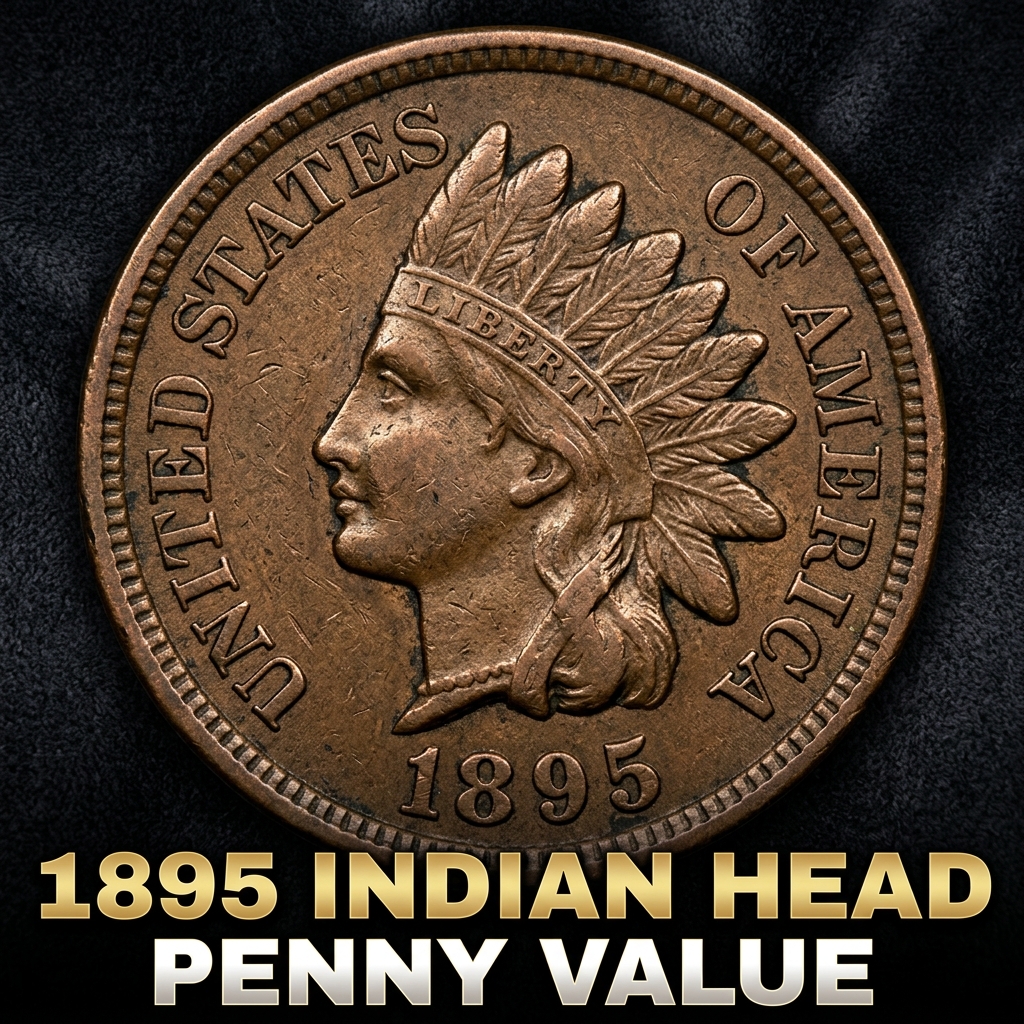
The 1895 Indian Head Penny is worth anywhere from $2 in heavily worn condition to over $100 or more in mint state, making it a coin that everyday collectors and curious finders should absolutely pay attention to. Whether you stumbled across one in an old jar or inherited it from a grandparent, this little coin may be hiding more value than you expect.
A Quick Look at the 1895 Indian Head Penny
The Indian Head Penny was designed by James Barton Longacre and minted from 1859 to 1909. By 1895, the series was well into its run, and the Philadelphia Mint struck millions of these coins for circulation. The obverse features Lady Liberty wearing a Native American headdress — a design that has captured collectors’ hearts for well over a century.
If you’re not sure what you have, using a coin identifier and value app is one of the easiest ways to get started. You can photograph your coin and quickly find out what you’re holding before spending hours doing research on your own.
The 1895 penny was struck only at the Philadelphia Mint, which means there’s no mintmark to look for. The entire production run came from one facility, and the coin had a mintage of approximately 38.3 million pieces — high enough that circulated examples are fairly common, but key-date quality specimens are still prized by serious collectors.
How Much Is the 1895 Indian Head Penny Worth?
Value depends heavily on condition, also called “grade” in coin collecting terms. A coin that’s been passed hand to hand for decades looks very different from one that was set aside early and never circulated. Here’s a general breakdown of what collectors and dealers typically pay:
| Grade / Condition | Estimated Value |
|---|---|
| Good (G-4) | $2 – $4 |
| Very Good (VG-8) | $4 – $7 |
| Fine (F-12) | $7 – $12 |
| Very Fine (VF-20) | $12 – $20 |
| Extremely Fine (EF-40) | $20 – $40 |
| About Uncirculated (AU-50) | $45 – $65 |
| Mint State (MS-63) | $75 – $120 |
| Mint State Red (MS-65 RD) | $200 – $400+ |
For a deeper look at 1895 Indian Head Penny prices in mint state red across different grade levels, CoinHix provides detailed auction records and population data that serious collectors rely on.
What Affects the Value Most?
Condition is king. The single biggest factor that determines what your 1895 Indian Head Penny is worth is how well it has been preserved. Coins in “Good” condition show heavy wear — the design details are flat, and the rim may be worn. Coins graded “Mint State” retain their original luster and sharp details, as if they just left the mint.
Color also matters for uncirculated coins. Grading services distinguish between Brown (BN), Red-Brown (RB), and Red (RD) coins. A full Red example with vibrant original copper color commands a significant premium over a Brown one in the same numerical grade.
Look closely at the feathers in Lady Liberty’s headdress and the diamond shapes in the headband. Sharp definition in these areas is a sign of a higher-grade coin. If those details are mushy or worn flat, you’re looking at a lower-grade example.
CoinHix is a great tool for checking recent sale prices and understanding exactly where your coin fits in the market before you decide whether to sell or hold.
Proof Coins and Special Varieties
In 1895, the U.S. Mint also struck Proof versions of the Indian Head Penny for collectors. Only about 2,200 proof examples were made, and they command much higher prices — often $150 to $500 or more depending on preservation and eye appeal.
Proof coins have sharp, mirrored fields and frosted devices. If you look at your coin under good light and see a mirror-like background, you may have something special on your hands.
There are no major varieties or errors widely documented for the 1895 issue, but minor repunched date varieties do exist and can carry small premiums for variety collectors.
Should You Get It Graded?
If your 1895 Indian Head Penny looks like it might be in Extremely Fine condition or better — meaning you can still see most of the design details clearly — professional grading through PCGS or NGC could be worth the investment. Slabbed coins in certified grades often sell for significantly more than raw (ungraded) coins.
For a comparison of how similar coins in the same series hold up across years, check out detailed value information for the 1898 Indian Head Penny to see how date, condition, and market trends come together.
If you’re new to all of this, CoinHix walks you through grading basics with real examples and lets you compare your coin to others in the database so you can get a realistic sense of what you’re working with.
FAQ
Q: Is the 1895 Indian Head Penny rare?
A: Not particularly. With a mintage of over 38 million, circulated examples are easy to find. However, high-grade mint state coins — especially those with original red color — are genuinely scarce and worth pursuing.
Q: How do I know if my 1895 Indian Head Penny is real?
A: Genuine examples weigh 3.11 grams and are made of 95% copper. A coin that sticks to a magnet or weighs significantly less is likely a fake. When in doubt, have it examined by a professional or run it through a trusted coin identification app.
Q: Where is the best place to sell an 1895 Indian Head Penny?
A: Options include eBay, local coin dealers, coin shows, and online auction platforms. For valuable examples, consider having the coin graded first to get the best return. Researching recent sales data through tools like CoinHix before listing will help you price it accurately.