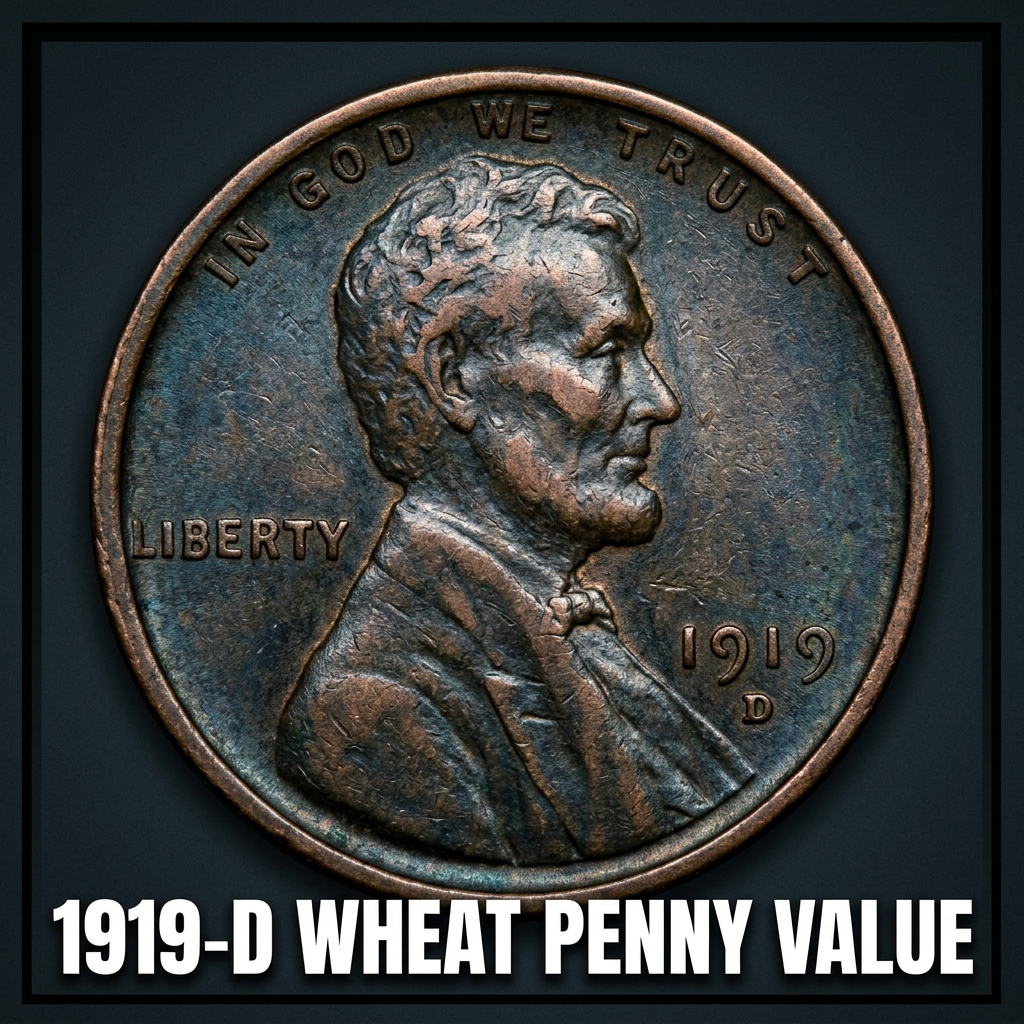
The 1919-D Wheat Penny is worth anywhere from about $0.50 in heavily worn condition to well over $100 in high mint state grades — and truly gem examples can fetch several hundred dollars at auction. If you found one of these old Lincoln cents in a coin jar or inherited collection, you’re in the right place to find out exactly what it’s worth.
Before we dive in, if you want a quick and easy way to identify coins and get instant value estimates, a coin identifier and value app can save you a lot of time and guesswork. Now, let’s take a closer look at the 1919-D Wheat Penny.
What Is the 1919-D Wheat Penny?
The 1919-D Wheat Penny is a Lincoln cent struck at the Denver Mint in 1919, identified by the small “D” mintmark just below the date on the obverse (front) of the coin. It’s part of the beloved Wheat Penny series, which ran from 1909 to 1958 and features two wheat stalks on the reverse.
Denver produced 57,154,000 of these coins in 1919 — a fairly large mintage compared to some earlier issues. That means the 1919-D is not rare in circulated grades, but finding one in well-preserved, uncirculated condition is a different story entirely.
These coins are 95% copper, 5% tin and zinc, with a diameter of 19mm. They were everyday pocket change once upon a time, which is exactly why most surviving examples show heavy wear.
How Much Is a 1919-D Wheat Penny Worth?
The value of a 1919-D Wheat Penny depends almost entirely on its condition. A coin that’s been in circulation for decades will be heavily worn smooth, while an uncirculated example might still show original red or red-brown luster. The difference in value between the two can be dramatic.
For detailed 1919-D Wheat Penny price data across all grades and color designations, professional grading references are your best resource. Dealers and auction records consistently show that eye appeal and surface quality drive prices in this series.
Here’s a general value breakdown by grade:
| Grade | Condition | Estimated Value |
|---|---|---|
| Good (G-4) | Heavy wear, outline visible | $0.50 – $1.00 |
| Fine (F-12) | Moderate wear, lettering clear | $2 – $4 |
| Extremely Fine (EF-40) | Light wear on high points | $10 – $20 |
| About Uncirculated (AU-55) | Slight wear, most luster present | $30 – $50 |
| MS-63 Red-Brown | Uncirculated, mixed luster | $60 – $90 |
| MS-65 Red | Gem uncirculated, full red | $200 – $400+ |
How to Grade Your 1919-D Wheat Penny at Home
You don’t need to be a professional numismatist to get a rough sense of your coin’s grade. Start by looking at Lincoln’s cheek and jaw — these are the highest points and the first areas to show wear. If the details there are completely flat, your coin is in Good or lower condition.
Next, check the wheat stalks on the reverse. In Fine condition, individual lines within the wheat grains are still visible. If they’re mostly merged together, you’re looking at a lower grade.
If the coin still has a reddish or orange tint and you can see original mint luster when you tilt it under a light, you might have an uncirculated example worth real money. Coins with full red color and no spots or cleaning are the most valuable.
Always handle coins by their edges and never clean them — cleaning destroys value instantly, even on genuinely rare coins.
Errors and Varieties That Can Increase the 1919-D Wheat Penny Value
Like many early Lincoln cents, the 1919-D occasionally turns up with interesting mint errors that can significantly boost value. Doubled die varieties, off-center strikes, and repunched mintmarks are among the most desirable finds.
A repunched mintmark (RPM) — where the “D” was stamped more than once at a slightly different angle — can add $10 to $50 or more to a coin’s value depending on how dramatic the shift is. Off-center strikes showing 10% or more misalignment can push values well into the hundreds of dollars.
If you think you might have an error coin, use CoinHix to photograph and examine your piece closely. CoinHix makes it easy to compare your coin against known varieties and get a sense of whether you’re holding something special.
Where to Sell Your 1919-D Wheat Penny
If you’ve determined that your coin has real value, the next step is deciding where to sell it. Options include eBay, coin shows, local dealers, and online auction houses like Heritage Auctions or Stack’s Bowers.
For circulated examples worth just a few dollars, eBay is probably your most convenient option. For anything in AU or mint state condition, consider getting the coin professionally graded by PCGS or NGC first — a certified grade dramatically increases buyer confidence and often results in higher sale prices.
You can also check a comprehensive breakdown of 1919 Wheat Penny values by mint mark and grade to benchmark what similar coins have sold for before you list yours.
And if you’re not sure where to start, download CoinHix — it’s one of the fastest ways to scan your coin, get a grade estimate, and explore current market values all in one place.
—
FAQ
Q: Is a 1919-D Wheat Penny rare?
A: Not in circulated grades — over 57 million were minted. However, well-preserved uncirculated examples with full red color are genuinely scarce and can be worth several hundred dollars to serious collectors.
Q: How do I know if my 1919-D penny has been cleaned?
A: A cleaned coin often looks unnaturally shiny or has fine hairline scratches under magnification. It may lack the toned, slightly dull luster that naturally aged copper develops over a century. Cleaning reduces value significantly, even on higher-grade coins.
Q: What’s the most valuable 1919-D Wheat Penny ever sold?
A: Top-grade MS-67 Red examples of the 1919-D have sold for well over $1,000 at major auctions. Gem quality coins in this series are rare enough that certified examples in top population grades attract serious bidding from advanced collectors.