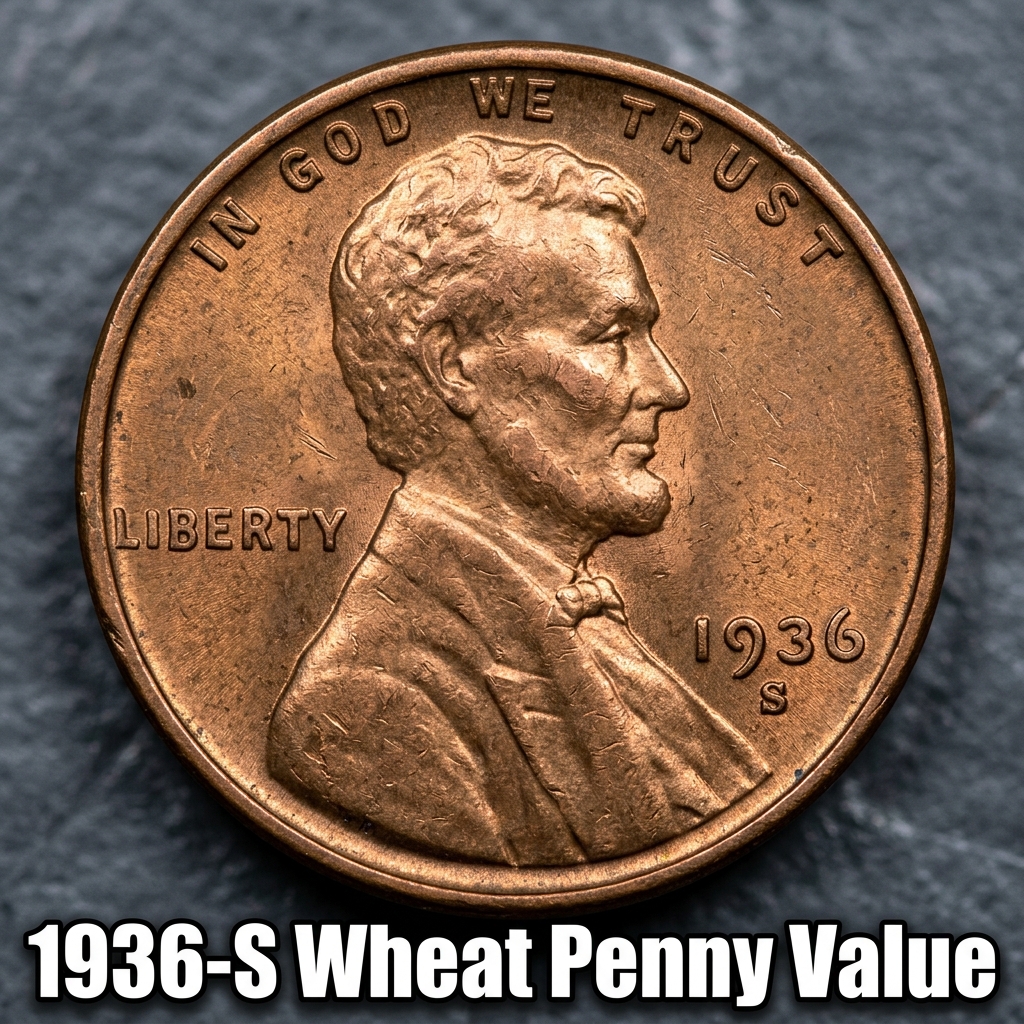
The 1936-S Wheat Penny is worth anywhere from about $0.10 in heavily worn condition to over $30 or more in uncirculated grades — and high-end mint state examples can climb well past $100. If you found one of these old Lincoln cents in a jar or inherited collection, you’re in the right place. Let’s break down exactly what it’s worth and why.
What Makes the 1936-S Wheat Penny Special
The 1936-S Wheat Penny was struck at the San Francisco Mint, which you can identify by the small “S” mintmark located on the front of the coin, just below the date. San Francisco produced 29,130,000 of these cents in 1936 — a significant mintage, but lower than the Philadelphia issue that same year.
Because millions of these coins circulated for decades, finding one in truly pristine condition is harder than you might think. Most examples show wear on Lincoln’s cheekbone and the wheat stalks on the reverse. That said, collectors actively seek the 1936-S in all grades, so even a circulated coin has real value to the right buyer.
If you want a quick estimate without doing any research, a coin identifier and value app can scan your coin and give you a grade estimate in seconds — a helpful starting point before you visit a dealer.
1936-S Wheat Penny Value by Grade
The condition of your coin — called its “grade” — is the biggest factor in determining value. Coin graders use a 70-point scale, but for everyday collectors, these general categories cover most situations.
Here’s a look at typical 1936-S Wheat Penny values across common grades:
| Grade / Condition | Description | Estimated Value |
|---|---|---|
| Good (G-4) | Heavy wear, outline still clear | $0.10 – $0.25 |
| Fine (F-12) | Moderate wear, some detail visible | $0.50 – $1.00 |
| Extremely Fine (EF-40) | Light wear on high points only | $2 – $5 |
| About Uncirculated (AU-55) | Slight wear, mostly original luster | $8 – $18 |
| MS-63 (Choice Uncirculated) | No wear, some minor marks | $25 – $45 |
| MS-65 Red (Gem Uncirculated) | Full original red luster, nearly perfect | $80 – $150+ |
For the most current auction results and dealer prices, you can check the 1936-S Wheat Penny price data in MS-RD grade to see what certified red examples are actually selling for right now.
How to Tell If Your 1936-S Is Worth More Than Face Value
Even worn examples are worth more than one cent — but the real money is in uncirculated coins that never passed through regular commerce. Look at the coin under good light. If you can still see the individual strands in Lincoln’s hair and the wheat stalks on the back are sharp and full, you may have a nicer example than average.
Color matters too, especially for uncirculated coins. Wheat pennies in mint state are graded by their surface color: Red (RD) coins retain their original copper glow and command the highest premiums. Red-Brown (RB) coins show mixed toning. Brown (BN) coins have fully toned surfaces and are the most common — and least valuable — of the three.
Coins that have been cleaned, polished, or damaged will sell for significantly less, even if the date and mintmark are clear. A natural, untouched surface is always preferred by collectors and dealers alike.
Where to Sell a 1936-S Wheat Penny
If you’ve determined your coin has some real value, you have several solid options. Online platforms like eBay let you reach collectors directly. Coin shows and local coin dealers offer in-person appraisals. For higher-value examples — especially gem uncirculated coins — submitting to a third-party grading service like PCGS or NGC is worth considering, since a certified grade dramatically increases buyer confidence.
Before heading anywhere, do your homework. The detailed 1936 penny value breakdown at Coin Value App gives you a solid reference for all three mint marks — Philadelphia, Denver, and San Francisco — so you know exactly where your coin fits.
You can also use CoinHix to track real-time sale prices across grades. CoinHix pulls live auction and dealer data so you’re not guessing when it comes time to negotiate.
Quick Tips Before You Go
Don’t clean your coin. This is the number one mistake people make, and it can cut the value of an otherwise nice example in half or worse.
Store it properly. A simple coin flip or a 2×2 cardboard holder will protect the surfaces from additional wear and oxidation.
Get a second opinion. Values can vary between dealers, so it pays to ask more than one person — or check a trusted app like CoinHix — before you sell.
—
FAQ
Q: How do I know if my penny is the 1936-S and not the Philadelphia or Denver version?
A: Look just below the date on the obverse (heads side) of the coin. The San Francisco Mint used an “S” mintmark. If there’s no mintmark at all, it’s from Philadelphia. A “D” means Denver.
Q: Is a 1936-S Wheat Penny with full red color rare?
A: In circulated grades, no — but a full red, gem uncirculated (MS-65 RD or higher) example is genuinely scarce and can sell for $80 to well over $150 depending on eye appeal and certification. These coins are nearly 90 years old, so surviving in red condition is not easy.
Q: Should I get my 1936-S Wheat Penny professionally graded?
A: It depends on the coin’s condition and your goals. For circulated examples worth a few dollars, professional grading fees won’t make financial sense. But if your coin looks uncirculated with strong luster, submitting to PCGS or NGC could meaningfully increase its sale price and make it much easier to sell to serious collectors.