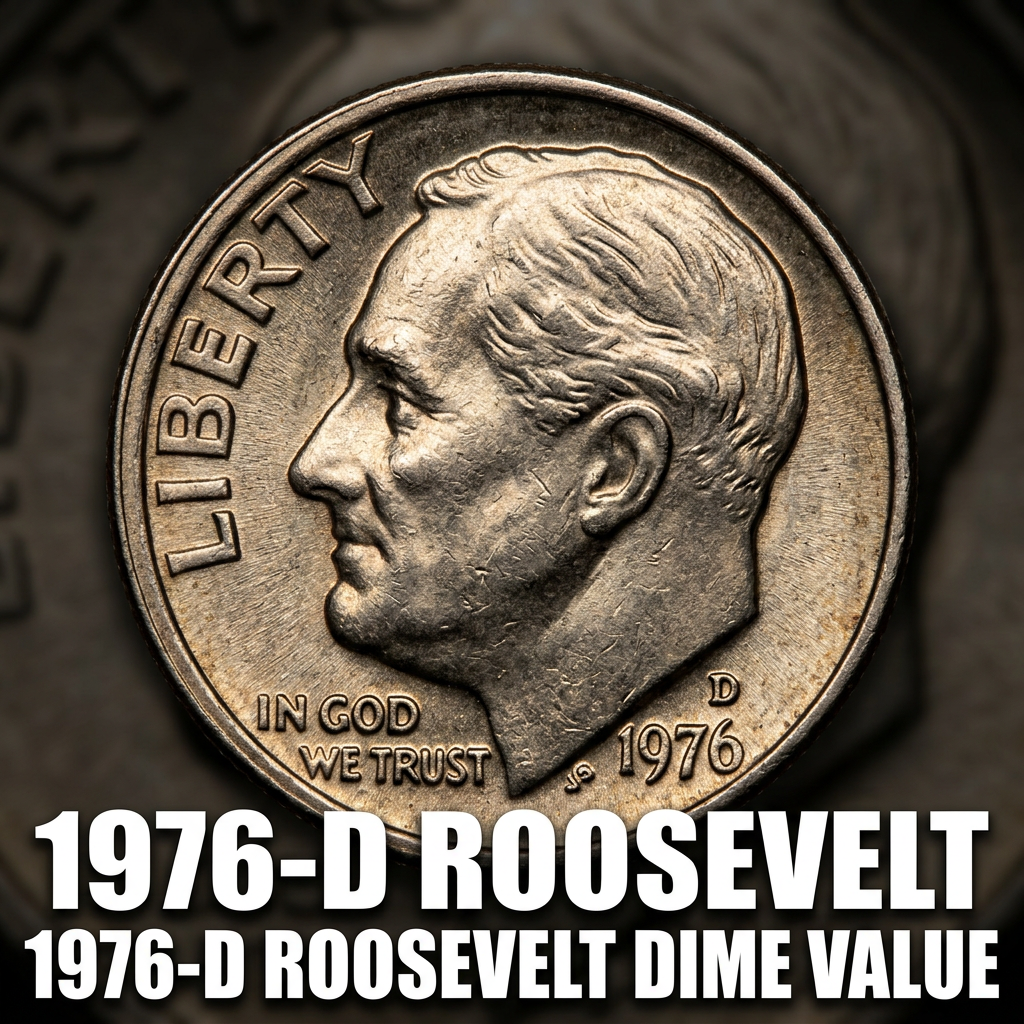
The 1976-D Roosevelt Dime is worth anywhere from face value (10 cents) in circulated condition to around $5 or more in pristine, uncirculated grades — and certain high-grade examples have sold for significantly more at auction. If you’ve got one of these coins sitting in a jar or inherited collection, you’re in the right place to find out what it might be worth.
What Is the 1976-D Roosevelt Dime?
The “D” in 1976-D stands for the Denver Mint, one of the U.S. facilities that struck coins that year. In 1976, the Denver Mint produced over 695 million Roosevelt dimes — yes, that’s hundreds of millions — making this a fairly common coin in the world of U.S. coinage.
Because so many were made, most 1976-D dimes that passed through everyday circulation aren’t considered rare. That said, condition matters a lot when it comes to value.
If you’re not sure how to identify or grade your coin, using a coin identifier and value app can help you quickly figure out what you’ve got and get a ballpark estimate before you take it to a dealer.
How Much Is the 1976-D Roosevelt Dime Worth by Grade?
Coin value is heavily tied to grade — a standardized way to describe how worn or preserved a coin is. The Sheldon scale runs from 1 (barely identifiable) to 70 (perfect).
Here’s a general breakdown of what you can expect for the 1976-D dime:
| Grade | Description | Estimated Value |
|---|---|---|
| G-4 (Good) | Heavy wear, design visible | $0.10 – $0.25 |
| VF-20 (Very Fine) | Moderate wear, details clear | $0.25 – $0.50 |
| MS-63 (Uncirculated) | No wear, some bag marks | $1.50 – $3.00 |
| MS-65 (Gem Uncirculated) | Strong luster, minimal marks | $3.00 – $6.00 |
| MS-67 or higher | Near perfect, top-tier grade | $20 – $100+ |
For the most current and detailed 1976-D Roosevelt Dime price data across all mint state grades, it’s worth checking a live pricing database that updates with real auction results.
Are Any 1976-D Dimes Worth More Than Face Value?
The short answer: yes, but mostly in high uncirculated grades or if the coin has a rare error.
Most well-worn 1976-D dimes are only worth face value. However, if yours has never been used in commerce and shows sharp detail with original mint luster, it could fetch a few dollars — sometimes more from the right buyer.
Error coins are where things get really interesting. Some 1976-D dimes have been found with off-center strikes, doubled die obverse markings, or die caps. These errors can push values into the $20–$100+ range depending on severity and eye appeal. Always inspect your coin closely under good lighting or a magnifying glass.
CoinHix is a great tool for looking up whether your coin matches any known error varieties. The app has a growing catalog of U.S. coin errors and varieties with photos to help you compare.
Tips for Getting the Best Value for Your 1976-D Dime
Before you sell or trade your coin, there are a few smart steps you can take.
First, don’t clean it. This is one of the most common mistakes new collectors make. Cleaning a coin — even gently — can drastically reduce its value because it removes original surface patina and can cause micro-abrasions visible under magnification.
Second, store it properly. If you think your coin might be in uncirculated condition, put it in a coin flip or airtight holder to protect it from oils, humidity, and scratches.
Third, get a second opinion. For any coin you believe might be MS-65 or higher, consider submitting it to a grading service like PCGS or NGC. A certified grade adds credibility and can significantly increase resale value.
You can also explore a detailed breakdown of 1976 dime values including the D mint mark to compare your coin against documented sales and current market trends.
CoinHix also lets you scan your coin with your phone’s camera to get an instant identification and estimated grade range — which is especially handy if you’re sorting through a lot of old coins at once.
Where to Sell a 1976-D Roosevelt Dime
For common circulated examples, most dealers won’t pay above face value. eBay or local coin shows may be your best options if you want to find a collector willing to pay a small premium.
For higher-grade or error coins, consider listing on major online platforms with good photos, or work with a reputable coin dealer who specializes in modern U.S. coinage. Auction houses are worth considering for any certified MS-67 or better specimens.
Using CoinHix to track recent sold prices before listing can give you a realistic sense of what buyers are currently paying, so you don’t leave money on the table.
—
FAQ About the 1976-D Roosevelt Dime
Q: Is the 1976-D dime made of silver?
A: No. By 1976, U.S. dimes had been made of copper-nickel clad since 1965. The 1976-D Roosevelt dime is 91.67% copper and 8.33% nickel. Only special collector proof sets from earlier years contain silver.
Q: How do I know if my 1976-D dime is uncirculated?
A: Look for original mint luster — a cartwheel-like sheen that rotates as you tilt the coin under light. There should be no flat, dull spots on the high points of the design (like Roosevelt’s cheekbone and hair). Any sign of wear means it’s circulated.
Q: What makes a 1976-D dime valuable enough to keep?
A: Condition is king. If your coin grades MS-65 or higher, or shows a clear mint error (such as a doubled die, off-center strike, or repunched mint mark), it’s worth holding onto and potentially getting professionally graded. Otherwise, it’s likely a common example worth only face value.