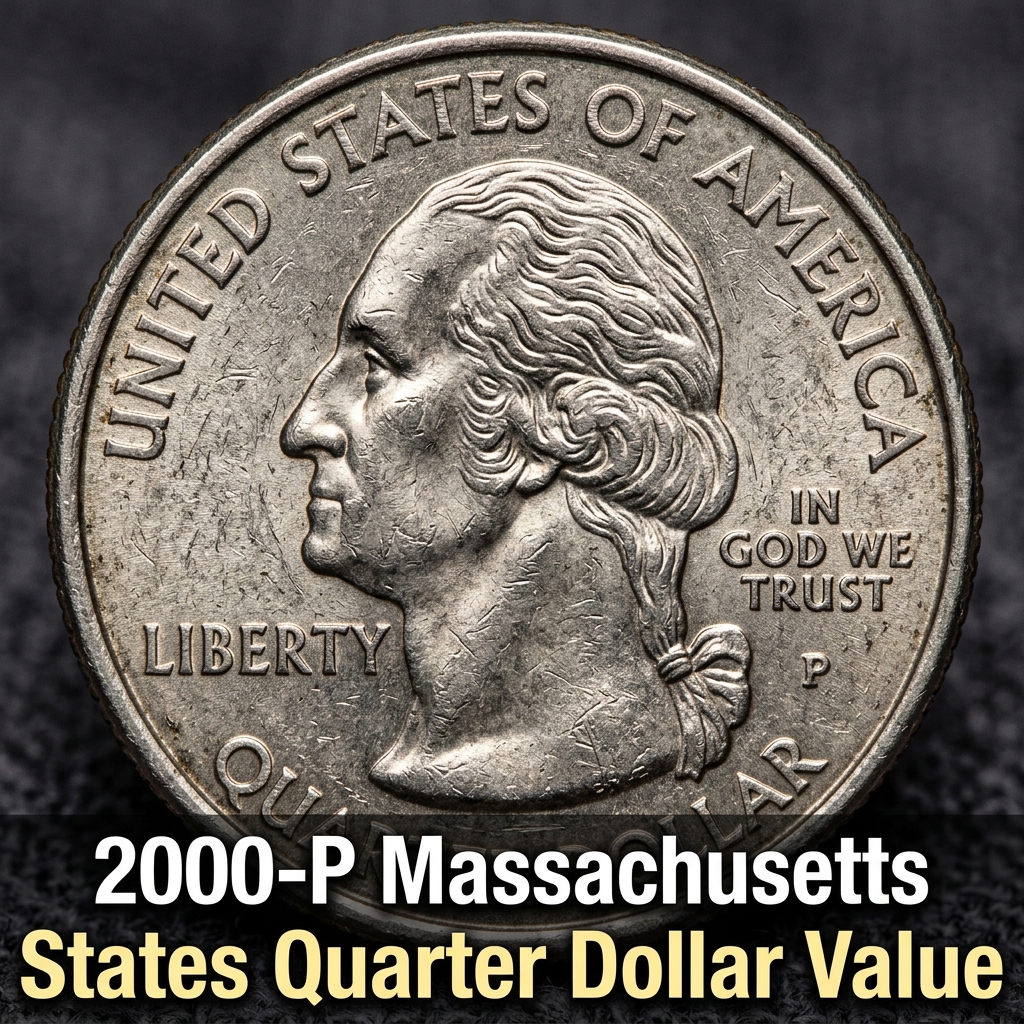
The 2000-P Massachusetts State Quarter is worth anywhere from 25 cents in circulated condition to $10 or more in pristine mint state — and a few rare examples have sold for significantly higher. If you just found one in your change jar or inherited a coin collection, you’re in the right place to find out what it’s really worth.
What Is the 2000-P Massachusetts State Quarter?
The 2000-P Massachusetts State Quarter is part of the United States Mint’s 50 State Quarters Program, which ran from 1999 to 2008. Each state got its own unique design, and Massachusetts features the iconic Minuteman statue along with an outline of the state — a tribute to the birthplace of American liberty.
The “P” in the coin’s name means it was struck at the Philadelphia Mint. That year, the Philadelphia Mint produced over 628 million of these quarters, making them fairly common in everyday circulation. But that doesn’t mean every single one is worth just a quarter — condition matters a lot.
If you’re trying to figure out whether the coins in your collection are worth more than face value, a coin identifier and value app can save you a lot of guesswork and help you identify details that affect pricing.
How Much Is the 2000-P Massachusetts Quarter Worth?
For most people who find a 2000-P Massachusetts Quarter in their pocket change, the coin is worth face value — 25 cents. Heavily circulated coins show wear on the high points of the design, which drops their collector appeal significantly.
However, coins that were never used in circulation — called “mint state” coins — are a different story. These were often saved directly from mint rolls and never touched by the general public. In top grades like MS67 or MS68, the value climbs quickly.
Here’s a general value table to give you a quick overview:
| Condition / Grade | Estimated Value |
|---|---|
| Circulated (worn) | Face value ($0.25) |
| MS63 (Choice Uncirculated) | $1 – $3 |
| MS65 (Gem Uncirculated) | $4 – $6 |
| MS67 (Superb Gem) | $10 – $25 |
| MS68 or Higher | $50 – $200+ |
You can explore up-to-date auction prices and graded sale records for the 2000-P Massachusetts Quarter to see exactly what collectors are currently paying across different grade levels.
Factors That Affect the Value of Your Coin
Not all 2000-P Massachusetts Quarters are created equal. A few key factors separate a common coin from a valuable one:
Strike quality – Some coins from this era have noticeably sharp, well-defined details, while others look a bit flat or mushy. Sharp strikes are more desirable.
Surface condition – Scratches, bag marks, and contact marks lower a coin’s grade. Coins that were carefully stored right from the mint roll have the cleanest surfaces.
Eye appeal – Luster, color, and overall visual attractiveness play a big role in how collectors and graders evaluate a coin. A coin with original brilliant luster will always command more interest.
If you want a professional opinion, PCGS and NGC are the two leading third-party coin grading services in the country. Getting your coin graded can unlock its true market value, especially if it appears to be in superb condition.
CoinHix is another excellent resource for tracking real-time coin prices and understanding grade-based values without having to dig through auction records manually.
Are There Any Valuable Error Coins to Look For?
Error coins are where things get exciting. A small number of 2000-P Massachusetts Quarters were struck with minor to significant mint errors, and these can be worth far more than their standard counterparts.
Some errors to look for include:
Die cracks and cuds – These show up as raised lines or blobs on the coin’s surface and are caused by a cracked die during the minting process.
Off-center strikes – If the design appears shifted or partially missing from the coin’s edge, you may have an off-center error. Depending on how far off-center it is, values can range from $20 to well over $100.
Doubled die – Look closely at lettering and design elements for any doubling. This is harder to spot with the naked eye but can significantly increase value.
For a deeper look at what your 2000 quarter is worth based on mint mark, grade, and error type, detailed breakdowns are available to help you compare your coin against known examples.
Using CoinHix to photograph and research your coin is a smart first step before spending money on professional grading.
Should You Hold On to It or Sell?
If your 2000-P Massachusetts Quarter looks bright, clean, and uncirculated, it’s worth keeping and potentially getting graded. The State Quarters series remains one of the most collected modern coin series in American history, and high-grade examples continue to attract serious buyer interest.
If it’s worn from years in circulation, it’s probably just a spender — but still a fun piece of American history to hold onto.
Either way, knowing what you have is the first step. Apps like CoinHix make it easy to track values, compare grades, and stay informed without needing to be a professional numismatist.
FAQ
Q: How do I know if my 2000-P Massachusetts Quarter is uncirculated?
A: Look for original mint luster — a soft, cartwheel-like shine that reflects light as you tilt the coin. Circulated coins appear dull or show wear on raised areas like the Minuteman’s head and hands. No wear plus full luster usually means uncirculated.
Q: Is the 2000-P Massachusetts Quarter rare?
A: Not particularly. Over 628 million were minted in Philadelphia, so it’s a common coin in circulated grades. However, superb gem examples graded MS67 or higher are genuinely scarce and can bring solid premiums among collectors.
Q: Where can I sell a high-grade 2000-P Massachusetts Quarter?
A: Your best options are eBay, coin shows, or working with a reputable coin dealer. If the coin has been professionally graded by PCGS or NGC, it will attract more buyer confidence and potentially higher bids. You can also use CoinHix to check current market prices before listing.