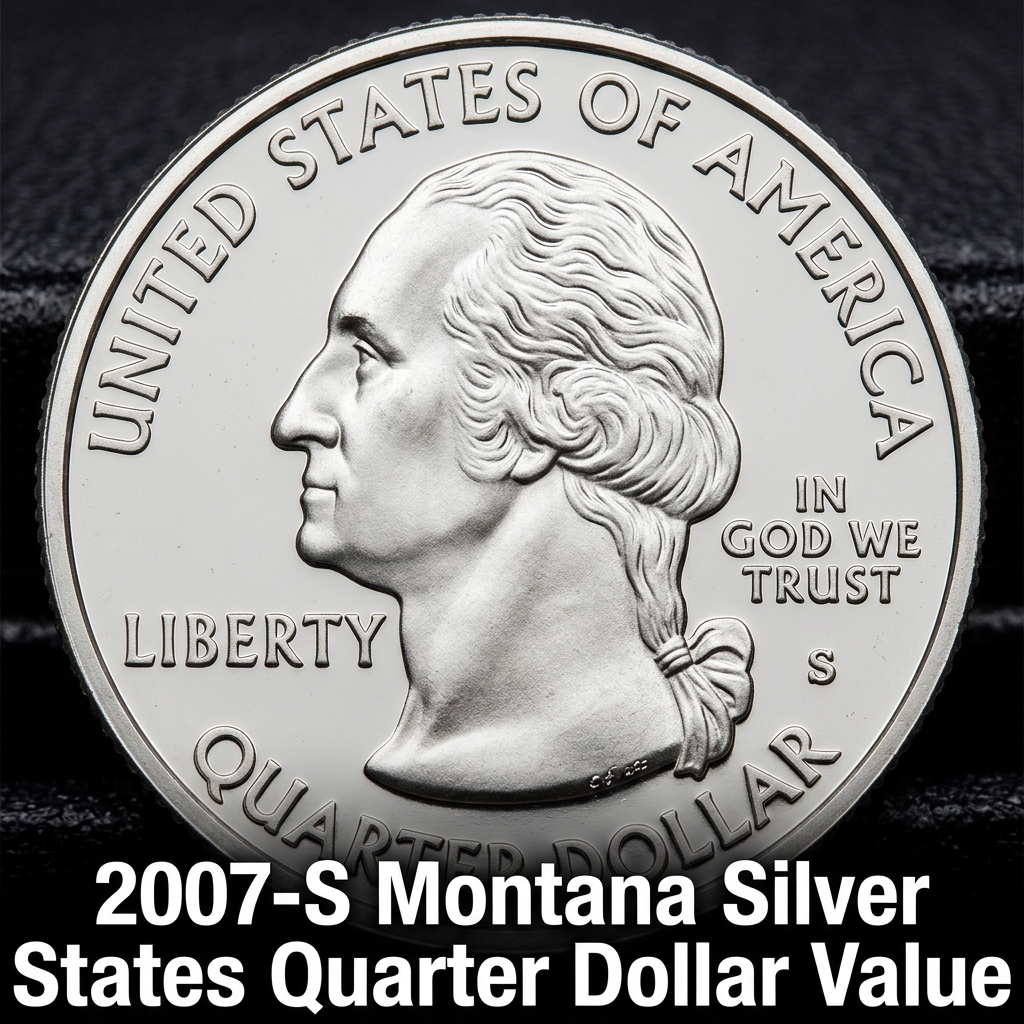
The 2007-S Montana Silver State Quarter is worth anywhere from $5 in lightly circulated condition to over $25 or more in perfect proof grades, making it a surprisingly interesting find for anyone digging through old coin collections. If you’ve stumbled across one of these silver proof quarters and are wondering whether it’s worth holding onto, you’re in the right place — this guide breaks it all down in plain language.
What Makes the 2007-S Montana Quarter Special
Not all State Quarters are created equal. The 2007-S Montana quarter stands out from the regular copper-nickel clad versions because it was struck in 90% silver at the San Francisco Mint. That little “S” mintmark on the coin is your first clue that you might be holding something more valuable than pocket change.
These coins were never released for general circulation. Instead, they were sold directly to collectors as part of the U.S. Mint’s Silver Proof Sets. That means most examples you’ll find today are in excellent condition — but condition still matters a great deal when determining actual value.
The Montana design features a bison skull above the Big Sky Country landscape, a nod to the state’s rugged heritage. It’s a well-received design among collectors and contributes to its ongoing popularity.
If you’re not sure whether your quarter is silver or clad, a simple way to check is by looking at the coin’s edge — silver versions will show a solid silver edge with no copper stripe. You can also use a coin identifier and value app to quickly scan and identify what you have before you decide whether to sell or keep it.
2007-S Montana Silver Quarter Value by Grade
Grade is everything in the coin world. A coin in perfect, deep cameo proof condition is worth significantly more than one with light handling marks or cloudiness on the surfaces. Here’s a general breakdown of what the 2007-S Montana Silver State Quarter is worth at different grade levels:
| Grade | Description | Estimated Value |
|---|---|---|
| PR-65 | Proof, minor blemishes | $5 – $8 |
| PR-67 | Proof, nearly flawless | $8 – $12 |
| PR-69 DCAM | Deep Cameo, near perfect | $12 – $20 |
| PR-70 DCAM | Perfect Deep Cameo | $20 – $30+ |
For the most current and accurate pricing data, you can check out live market prices for the 2007 Montana quarter across multiple grades to see what buyers are actually paying right now.
How Many Were Minted and Why That Matters
The U.S. Mint produced approximately 1.3 million 2007-S Silver Proof State Quarters for Montana. While that sounds like a lot, keep in mind these were sold only to collectors — not distributed through banks. Compared to the billions of clad quarters made for general circulation, the silver version is genuinely scarcer.
That said, mintage alone doesn’t make a coin valuable. The real magic happens when you combine a low mintage with high demand and top-tier condition. For this particular coin, the sweet spot is in PR-69 and PR-70 Deep Cameo grades, where collectors are willing to pay a meaningful premium.
Coins that have been professionally graded and slabbed by PCGS or NGC command even higher prices on the market. Raw ungraded coins are harder to sell at top dollar unless a buyer can verify the coin’s authenticity and quality themselves.
Is the Silver Content Worth Anything on Its Own
Absolutely. Even if a 2007-S Montana Silver Quarter isn’t in perfect collector condition, it still contains about 0.1808 troy ounces of pure silver. With silver prices generally hovering around $25–$30 per troy ounce in recent years, the melt value alone puts these coins at roughly $4.50 to $5.50 just for the metal content.
That means even a heavily cleaned or slightly damaged example has a built-in floor value based on silver alone — a nice safety net for collectors and casual holders alike.
Of course, you should never melt a coin without first confirming its collector value exceeds the melt value. Use a reliable source to check the full value breakdown of 2007 quarters including silver proof versions before making any decisions.
CoinHix is a fantastic tool for tracking both collector value and silver melt value in one place, especially if you have a whole collection to evaluate.
Where to Sell Your 2007-S Montana Silver Quarter
If you decide to sell, you have several good options. eBay remains one of the most active marketplaces for State Quarter proof coins, and you can search completed listings to see what similar coins actually sold for — not just what sellers are asking.
Local coin dealers are another option, especially if you want quick cash without the hassle of online selling. Expect dealers to offer 50–70% of retail value, which is normal since they need room for profit.
Coin shows are great for getting multiple opinions and offers in one afternoon. Bring your coin in its original packaging if you have it — original mint packaging adds a small premium for many buyers.
And before you head anywhere, use CoinHix to get a quick ballpark estimate so you walk in knowing what you’ve got. Knowledge is your best negotiating tool.
FAQ About the 2007-S Montana Silver State Quarter
Q: How do I know if my 2007-S Montana quarter is silver or just a regular clad quarter?
A: Look at the edge of the coin. Silver quarters have a solid silver edge with no visible copper stripe. You can also check the mintmark — only the “S” mintmark version from San Francisco was made in silver. Regular circulation quarters from Philadelphia (P) and Denver (D) are copper-nickel clad.
Q: Is a 2007-S Montana Silver Quarter worth getting professionally graded?
A: It depends on the coin’s condition. If your coin looks flawless with sharp cameo contrast, professional grading by PCGS or NGC could push the value into the $20–$30+ range for a PR-70 DCAM. For lower-grade examples, the grading fee might not be worth it. CoinHix can help you assess whether grading makes financial sense before you spend the money.
Q: Can I find a 2007-S Montana Silver Quarter in regular change?
A: No. These coins were only sold in Silver Proof Sets directly from the U.S. Mint and were never distributed through banks or into general circulation. If you find one, it came from a collector’s set — which also means it’s likely in much better condition than a typical pocket-change coin.