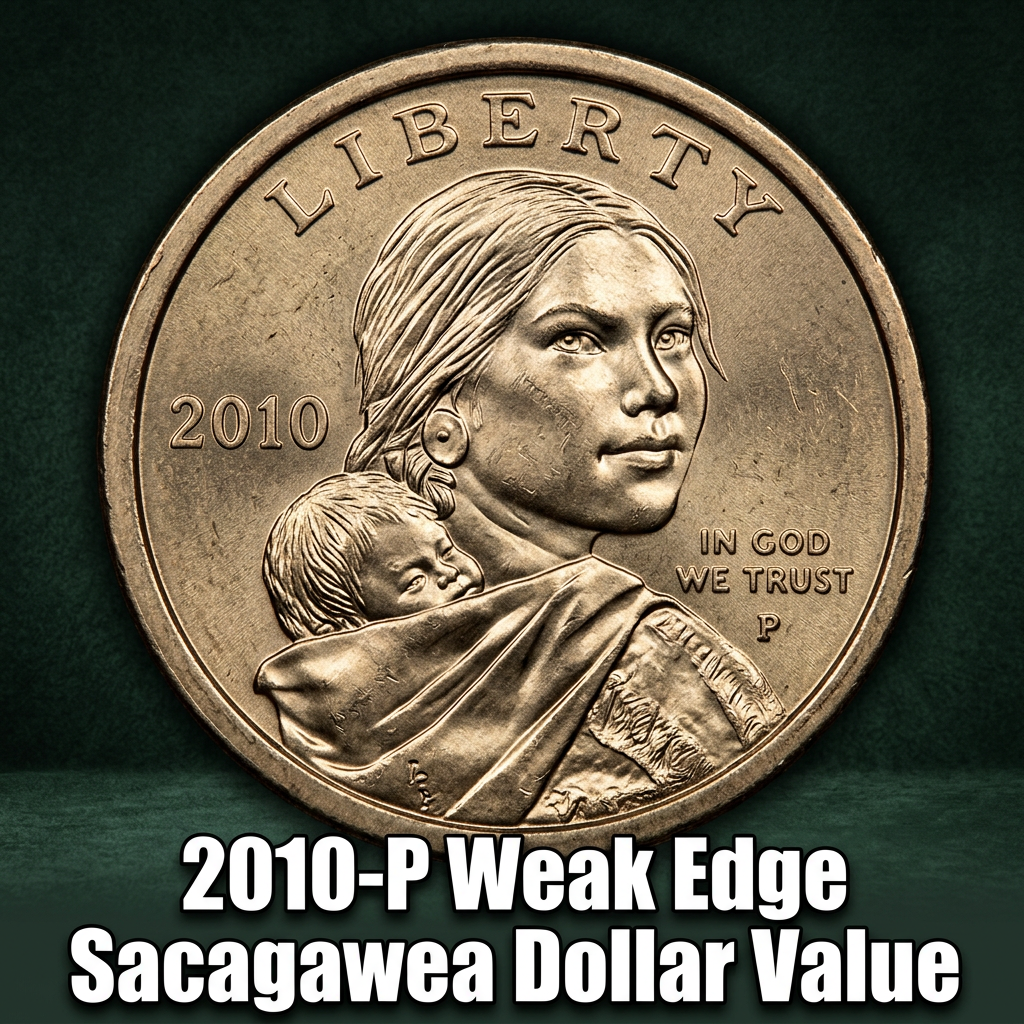
The 2010-P Weak Edge Lettering Sacagawea Dollar is worth anywhere from face value in circulated condition to $50 or more for certified mint-state examples — and certain error varieties can push that number even higher. If you found one of these golden-colored coins in your pocket change or tucked away in an old drawer, you’re in the right place to find out exactly what you’ve got.
coin identifier and value app tools have made it easier than ever for everyday collectors to identify varieties like this one without needing a dealer or a magnifying glass the size of a dinner plate. Whether you’re a seasoned collector or someone who just stumbled onto an unusual coin, this guide will walk you through everything you need to know.
What Is the 2010-P Weak Edge Sacagawea Dollar?
The Sacagawea Dollar has been produced since 2000, featuring the famous Shoshone guide on the obverse and rotating reverse designs that celebrate Native American culture. Starting in 2009, the U.S. Mint began placing the date, mint mark, and motto (“E PLURIBUS UNUM” and “IN GOD WE TRUST”) on the edge of the coin rather than the face.
The 2010-P version was struck at the Philadelphia Mint and belongs to the Native American Dollar series. The reverse that year depicted a Great Tree with arrows — honoring the Haudenosaunee Confederacy.
The “Weak Edge Lettering” variety refers to coins where the edge inscriptions are faint, incomplete, or barely visible. This happens when the collar die doesn’t apply full pressure during striking, leaving the lettering shallow or partially missing. It’s not a dramatic error, but it’s noticeable enough to attract collector attention — and collector dollars.
How Much Is the 2010-P Weak Edge Sacagawea Dollar Worth?
Most 2010-P Sacagawea Dollars pulled from circulation are only worth face value — $1. The coin was produced in large numbers, so common circulated examples don’t carry a premium.
However, uncirculated (mint state) coins tell a different story. A 2010-P in MS65 condition can fetch $10 to $20, while top-graded MS67 or MS68 examples can sell for $40 to $100 or more at auction. The Weak Edge Lettering variety adds collector interest and can push values slightly higher, especially in higher grades.
For the most current price data, you can check live 2010-P Sacagawea Dollar prices across multiple MS grades to see what the market is actually paying right now — prices shift based on recent auction results and demand.
| Grade | Condition | Estimated Value |
|---|---|---|
| MS60–MS62 | Uncirculated (lower end) | $2 – $5 |
| MS63–MS64 | Choice Uncirculated | $5 – $12 |
| MS65 | Gem Uncirculated | $12 – $25 |
| MS66 | Premium Gem | $25 – $45 |
| MS67+ | Superb Gem | $50 – $100+ |
| Weak Edge Lettering Error (MS65+) | Certified variety | $30 – $150+ |
How to Identify the Weak Edge Lettering Variety
Finding this variety requires a little hands-on inspection. Hold your 2010-P Sacagawea Dollar and tilt it under a good light source. Slowly rotate the coin and examine the edge for lettering.
On a normal coin, you’ll see clear, evenly struck letters reading “IN GOD WE TRUST,” the date, the mint mark “P,” and “E PLURIBUS UNUM.” On the Weak Edge Lettering variety, the inscriptions will appear faint, shallow, partially missing, or uneven. In extreme cases, entire words may be nearly invisible.
Don’t confuse this with a smooth-edge “plain edge” error, which is a completely separate and much rarer variety. Weak edge lettering means the text is there but poorly defined — not absent entirely.
If you want a professional second opinion without the hassle of mailing your coin off, CoinHix lets you look up certified coin data and grade-based values from your phone in seconds. It’s a great starting point before deciding whether to get your coin professionally graded.
Is It Worth Getting Graded?
Professional grading by PCGS or NGC can significantly increase the value and marketability of your coin, especially if it’s in pristine uncirculated condition. The grading fee usually runs between $20 and $40 per coin, so it only makes financial sense if your coin grades MS65 or higher.
For Weak Edge Lettering examples, a certified label from a major grading service confirms the variety and makes the coin much easier to sell to serious collectors.
You can also explore detailed 2010 Sacagawea Dollar value breakdowns by grade and variety to help you decide if submitting for grading is worth it based on current market conditions.
Before you spend money on grading, take a few minutes to use CoinHix to see how similar certified examples have been selling. It’s a smart move that could save you money — or confirm you’ve got something genuinely worth the investment.
Tips for Storing and Selling Your Coin
If you believe you have a Weak Edge Lettering 2010-P Sacagawea Dollar in nice condition, handle it carefully. Hold coins by the edge only — fingerprints on the face can reduce the grade and the value. Store it in a coin flip, a 2×2 cardboard holder, or an airtight capsule to protect the surfaces.
When it comes time to sell, your best options include eBay (check completed listings for realistic prices), coin shows, local dealers, and online auction platforms. Certified coins almost always command stronger prices and sell faster.
CoinHix is also a helpful tool for tracking recent sale prices so you know whether you’re being offered a fair deal.
FAQ
Q: How do I know if my 2010-P Sacagawea Dollar has weak edge lettering?
A: Carefully examine the edge of the coin under good lighting. If the inscriptions like “IN GOD WE TRUST” or “E PLURIBUS UNUM” appear faint, shallow, or partially missing compared to a normal example, you likely have the Weak Edge Lettering variety. A jeweler’s loupe or magnifier helps confirm it.
Q: Is the 2010-P Weak Edge Lettering Sacagawea Dollar rare?
A: It’s a recognized variety, but not extremely rare. Enough examples exist in collector hands that it has an established market. Rarity increases significantly in higher mint-state grades like MS67 or above, where the coin is both scarce and in exceptional condition.
Q: Can I sell a 2010-P Weak Edge Sacagawea Dollar without getting it graded?
A: Yes, you can sell it raw (ungraded), but you’ll likely get less for it. Serious collectors prefer certified coins because the grade and variety are independently verified. For lower-grade examples, selling raw is usually fine. For high-grade or error coins, professional certification is almost always worth the cost.