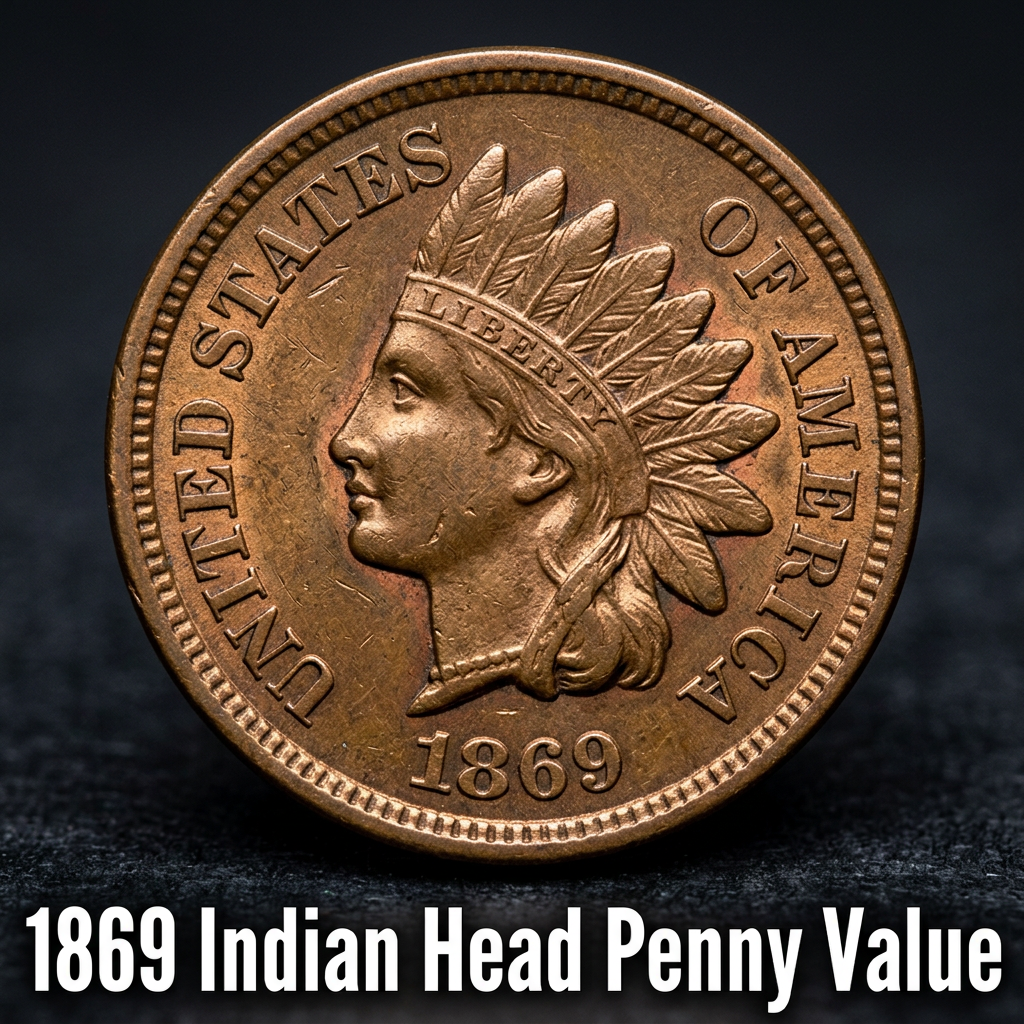
The 1869 Indian Head Penny is worth anywhere from $20 in heavily worn condition to over $1,000 or more in higher mint state grades. If you found one of these old cents in a drawer, a jar, or an inherited coin collection, you’re in the right place — let’s break down exactly what it might be worth.
What Makes the 1869 Indian Head Penny Special
The 1869 Indian Head Penny was struck at the Philadelphia Mint during the post-Civil War era. At that time, the United States was still rebuilding, and these small copper-nickel cents were everyday pocket change for ordinary Americans.
What makes the 1869 issue stand out is its relatively low mintage compared to other years in the series. The Philadelphia Mint produced just over 6 million coins that year — a modest number by 19th-century standards. That limited supply, combined with over 150 years of circulation and loss, means surviving examples in good condition are genuinely hard to find.
If you’re not sure what you have, using a coin identifier and value app is a great first step. It can help you confirm the date, identify the mint mark (or lack of one), and get a ballpark value before you visit a dealer.
How Condition Affects the 1869 Indian Head Penny Value
Here’s the most important thing to understand: condition is everything in coin collecting. A 1869 Indian Head Penny that’s been rubbed smooth from decades of use is worth a fraction of what a crisp, well-preserved example brings at auction.
Coin collectors use a grading scale from 1 to 70. Coins graded below 10 are called “About Good” or “Good” — heavily worn but still identifiable. Mid-range grades (20–45) are called “Fine” or “Extremely Fine.” Coins graded 60 and above are considered “Mint State,” meaning they never circulated.
For the 1869 Indian Head Penny, even a well-worn example in Good (G-4) condition can sell for $20–$40. As grades improve, values climb quickly. You can explore detailed 1869 Indian Head Penny mint state price data to see exactly how much the higher grades command in today’s market.
1869 Indian Head Penny Value Chart by Grade
Here’s a quick reference table to give you a clear picture of what the 1869 Indian Head Penny is worth across different grades:
| Grade | Description | Estimated Value |
|---|---|---|
| G-4 (Good) | Heavy wear, date visible | $20 – $40 |
| VG-8 (Very Good) | Moderate wear, major details clear | $45 – $75 |
| F-12 (Fine) | Even wear, feathers visible | $90 – $130 |
| EF-40 (Extremely Fine) | Light wear on high points | $200 – $325 |
| MS-63 (Mint State) | Uncirculated, some marks | $700 – $1,200 |
| MS-65 (Gem Mint State) | Gem quality, full luster | $2,000+ |
Varieties and Errors That Can Boost the 1869 Indian Head Penny Value
Like many coins of this era, the 1869 Indian Head Penny has a well-known variety that serious collectors chase: the 1869/9 overdate. This is a repunched date error where the 9 was punched over a previous 9 in a slightly different position. If you look closely at your coin under magnification and see what looks like a doubled or shadowed final digit, you might have this variety.
The 1869/9 overdate commands a significant premium — often 2 to 3 times the standard value at the same grade. Even in Good condition, an authenticated 1869/9 can fetch $100 or more.
Beyond the overdate, look for repunched dates, die cracks, or strong strikes that show sharp feather detail on Liberty’s headdress. These characteristics can add desirability and value.
For comparison purposes, it’s worth checking out how similar coins from adjacent years are priced — for instance, Indian Head Penny value data from other years in the series can help you understand how the 1869 fits into the broader market.
How to Get the Best Price for Your 1869 Indian Head Penny
If you believe you have a nice example, don’t clean it. Cleaning a coin — even gently — dramatically reduces its value and is a red flag to any serious buyer or grader.
Your best options for selling or getting an appraisal include submitting to a third-party grading service like PCGS or NGC, visiting a local coin show, or listing on a reputable auction platform. For quick identification and a value estimate right from your phone, CoinHix is one of the easiest tools available. CoinHix lets you scan your coin and get real-time price data without needing to be an expert.
Whether you’re holding onto it as a keepsake or thinking about selling, knowing your coin’s grade is the first step to getting what it’s truly worth.
—
FAQ
Q: Is a 1869 Indian Head Penny rare?
A: It’s not extremely rare, but it’s scarcer than many other Indian Head Penny dates. With only about 6 million minted and over 150 years of attrition, finding one in nice condition is genuinely uncommon. Higher-grade examples are considered conditionally rare and can sell for thousands of dollars.
Q: How can I tell if my 1869 Indian Head Penny is the overdate variety?
A: Use a 5x or 10x loupe or magnifying glass and look at the last digit in the date. On the 1869/9 overdate, you’ll see remnants of an earlier 9 punched slightly off-position beneath the final digit. It can be subtle, so CoinHix and other identification tools can help you compare your coin to known examples before paying for professional attribution.
Q: Should I clean my 1869 Indian Head Penny before selling it?
A: Absolutely not. Cleaning coins — even with gentle soap or a soft cloth — removes the original surface and destroys collector value. A naturally toned or even dark coin is worth far more than a cleaned one. Leave it as-is and let a professional grader assess it in its original state.