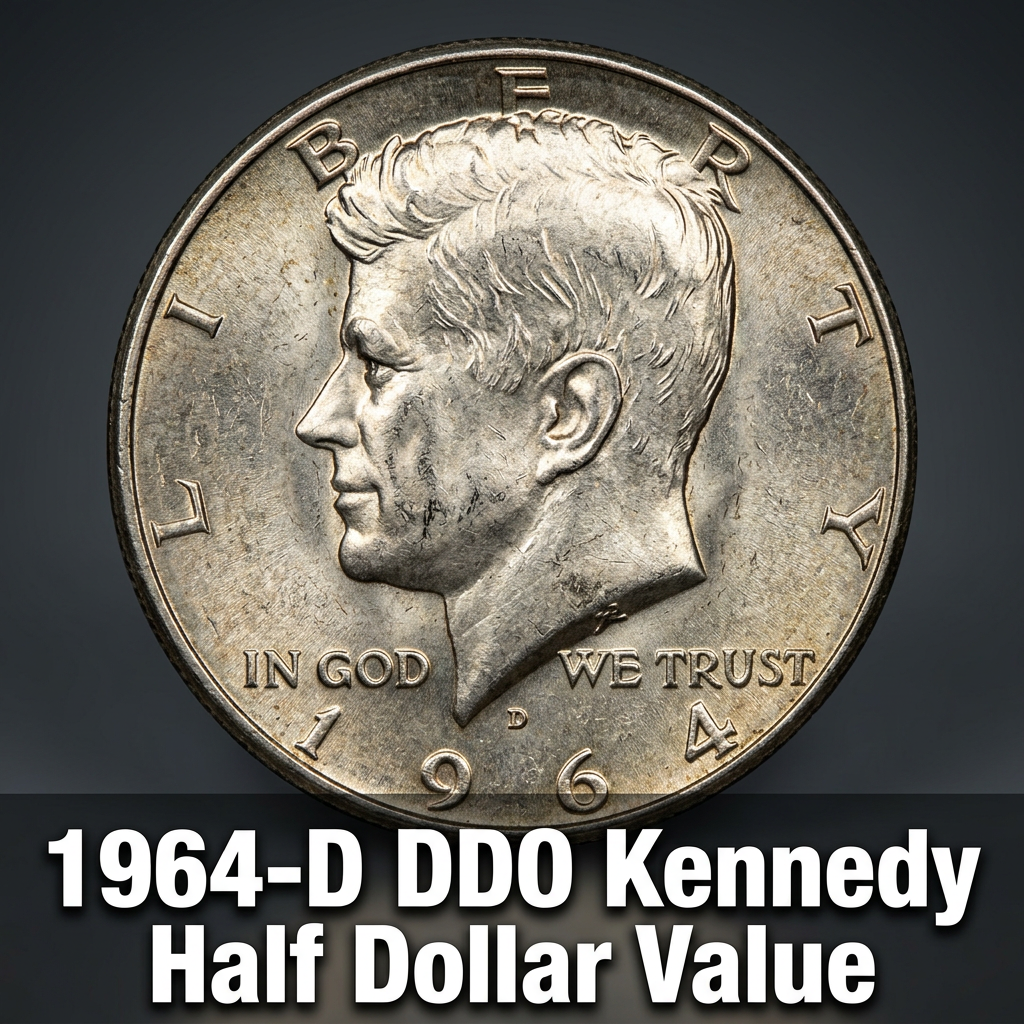
The 1964-D DDO Kennedy Half Dollar is worth anywhere from $20 in circulated condition to well over $500 or more in high mint state grades, making it one of the most exciting doubled die varieties from the entire Kennedy Half Dollar series. If you stumbled across one of these coins in an old collection or at a garage sale, you may be holding something genuinely valuable.
What Is the 1964-D DDO Kennedy Half Dollar?
The 1964-D DDO stands for “Denver Doubled Die Obverse.” This means the front of the coin — the side showing President Kennedy’s portrait — was struck with a die that had a doubling error during its creation. The result is a coin where certain design elements appear slightly doubled or misaligned when viewed closely under magnification.
This isn’t just a trick of the light. A true doubled die variety is caused during the hubbing process at the mint, where the design is pressed into the die more than once at slightly different angles. It’s a manufacturing error that happened before any coins were even struck.
The 1964-D Kennedy Half Dollar was already a first-year issue for the Denver Mint, which makes it historically important on its own. When you add the DDO variety on top of that, you’ve got a coin that serious collectors actively seek out. If you’re not sure whether your coin has this feature, a coin identifier and value app can help you compare your coin’s details against known examples in seconds.
How to Identify the Doubled Die Obverse on Your 1964-D
The doubling on this variety is most visible in specific areas of the obverse design. Look carefully at Kennedy’s eye, the lettering in “LIBERTY,” and the date numerals. Under a 5x or 10x loupe, you should see a clear secondary image — a shadow or shelf — alongside these details.
It’s important not to confuse a true DDO with machine doubling, which is a much more common and less valuable effect. Machine doubling happens during the strike itself and produces a flat, shelf-like smear rather than a rounded, raised doubling. True doubled dies show two distinct, fully formed images.
The “D” mintmark on the reverse should also be present, confirming this coin came from the Denver Mint. Denver struck over 156 million Kennedy Half Dollars in 1964, so the coin itself is not rare — but the DDO variety is far less common, and finding a well-preserved example is genuinely exciting.
1964-D DDO Kennedy Half Dollar Value by Grade
The value of this coin depends heavily on its condition. A coin that has been heavily circulated will show wear on Kennedy’s hair detail and the high points of his portrait. Meanwhile, an uncirculated example with original luster can command a significant premium.
Here’s a general value guide based on grade:
| Grade | Condition | Estimated Value |
|---|---|---|
| VF-20 | Very Fine (circulated) | $20 – $40 |
| EF-45 | Extremely Fine | $45 – $80 |
| MS-63 | Mint State (light marks) | $100 – $200 |
| MS-65 | Gem Uncirculated | $300 – $500+ |
| MS-66+ | Superb Gem | $600 – $1,000+ |
For the most up-to-date auction results and dealer prices, you can check live 1964 Kennedy Half Dollar market prices and recent sales data to see what buyers are actually paying right now.
Should You Get It Certified?
If you believe you have a genuine 1964-D DDO Kennedy Half Dollar, professional certification is strongly recommended before you attempt to sell it. Third-party grading services like PCGS or NGC will authenticate the doubling, assign a grade, and seal the coin in a tamper-evident holder. A certified DDO coin will sell for significantly more than a raw, ungraded example.
Many buyers are understandably skeptical of claimed varieties without authentication. A slabbed coin with the DDO designation confirmed by a major grading service removes all doubt and makes your coin much easier to sell at a fair price.
CoinHix is a great tool to use before you spend money on grading. You can look up recent certified sales of the 1964-D DDO to decide whether the grading fee is worth it for your specific coin’s apparent condition. If you want a broader breakdown of what your coin might be worth across all grades and conditions, this detailed 1964 Half Dollar value guide covering all varieties and grades is a helpful resource to bookmark.
Tips for Everyday Collectors Finding This Coin
Most people who find a 1964-D Kennedy Half Dollar in a drawer or old coin folder will have a circulated example. That’s perfectly fine — even worn examples of the DDO variety are worth several times their face value, and in great shape, they’re worth quite a bit more.
Start by checking for the “D” mintmark on the reverse, just below the eagle. Then grab an inexpensive jeweler’s loupe and examine the obverse carefully under good lighting. Compare what you see to photos of confirmed DDO examples online.
If you want a faster and easier way to check, CoinHix lets you scan your coin and compare it against a database of known varieties, including doubled die types. It’s a smart first step before spending anything on professional grading. And don’t clean the coin — ever. Cleaning destroys surfaces and dramatically reduces value, even on rare varieties.
FAQ
Q: How do I know if my 1964-D Half Dollar is really a DDO?
A: Look for visible doubling on Kennedy’s eye, the date, and the word “LIBERTY” under magnification. True doubled die doubling appears as two distinct, rounded images. If you’re unsure, use CoinHix or consult a professional numismatist before drawing conclusions.
Q: Is the 1964-D DDO Kennedy Half Dollar rare?
A: It is a scarce variety compared to the regular 1964-D issue, which had a mintage of over 156 million. Not every 1964-D has the doubling. Finding a well-preserved DDO example is uncommon, which is exactly why collectors pay a premium for them.
Q: Can I sell my 1964-D DDO Kennedy Half Dollar without getting it graded?
A: Yes, but you’ll likely receive less money for it. Ungraded coins with claimed varieties are harder to sell because buyers can’t verify the doubling without examining the coin themselves. Certification from PCGS or NGC adds credibility and typically increases the final sale price.