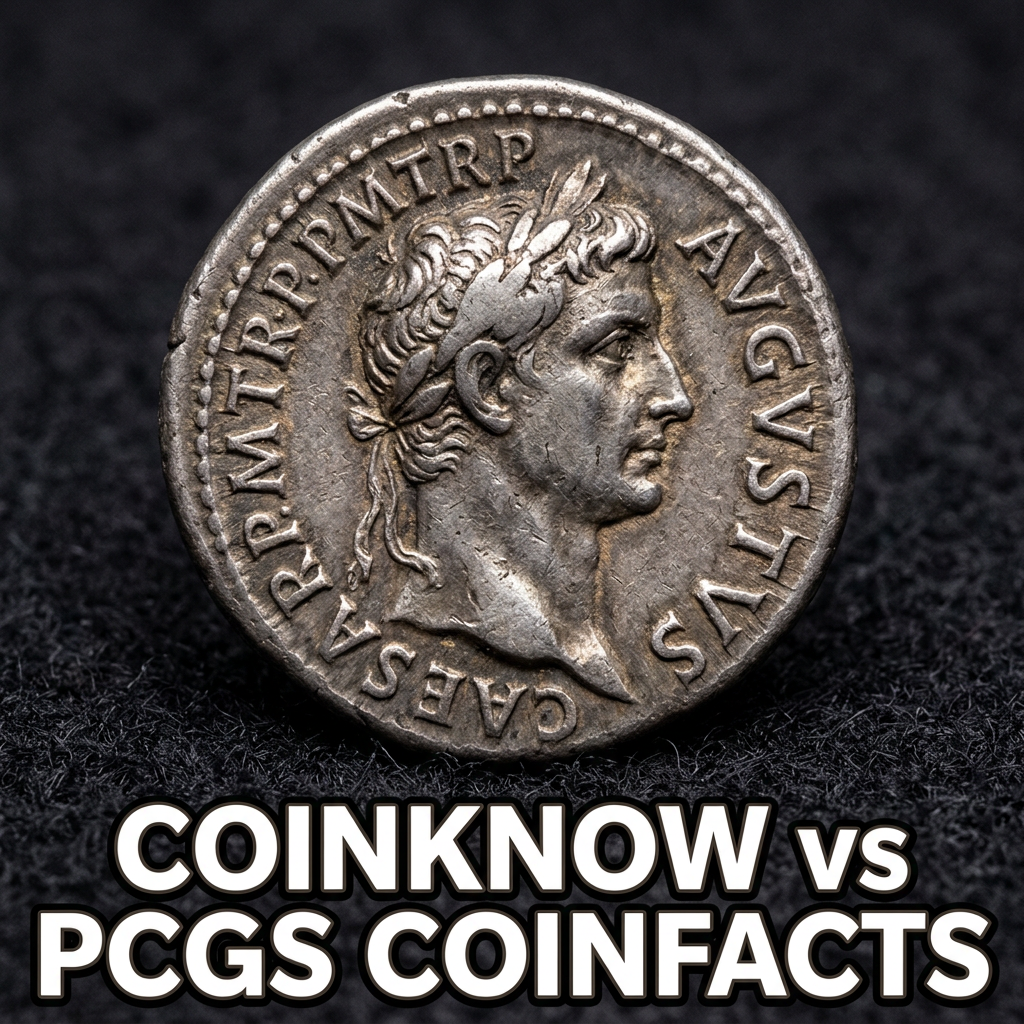
If you recently dug an old coin out of a drawer or inherited a collection from a relative, you’re probably wondering whether it’s worth anything — and the answer can range from a few cents to several hundred dollars depending on the coin’s age, condition, and mint mark. Two of the most commonly recommended tools for looking up coin values are CoinKnow and PCGS CoinFacts, and knowing which one suits your needs can save you a lot of time and confusion.
What Are These Tools and Who Are They For
Before diving into a comparison, it helps to understand that not all coin research tools are built for the same audience. PCGS CoinFacts is a professional-grade database maintained by the Professional Coin Grading Service, one of the most respected names in the numismatic world. It’s loaded with auction records, population reports, and grading data that serious collectors and dealers rely on daily.
CoinKnow, on the other hand, is designed to be more approachable for beginners. It offers basic coin identification and estimated values in a cleaner, simpler interface. If you just found a 1964 Kennedy Half Dollar in grandma’s jewelry box and want to know if it’s silver (it is, by the way), CoinKnow might get you to an answer faster.
That said, if you want a genuinely fast and visual way to identify coins, a coin identifier and value app on your phone can be even more convenient than either website — especially when you’re sorting through a large pile of loose change or estate coins.
How PCGS CoinFacts Handles Coin Values
PCGS CoinFacts is arguably the most data-rich free coin resource available online. For any given U.S. coin, you can find mintage numbers, historical auction results, price guides by grade, and even population data showing how many coins have been certified at each grade level.
For example, if you pull up a 1909-S VDB Lincoln Cent on PCGS CoinFacts, you’ll see values ranging from around $700 in heavily worn condition (Good-4) all the way to $10,000 or more in gem uncirculated grades. That level of detail is incredibly useful if you already know a little about grading.
The downside is the learning curve. Terms like MS-65, PR-70, and “population report” mean nothing to most people who just found an old coin. If you’re not already familiar with the Sheldon grading scale, PCGS CoinFacts can feel overwhelming pretty quickly.
How CoinKnow Approaches the Same Problem
CoinKnow simplifies the process by presenting coin values in plain language and a more beginner-friendly layout. You can search by coin type and year and get a general value estimate without needing to know what grade your coin is.
The tradeoff is precision. CoinKnow’s value estimates tend to be broad ranges rather than the granular, grade-by-grade breakdowns you get from PCGS. For casual users, that’s often enough — but if you’re trying to decide whether to get a coin professionally graded or sell it at auction, you’ll want more detailed data.
CoinKnow also doesn’t offer the same depth of auction history, which is a key resource for understanding what coins actually sell for in the real market versus what a price guide says.
Side-by-Side Comparison
Here’s a quick look at how both tools stack up across key features:
| Feature | CoinKnow | PCGS CoinFacts |
|---|---|---|
| Ease of Use | ⭐⭐⭐⭐⭐ Beginner-friendly | ⭐⭐⭐ Moderate learning curve |
| Value Detail | General ranges only | Grade-by-grade pricing |
| Auction History | Not available | Extensive records |
| Coin Identification | Basic search | Detailed variety info |
| Mobile Experience | Decent | Functional but dated |
| Best For | Casual coin finders | Serious collectors & dealers |
A Smarter Option for Everyday Coin Hunters
If you’re somewhere in between — not a professional numismatist, but serious enough to want accurate information — there’s a better starting point than either website. CoinHix is a mobile app built specifically for people who find coins and want fast, reliable answers. You simply take a photo of your coin and CoinHix uses image recognition technology to identify it and pull up current market values.
This is especially handy when you’re dealing with a jar of mixed old coins and don’t want to manually search each one on a website. CoinHix does the heavy lifting for you, and its value estimates draw from real market data rather than static price guides that may be months out of date.
For coins that turn out to be potentially valuable, you can then cross-reference on PCGS CoinFacts to dig deeper into grading and auction history. Think of it as a two-step process: identify quickly with CoinHix, then research deeply with PCGS if the coin warrants it.
—
FAQ
Q: Is PCGS CoinFacts free to use?
A: Yes, PCGS CoinFacts is completely free to access online. You don’t need a membership to look up coin values, mintage data, or auction records, though some advanced features may require registration.
Q: Can I use CoinKnow to identify error coins or rare varieties?
A: CoinKnow is not well-suited for identifying specific varieties or mint errors. For that level of detail, PCGS CoinFacts or a specialized variety guide like the Red Book would serve you much better.
Q: What’s the fastest way to identify a coin I know nothing about?
A: Taking a photo with a coin identification app like CoinHix is usually the fastest method. It can recognize the coin from the image alone, which saves you from having to read tiny inscriptions or guess the date before you can even start searching a database.