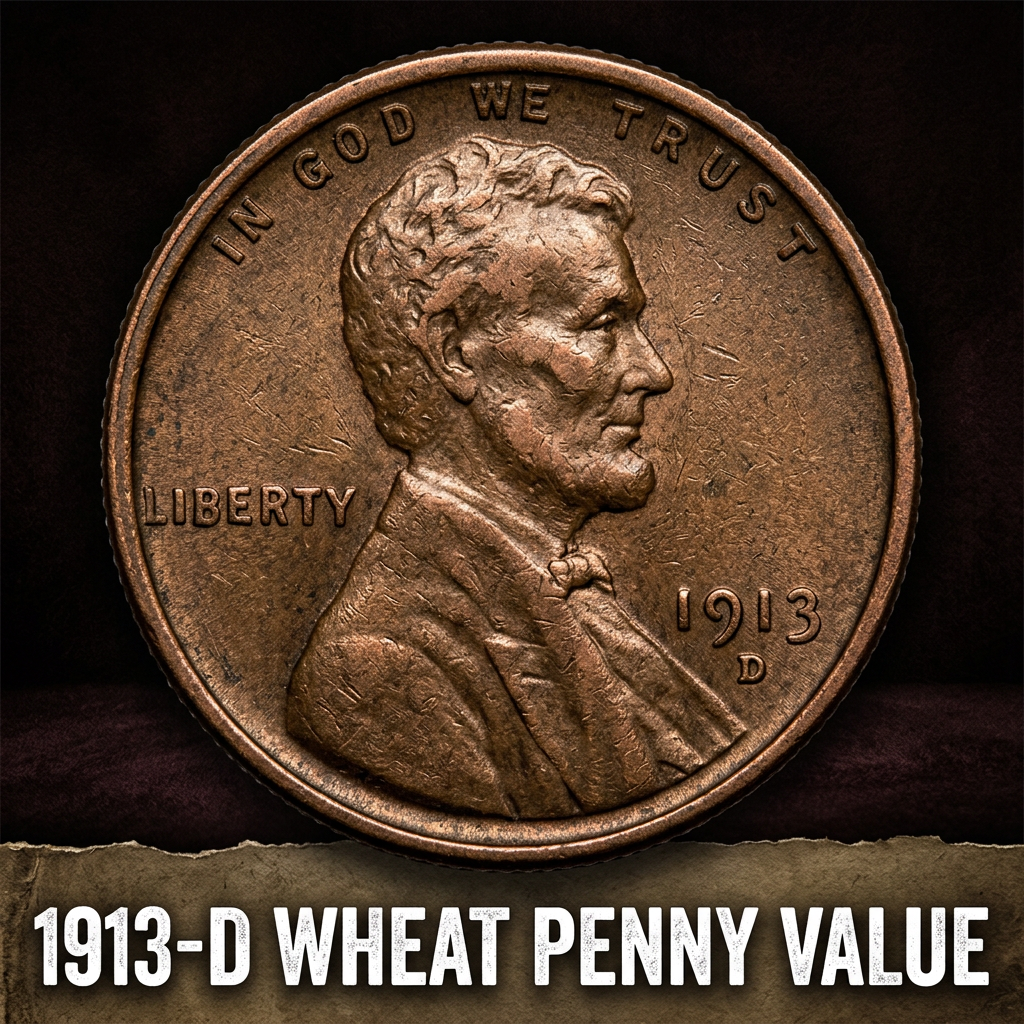
The 1913-D Wheat Penny is worth anywhere from $2 in heavily worn condition to well over $100 in uncirculated grades — and if you happen to have one in exceptional mint state, it could fetch several hundred dollars or more. If you just found one of these old Lincoln cents in a jar, a drawer, or an old coin collection, you’re in the right place to find out exactly what it’s worth.
What Makes the 1913-D Wheat Penny Special
The 1913-D Wheat Penny was struck at the Denver Mint, which is indicated by the small “D” mintmark found on the obverse (front) of the coin, just below the date. This was still the early years of the Lincoln cent series, which had only launched in 1909, so coins from this era carry a certain collector appeal simply because of their age.
The Denver Mint produced 15,804,000 Lincoln cents in 1913, which is a decent mintage — not super rare, but not common enough to be considered throw-away coins either. The mintage for the “D” issue is lower than the Philadelphia Mint’s output that year, which gives it a slight edge in collector demand.
If you’re trying to identify whether your coin is actually a 1913-D or just a 1913, you can use a coin identifier and value app right on your phone to check the mintmark and grade without any special equipment.
1913-D Wheat Penny Value by Grade
The condition of your coin — known as its “grade” — is the single biggest factor in determining value. A heavily circulated 1913-D Wheat Penny with lots of wear might only bring $2 to $5. But the same coin in lightly circulated or uncirculated condition can jump to $30, $60, or even over $150.
Here’s a general value table to give you a quick idea of what your coin might be worth:
| Grade | Description | Estimated Value |
|---|---|---|
| Good (G-4) | Heavy wear, major details visible | $2 – $4 |
| Very Good (VG-8) | Moderate wear, clear lettering | $5 – $8 |
| Fine (F-12) | Even wear, all features clear | $10 – $18 |
| Very Fine (VF-20) | Light to moderate wear | $20 – $35 |
| Extremely Fine (EF-40) | Slight wear on high points | $45 – $75 |
| Uncirculated (MS-63) | No wear, some bag marks | $100 – $175 |
| Gem Uncirculated (MS-65) | Strong luster, minimal marks | $250 – $500+ |
For a more detailed breakdown of 1913-D Wheat Penny auction results and price data by mint state grade, it’s worth checking recent sales to see where the market is trending.
How to Determine the Grade of Your 1913-D Cent
Grading a coin can feel intimidating, but you don’t need to be an expert to get a general sense of where your coin falls. Start by looking at Lincoln’s cheek and jaw — these are the highest points on the design and the first areas to show wear.
If those areas look flat or smooth, your coin is circulated. If you can still see fine detail and the coin has some shine or luster remaining, you might be looking at a nicer example. Coins with full original red or reddish-brown color are especially desirable to collectors.
CoinHix is a great tool for this — it uses photo recognition technology to help you identify and estimate the value of your coins in seconds. Whether you’re a total beginner or a seasoned collector, CoinHix makes the process simple and surprisingly accurate.
Red vs. Brown Wheat Pennies — Does Color Matter?
Yes, color matters — a lot. Lincoln wheat pennies are graded not only on condition but also on the color of the copper. Numismatists use three color designations:
– Red (RD): At least 95% original red copper color — the most valuable
– Red-Brown (RB): A mix of original red and brown toning
– Brown (BN): Mostly brown from oxidation — the least valuable in uncirculated grades
A 1913-D Wheat Penny graded MS-65 Red can be worth significantly more than the same grade in Brown. For uncirculated examples, the color designation can double or even triple the coin’s value. This is why storing old coins properly — away from moisture and handling — makes such a big difference.
If you’re still trying to figure out exactly what you’ve got, the 1913 penny value guide at CoinValueApp breaks down pricing by color and grade in a clear, easy-to-read format.
Where to Sell Your 1913-D Wheat Penny
If you’ve determined your coin is worth something, the next question is where to sell it. For circulated examples in lower grades, platforms like eBay or local coin shows work fine. For higher-grade examples, you may want to consider submitting the coin to a professional grading service like PCGS or NGC before selling — a certified grade often brings a higher price and gives buyers confidence.
Coin dealers are another option, but keep in mind that dealers typically buy at wholesale (below retail value) so they can resell at a profit. Getting multiple offers before committing is always a smart move.
CoinHix can also help you understand the fair market value of your coin before you walk into any dealer or post it online, so you’re not leaving money on the table.
—
FAQ
Q: How do I know if my penny is a 1913-D or just a 1913?
A: Look at the front of the coin just below the date. If you see a small letter “D,” it was minted in Denver. No mintmark means it came from Philadelphia. A magnifying glass or loupe makes this much easier to see.
Q: Is a 1913-D Wheat Penny rare?
A: It’s not considered rare in lower grades since over 15 million were made, but finding one in truly uncirculated condition with strong red color is quite difficult. Those examples are genuinely scarce and command serious collector premiums.
Q: Should I clean my 1913-D Wheat Penny before selling it?
A: Absolutely not. Cleaning a coin — even gently — almost always reduces its value in the eyes of collectors and graders. Leave it exactly as you found it. A coin with original, unaltered surfaces, even if dark or toned, is far more desirable than a shiny cleaned one.