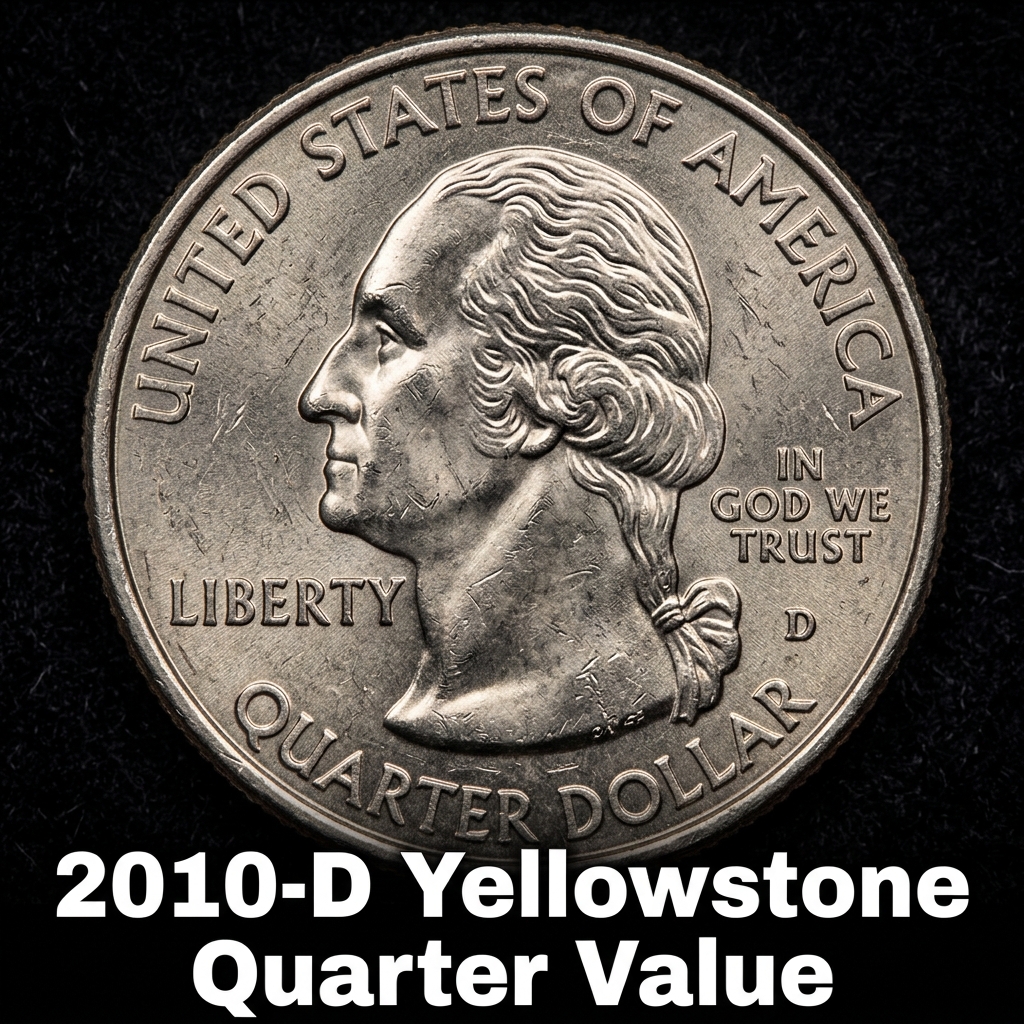
The 2010-D Yellowstone Quarter is worth anywhere from 25 cents in circulated condition to over $15 or more in pristine uncirculated grades — and a small number of error coins can fetch significantly more. If you just found one in your pocket change or tucked away in an old jar, you’re in the right place. This guide breaks down exactly what your coin might be worth, what to look for, and how to tell if you’re holding something special.
What Is the 2010-D Yellowstone Quarter?
The 2010-D Yellowstone Quarter is part of the America the Beautiful Quarters program, a series launched by the U.S. Mint in 2010 to honor national parks and historic sites across all 50 states and territories. Yellowstone National Park was the first design released in this series, making it a historically significant coin even for casual collectors.
The “D” in the name refers to the Denver Mint, which struck this coin. Philadelphia also produced a version (the 2010-P), but the two are different coins with separate mintages and values. It’s always worth checking which mint mark your coin carries — you’ll find the small “D” or “P” on the obverse side, just below “IN GOD WE TRUST.”
If you’re unsure what you have, a coin identifier and value app can help you quickly scan and identify your coin from a photo, saving you a lot of guesswork.
How Much Is a 2010-D Yellowstone Quarter Worth?
For most people who find this coin in circulation, it’s worth face value — 25 cents. Coins that have been passed around in everyday use show wear on the high points of the design, which significantly lowers their collector value.
However, if your coin has never been used — meaning it came straight from a mint roll or bank bag — it could be worth real money. Uncirculated examples graded MS-65 or higher have sold for $5 to $15, and top-tier specimens in MS-68 or MS-69 can reach $50 to $100 or more at auction.
You can check detailed 2010 Yellowstone quarter price data by grade to see how different condition levels affect the value. Having a good sense of grading standards makes a real difference when you’re trying to figure out what your coin is truly worth.
| Condition | Grade | Estimated Value |
|---|---|---|
| Circulated (worn) | G–VF | Face value ($0.25) |
| Lightly circulated | EF–AU | $0.50 – $2 |
| Uncirculated | MS-63 – MS-65 | $3 – $10 |
| Gem Uncirculated | MS-66 – MS-67 | $10 – $30 |
| Superb Gem | MS-68+ | $50 – $100+ |
Mintage Numbers and Why They Matter
The Denver Mint produced approximately 223,800,000 copies of the 2010-D Yellowstone Quarter. That’s a large mintage, which is one reason why circulated examples are easy to find and not especially valuable on their own.
But here’s the thing — high mintage doesn’t mean every coin is common in top condition. Getting a coin from the production line to a collector’s hands without any contact marks, bag scratches, or handling damage is genuinely difficult. That’s why high-grade examples are still worth hunting for.
Collectors who want to learn more about what 2010 quarters are worth across different grades and mint marks will find that small differences in condition can mean big differences in price. A coin that looks “shiny” to the naked eye might grade MS-63, while a perfectly struck, fully lustrous example could grade MS-67 and be worth ten times as much.
Error Coins and Special Varieties
One area where 2010-D Yellowstone Quarters can really surprise collectors is in error coins. U.S. Mint errors — things like doubled dies, off-center strikes, and clipped planchets — are relatively rare but highly sought after.
A doubled die error, where design elements appear slightly doubled under magnification, can push the value of an otherwise ordinary quarter into the $25–$100+ range depending on how dramatic the doubling is. Off-center errors, where the design is noticeably shifted, are even more dramatic and can be worth $50 to $200 or more.
If you think your 2010-D Yellowstone Quarter looks a little “off” in some way, it’s worth examining it closely under a loupe or magnifying glass. CoinHix is a great tool for researching error varieties and understanding how specific anomalies can affect value before you spend the coin or sell it.
Should You Get It Graded?
Professional grading through services like PCGS or NGC adds credibility to your coin and often increases its resale value. However, grading costs money — usually $20 to $50 or more per coin — so it only makes sense if your coin is already in exceptional condition.
For most circulated 2010-D Yellowstone Quarters, the cost of grading would exceed the coin’s value. But if you’ve pulled a pristine roll-end coin from a bank bag and it looks gem-quality, it might be worth submitting.
Not sure where to start? CoinHix lets you browse certified coin sales data and compare what graded examples have actually sold for at auction, which can help you decide whether submitting for grading makes financial sense.
Frequently Asked Questions
Q: Is a 2010-D Yellowstone Quarter rare?
A: Not in circulated condition — over 223 million were minted. However, finding one in true gem uncirculated condition (MS-67 or higher) is genuinely uncommon, and those examples do carry real collector value.
Q: What’s the difference between the 2010-D and 2010-P Yellowstone Quarter?
A: The only difference is the mint that made them. The “D” stands for Denver and the “P” stands for Philadelphia. Both have similar values in most grades, though auction results can vary. Always check your mint mark before looking up prices.
Q: How do I know if my 2010-D Yellowstone Quarter is worth getting appraised?
A: If the coin has no visible wear, strong luster, and no distracting marks or scratches, it may be worth having a professional look at it. You can also use CoinHix to get a quick ballpark estimate based on comparable sales before spending money on a formal appraisal.