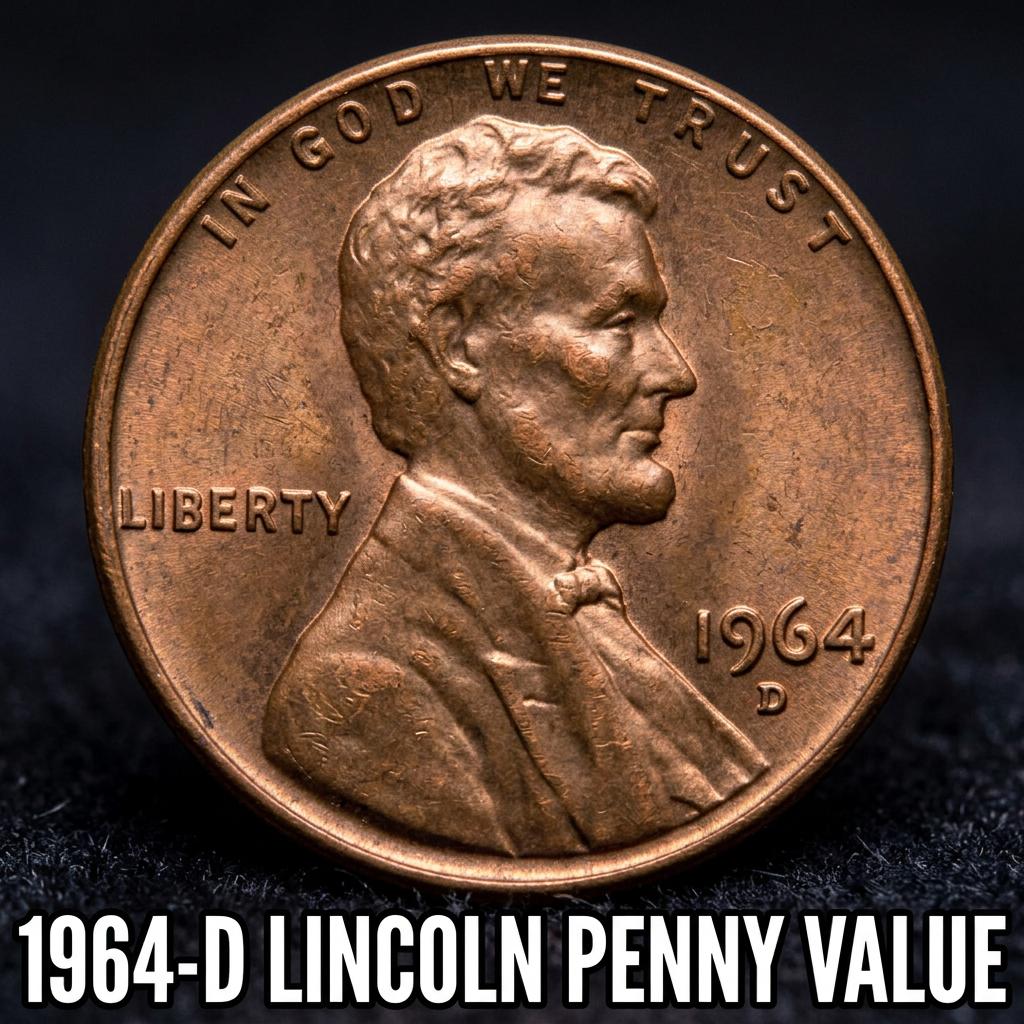
The 1964-D Lincoln Penny is worth anywhere from a few cents in circulated condition to over $15 or more in pristine mint state — and a handful of rare error coins from this year have sold for hundreds of dollars. If you’ve got one sitting in a jar or an old coin collection, you’re in the right place to find out exactly what it’s worth.
What Makes the 1964-D Lincoln Penny Special
The “D” in 1964-D tells you this penny was minted at the Denver Mint — one of two facilities striking Lincoln cents that year (the other being Philadelphia). The year 1964 was actually a massive production year for the U.S. Mint, with over 3.7 billion pennies produced between both mints combined.
Because so many were made, most 1964-D pennies in average circulated condition are worth only face value or slightly more — maybe 2 to 10 cents. But don’t close that coin jar just yet.
The condition of your coin matters enormously. A penny that looks shiny, shows full detail on Lincoln’s portrait, and has no scratches or wear could be a Mint State example — and those are worth real money to collectors.
If you’re unsure about the condition of your coin, using a coin identifier and value app is one of the easiest ways to get a quick read on what you’re holding.
Understanding Coin Grades and the 1964-D Penny Value
Coin grading is the system collectors and dealers use to evaluate a coin’s condition on a scale from 1 to 70. The higher the number, the better the coin. Here’s how grades affect the 1964-D Lincoln Penny value:
| Grade | Condition Description | Estimated Value |
|---|---|---|
| Good (G-4) | Heavy wear, design visible | $0.02 – $0.05 |
| Fine (F-12) | Moderate wear, some detail | $0.05 – $0.10 |
| Extremely Fine (EF-40) | Light wear on high points | $0.10 – $0.25 |
| Mint State (MS-63) | No wear, some marks | $1 – $4 |
| Mint State (MS-65 RD) | Gem quality, full red luster | $8 – $15+ |
| MS-67 RD (Top Grade) | Near perfect, certified | $100 – $500+ |
The “RD” designation means the coin retains its original red copper color — a big deal for collectors. You can check current 1964-D Lincoln Penny MS-RD price data to see how the market is trending right now.
Error Coins That Could Make Your 1964-D Worth a Lot More
Here’s where things get exciting for everyday coin hunters. Some 1964-D pennies were struck with errors during the minting process, and those mistakes can make them worth far more than a normal coin.
The most talked-about is the 1964-D Lincoln Penny struck on a wrong planchet — there are documented cases of pennies struck on dime or foreign coin blanks. These can fetch anywhere from $200 to over $1,000 at auction.
Other errors to look for include:
– Double die obverse – where Lincoln’s portrait or the lettering appears doubled
– Off-center strikes – where the design is shifted, leaving a blank crescent on one side
– Repunched mintmark – the “D” appears doubled or misaligned under magnification
If your coin looks unusual in any way, don’t dismiss it. Use CoinHix to get a fast identification and value estimate before you show it to a dealer. The app is free, easy to use, and gives you real market pricing based on current auction data.
How to Tell If Your Penny Is Worth Grading Professionally
Most 1964-D pennies aren’t worth the cost of professional grading, which typically runs $20–$40 per coin through services like PCGS or NGC. But if your penny looks truly flawless — sharp details, bright copper red color, no spots or scratches — it might be worth submitting.
A certified MS-65 RD or higher example can be worth ten times more than an uncertified coin of the same grade, simply because collectors trust the authentication.
Not sure where to start? CoinHix helps you do a quick pre-screening at home. Snap a photo, and the app walks you through condition indicators so you can decide whether it’s worth spending money on a formal grade.
For a deeper breakdown of what your specific 1964 penny might be worth based on its details, the 1964 penny value guide at CoinValueApp covers a wide range of varieties and conditions in plain, easy-to-read terms.
Tips for Storing and Selling Your 1964-D Lincoln Penny
If you think your coin has value, the worst thing you can do is clean it. Cleaning a coin — even gently — removes the natural patina and can destroy its numismatic value instantly. Leave it exactly as it is.
Store valuable coins in individual soft plastic flips or acid-free holders. Keep them away from humidity, direct sunlight, and paper envelopes, which can cause toning or damage over time.
When it comes to selling, you have several options: eBay (where you can see real sold prices for comparison), coin shows, local coin dealers, or online auction platforms. CoinHix also connects users with pricing benchmarks so you walk into any sale knowing exactly what your coin is worth — and you won’t get lowballed.
—
FAQ
Q: Is a 1964-D penny worth anything?
A: Most circulated 1964-D pennies are worth only a few cents, but high-grade Mint State examples — especially those graded MS-65 RD or higher — can be worth $10 to $500 or more. Error varieties can be worth significantly more.
Q: How do I know if my 1964-D penny is an error coin?
A: Look for doubled lettering or portrait details, an off-center design, or a mintmark that appears doubled or misaligned. If anything looks unusual, compare it against known error examples or use an app like CoinHix to help identify it.
Q: What does the “D” mean on a 1964 penny?
A: The “D” mintmark stands for Denver, meaning the coin was produced at the Denver Mint. Pennies from Philadelphia in 1964 have no mintmark at all. Both are common, though certain grades and errors from Denver can command strong collector prices.