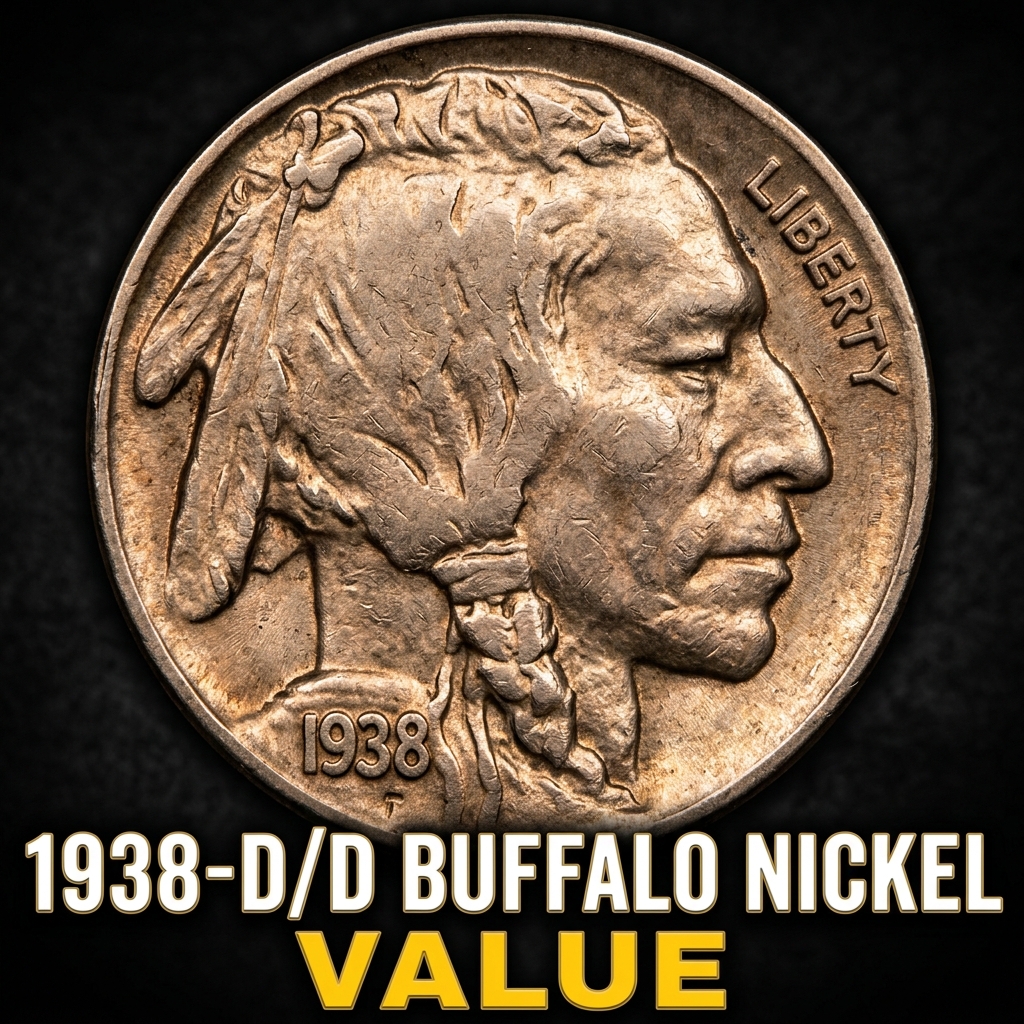
The 1938-D/D Buffalo Nickel is worth anywhere from $5 in circulated condition to well over $150 in mint state — and that’s just for a regular example. If you have one with a clearly visible repunched mintmark (D/D), the value can climb even higher, making this one of the most exciting finds among late-series Buffalo Nickels.
What Makes the 1938-D/D Buffalo Nickel Special
The 1938-D Buffalo Nickel was the very last year of the Buffalo Nickel series, which ran from 1913 to 1938. That alone gives it extra appeal among collectors. But the 1938-D/D variety adds another layer of interest — the mintmark “D” was punched into the die twice, slightly offset, leaving a doubled impression that you can see under magnification.
This kind of error is called a repunched mintmark (RPM), and it’s a legitimate variety that’s listed in major coin references. It happened because mint workers in that era punched mintmarks into dies by hand, one at a time. Sometimes the punch slipped or was repositioned, leaving a ghost image behind the main letter.
That tiny detail can mean a real difference in what your coin is worth. If you’re not sure whether you have the D/D variety or just a standard 1938-D, a good coin identifier and value app can help you compare your coin to known examples and get a quick estimate before you take it to a dealer.
How to Identify the Repunched Mintmark
Finding the repunched mintmark on your 1938-D/D Buffalo Nickel isn’t difficult once you know where to look. Flip the coin to the reverse (the side with the buffalo) and find the mintmark “D” just below the words “FIVE CENTS.”
Under a 5x or 10x loupe or magnifying glass, look closely at the “D.” On the D/D variety, you’ll notice a second “D” slightly behind, above, or below the primary mintmark. The exact position of the secondary punch can vary, and coin experts have catalogued several sub-varieties (such as FS-501 in the Cherrypickers’ Guide).
If the mintmark looks clean and single with no ghost impression, you likely have a standard 1938-D. That coin is still collectible — just not as valuable as the RPM version. Either way, both coins are worth examining carefully because condition matters enormously when determining value.
1938-D/D Buffalo Nickel Value by Grade
Coin values depend heavily on condition, or “grade.” Here’s a general breakdown of what the 1938-D/D Buffalo Nickel is worth across common grades:
| Grade | Description | Estimated Value |
|---|---|---|
| Good (G-4) | Heavy wear, date visible | $5 – $8 |
| Fine (F-12) | Moderate wear, details visible | $10 – $18 |
| Extremely Fine (EF-40) | Light wear on high points | $25 – $45 |
| About Uncirculated (AU-55) | Slight wear, most luster present | $55 – $80 |
| Mint State (MS-63) | Uncirculated, minor marks | $100 – $150+ |
| Mint State (MS-65) | Gem uncirculated | $200 – $400+ |
For the most up-to-date auction results and dealer prices, you can check current 1938-D Buffalo Nickel price data by grade on CoinHix. The market can shift based on recent sales, so live data is always more reliable than static price guides.
What Affects the Value Beyond the Grade
Grade is the biggest factor, but it’s not the only one. For the 1938-D/D specifically, how clearly visible the repunched mintmark is will influence what a collector is willing to pay.
A coin where the secondary “D” is bold and obvious will command a premium. A coin where the RPM is barely there — sometimes called a “weak” variety — may only bring a modest bump over the standard 1938-D price.
Eye appeal also matters. A coin that’s been cleaned or polished will lose significant value even if it grades highly by surface wear standards. Original skin (natural toning and luster) is always preferred by serious collectors.
You can explore a full breakdown of 1938 Buffalo Nickel values across all grades and varieties to see how the D/D compares to other issues from this final year of the series.
If you want a fast way to identify and estimate the value of coins from your collection at home, CoinHix is a great tool to start with. It covers thousands of U.S. coin varieties, including Buffalo Nickels, and gives you instant grade-based value ranges without needing to visit a coin shop first.
Should You Get It Certified
If you believe you have a 1938-D/D Buffalo Nickel in nice condition — especially anything AU or better — professional certification through PCGS or NGC is worth considering.
A certified coin in a graded slab sells for more money because buyers trust the grade. It also confirms the variety, which is important for RPM coins where skeptical buyers might want proof. Certification fees typically run $20–$40 per coin for standard service, and the value increase on a gem example can easily offset that cost.
CoinHix lets you track certified coin values and compare raw versus slabbed prices so you can make an informed decision before spending money on grading services.
—
Frequently Asked Questions
Q: How do I know if my 1938-D Buffalo Nickel is the D/D variety?
A: Look at the “D” mintmark on the reverse under magnification. If you see a second faint “D” slightly behind or offset from the main one, you likely have the D/D variety. Comparing your coin to photos in the Cherrypickers’ Guide or using a coin app can help confirm it.
Q: Is a circulated 1938-D/D Buffalo Nickel still worth saving?
A: Yes. Even in worn Good or Fine condition, the D/D variety is worth keeping. It has collector interest beyond a standard circulated Buffalo Nickel, and the premium over face value is meaningful even at lower grades.
Q: What’s the best way to find out what my coin is worth today?
A: Check recent auction results on sites like eBay (sold listings only) or use a tool like CoinHix to get real-time price data. Avoid cleaning the coin before getting a second opinion — cleaning can reduce value significantly.