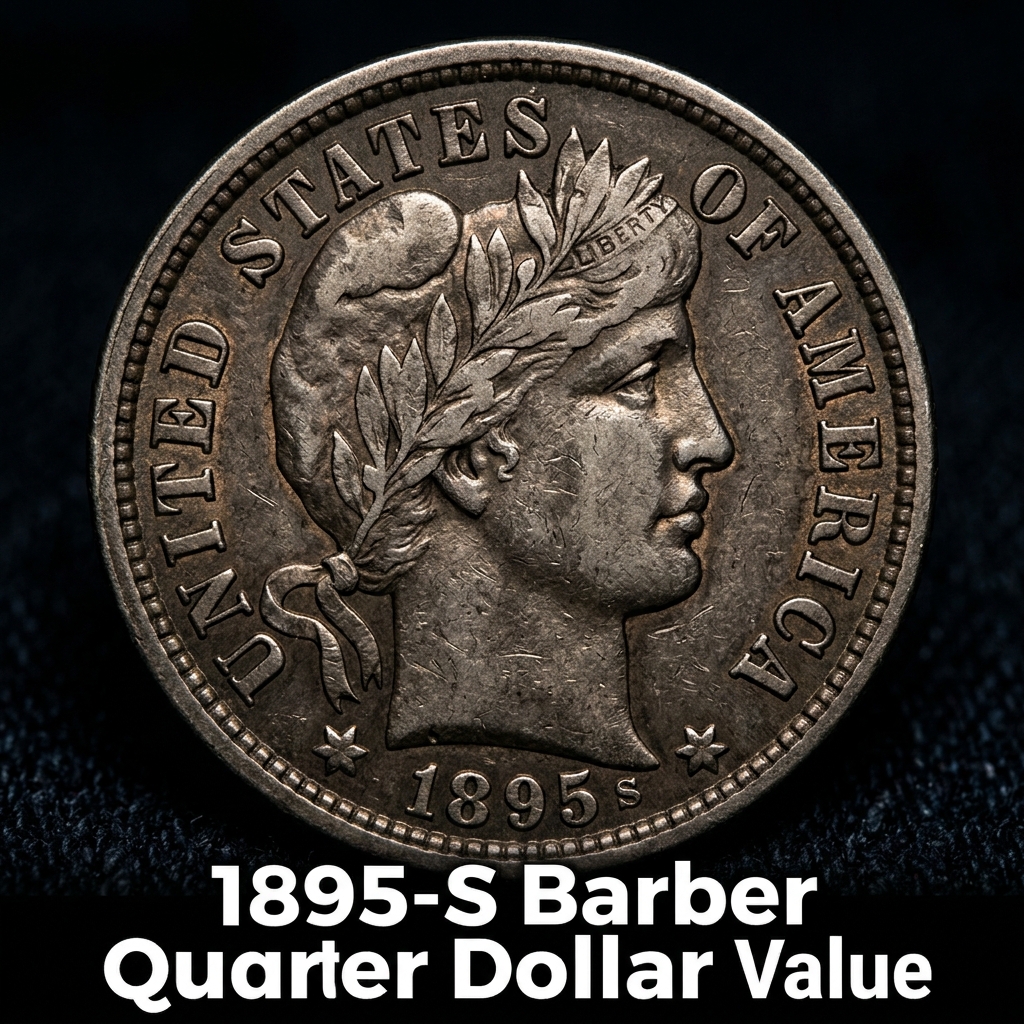
The 1895-S Barber Quarter Dollar is worth anywhere from $30 in heavily worn condition to well over $1,500 or more in higher mint state grades — and rare examples in top condition have sold for thousands at auction. If you found one of these old silver coins tucked away in a drawer or inherited from a family member, you may be sitting on something genuinely valuable.
What Is the 1895-S Barber Quarter?
The 1895-S Barber Quarter was minted at the San Francisco Mint, which is where the “S” mintmark comes from. You’ll find that small letter on the reverse side of the coin, just below the eagle. This coin is part of the Barber coinage series, designed by Charles E. Barber and produced from 1892 through 1916.
These quarters are made of 90% silver, which already gives them a base metal value above face value. But their numismatic — or collector — value goes far beyond just the silver content.
The 1895-S had a mintage of just 1,764,681 coins, which is relatively modest for the series. That lower production number, combined with the fact that most were used in everyday commerce and worn down over time, means well-preserved examples are genuinely hard to find today.
If you’re not sure what you have, using a coin identifier and value app is one of the easiest ways to get a quick read on your coin before paying for a professional appraisal.
How Much Is the 1895-S Barber Quarter Worth Today?
Value depends heavily on condition, also known as “grade” in the coin collecting world. A coin that’s been heavily circulated — with a nearly flat design and worn-down details — is worth much less than one that still shows sharp lines and luster.
Here’s a general value breakdown for the 1895-S Barber Quarter:
| Grade / Condition | Estimated Value |
|---|---|
| Good (G-4) | $30 – $45 |
| Very Good (VG-8) | $55 – $80 |
| Fine (F-12) | $90 – $130 |
| Very Fine (VF-20) | $175 – $250 |
| Extremely Fine (EF-40) | $350 – $550 |
| About Uncirculated (AU-50) | $700 – $950 |
| Mint State (MS-60 and above) | $1,500 – $4,000+ |
Keep in mind these are approximate market values and can shift based on buyer demand, recent auction results, and overall silver prices.
How to Check the Condition of Your 1895-S Barber Quarter
Grading coins takes some practice, but here are a few things to look for even as a beginner. On the obverse, look at Lady Liberty’s hair above her ear — in worn coins, this detail fades first. If you can still see individual strands, that’s a good sign.
On the reverse, examine the eagle’s breast feathers and the shield design. Well-defined feathers and visible lines in the shield indicate a higher-grade coin.
Never clean your coin with soap, polish, or any abrasive. Even well-intentioned cleaning can strip the coin’s natural surface and dramatically reduce its value to collectors.
Many people find it helpful to download CoinHix to get a fast visual grade estimate before doing anything else. CoinHix uses your phone’s camera to scan the coin and give you a ballpark condition assessment — it’s a smart first step before heading to a coin dealer.
Is the 1895-S Barber Quarter Rare?
Within the Barber Quarter series, the 1895-S is considered a semi-key date. It’s not the rarest coin in the series — that title goes to the 1901-S — but it’s noticeably harder to find than common-date Barber quarters, especially in grades above Very Fine.
If you’re curious how this coin compares to other silver coins from the same era, it’s worth exploring related coins like the Morgan Dollar. You can check out what the 1895 Morgan Dollar is worth to see how silver dollar values from the same year stack up against this quarter.
Collectors actively seek out the 1895-S because of that combination of lower mintage and scarcity in higher grades. A coin with original luster, no cleaning, and strong details is genuinely tough to find — and that’s exactly what drives up the price.
Where to Sell Your 1895-S Barber Quarter
If you’ve decided you want to sell, you have several solid options. Local coin dealers are convenient but may offer below-market prices since they need to make a profit on resale. Online platforms like eBay or Heritage Auctions give you access to a national pool of collectors, often resulting in better prices.
Before selling anywhere, get at least two or three quotes. You can also use CoinHix to get a current estimated market value in seconds — it’s a handy way to know whether an offer you’re receiving is fair or whether you should keep shopping around.
For high-value examples, consider submitting your coin to a professional grading service like PCGS or NGC. A certified grade in a tamper-evident slab dramatically increases buyer confidence and can boost the final sale price significantly.
Frequently Asked Questions
Q: How do I know if my coin is really an 1895-S Barber Quarter?
A: Look at the date on the obverse — it should clearly read 1895. Then flip the coin over and check just below the eagle’s tail for a small “S” mintmark. If both are present, you have the San Francisco issue. A coin identifier app can help you confirm this quickly using your phone camera.
Q: Is it worth getting my 1895-S Barber Quarter professionally graded?
A: It generally makes sense if your coin appears to be in Fine condition or better. Grading fees typically run $30 to $50 per coin, so the cost is only worth it when the certified grade would meaningfully increase the coin’s sale value — usually at EF-40 and above.
Q: Does cleaning a Barber Quarter increase its value?
A: No — and this is one of the most common mistakes people make. Cleaning a coin removes the natural patina and can leave hairline scratches visible under magnification. Dealers and collectors can spot cleaned coins immediately, and a cleaned coin typically sells for 20% to 50% less than an original-surface example in the same grade.