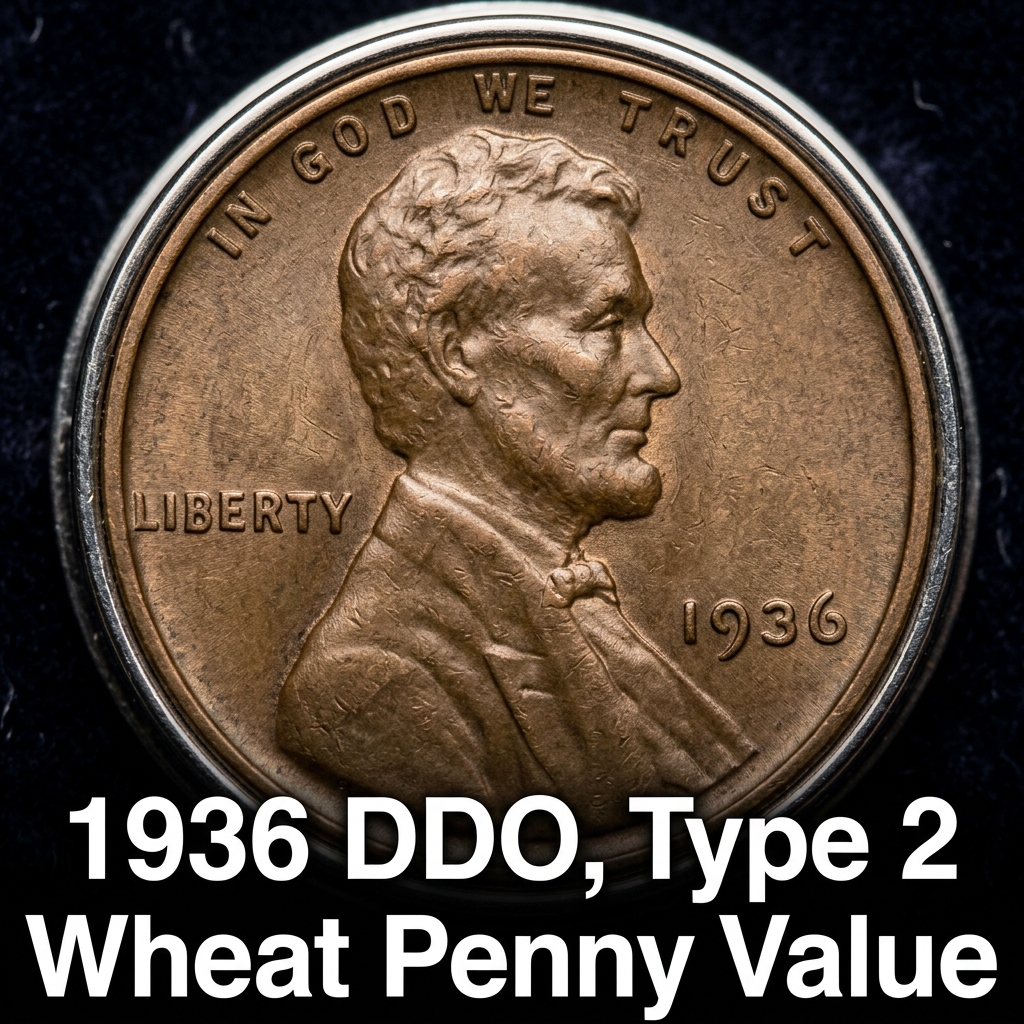
The 1936 DDO Type 2 Wheat Penny is worth anywhere from $15 in heavily worn condition to well over $500 in high mint state grades — and certain certified examples have sold for even more at auction. If you just found one of these coins in an old jar or inherited collection, you’re in the right place to find out what it’s actually worth.
What Makes the 1936 DDO Type 2 So Special
Not all 1936 Lincoln Wheat Pennies are created equal. The DDO stands for “Doubled Die Obverse,” which means the die used to strike the coin had a doubling error during its creation. On the Type 2 variety specifically, you’ll notice the doubling most clearly on the date, the word LIBERTY, and IN GOD WE TRUST.
This isn’t just a trick of the light or normal wear — it’s a true mint error that collectors actively hunt for. Because of this, the 1936 DDO Type 2 commands a significant premium over a regular 1936 Wheat Penny.
If you’re not sure whether your coin has this doubling or not, a good coin identifier and value app can help you compare your coin’s features against known varieties quickly and easily.
How to Tell If You Have the Type 2 DDO
The easiest way to check for the Type 2 doubling is to use a 5x or 10x magnifying loupe and look closely at the obverse (heads side) of the coin. Focus on the date “1936” first — do the numbers appear to have a shadow or second outline behind them?
Next, look at the letters in LIBERTY along the left side of Lincoln’s portrait. On a genuine DDO Type 2, those letters will show clear, separated doubling rather than a blurry or mushed look (which would just be wear).
If you’re seeing what looks like doubled details but you’re still unsure, CoinHix is a great tool to use. The CoinHix app lets you scan your coin and instantly compare it against documented doubled die varieties so you know exactly what you’re holding.
1936 DDO Type 2 Wheat Penny Value by Grade
The condition of your coin plays a huge role in its value. Here’s a general value guide based on grade:
| Grade | Description | Estimated Value |
|---|---|---|
| Good (G-4) | Heavy wear, outline visible | $15 – $30 |
| Fine (F-12) | Moderate wear, some detail | $35 – $75 |
| Extremely Fine (EF-40) | Light wear on high points | $100 – $200 |
| MS-63 (Mint State) | Uncirculated, minor marks | $250 – $400 |
| MS-65+ (Gem Mint) | Near perfect, full luster | $500 and up |
For the most current auction prices and real-time market data, you can check out the latest 1936 Wheat Penny price data in MS-RD condition to see how top-grade examples are performing right now.
What Affects the Value Beyond Grade
Beyond the numerical grade, a few other factors can push your 1936 DDO Type 2 Wheat Penny’s value higher or lower.
Color designation matters a lot for Wheat Pennies. Coins graded Red (RD) are the most valuable because they retain their original copper luster. Red-Brown (RB) coins are worth less, and Brown (BN) coins — the most common — command the lowest premiums in mint state.
Certification also plays a role. A coin graded and slabbed by PCGS or NGC will almost always sell for more than a raw (ungraded) coin of the same quality, simply because buyers trust the authentication. If you believe your coin is the genuine DDO Type 2, getting it certified is usually worth the cost.
You can also explore a detailed breakdown of 1936 penny values across all varieties and mint marks to see how your specific coin stacks up against the broader 1936 Lincoln cent series.
Should You Get It Graded or Sell It Raw
This is a question a lot of everyday collectors ask. The honest answer depends on how confident you are in the coin’s condition and authenticity.
If your coin looks uncirculated or close to it, and you can clearly see the Type 2 doubling, professional grading is absolutely worth considering. The difference between a raw coin selling for $150 and a PCGS-certified MS-64 RD selling for $350 or more can easily cover the grading fee and then some.
If the coin is heavily worn but still shows the DDO features, you can likely sell it raw to a collector or dealer without losing much value. Either way, downloading CoinHix before you make any decisions is a smart move — it gives you instant access to pricing comps, variety identification, and auction history all in one place.
—
FAQ
Q: How do I know if my 1936 penny is a DDO Type 2 and not just a regular one?
A: Look for clear doubling on the date numerals and the word LIBERTY using a magnifying glass. The Type 2 shows distinct, separated doubling rather than blurry wear. A coin identification app or a professional dealer can also help confirm the variety.
Q: Is a 1936 DDO Type 2 Wheat Penny worth getting professionally graded?
A: Yes, especially if it’s in Extremely Fine or better condition. Certified coins almost always sell for a premium over raw coins, and PCGS or NGC authentication protects you and any future buyer from fakes.
Q: Where is the mint mark on a 1936 Wheat Penny?
A: The mint mark (D for Denver or S for San Francisco) is located on the obverse just below the date. Philadelphia-minted coins have no mint mark. Mint mark also affects value — the 1936-S DDO Type 2 is generally rarer and can be worth more than its Philadelphia counterpart.