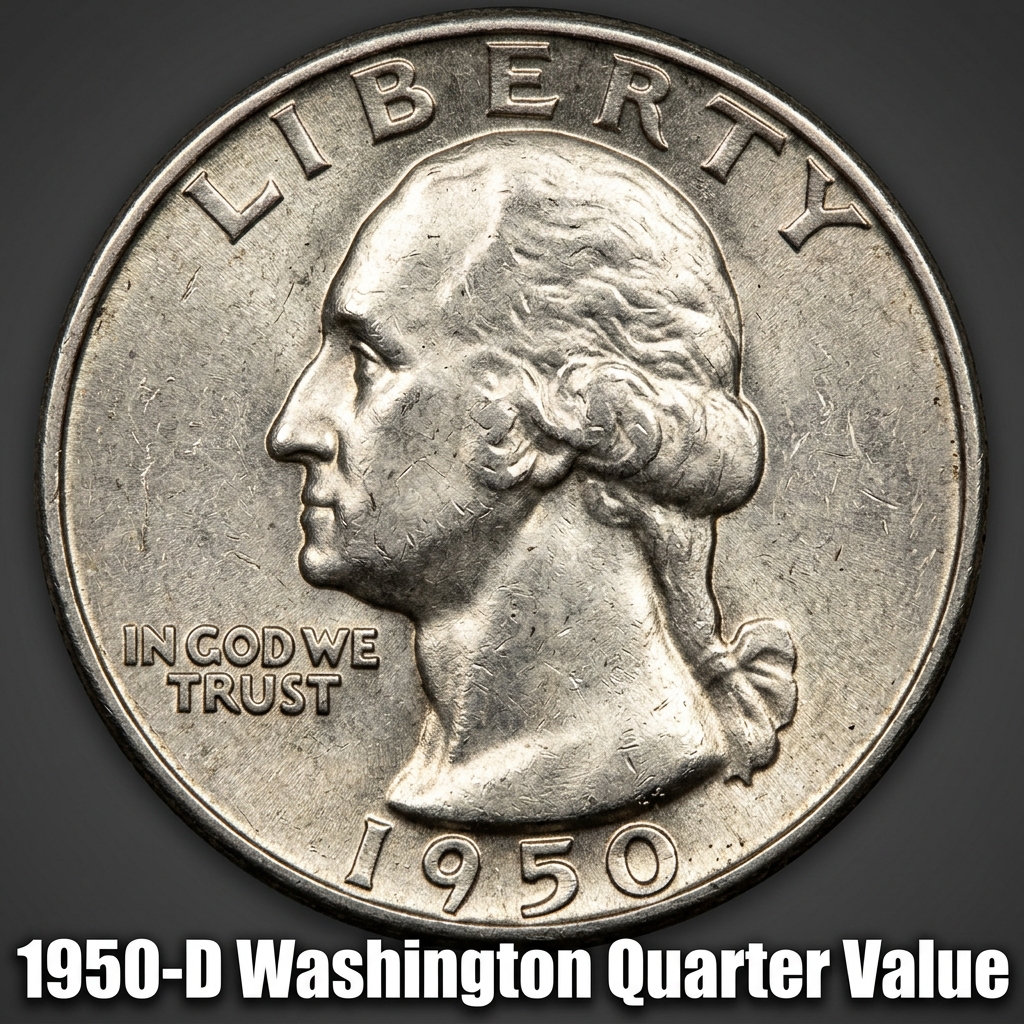
The 1950-D Washington Quarter is worth anywhere from $6 in heavily worn condition to over $200 or more in high mint state grades, with pristine examples occasionally pushing even higher at auction. If you found one of these coins in an old jar, drawer, or inherited coin collection, you’re in luck — this is one of the more interesting mid-century quarters to come across.
What Makes the 1950-D Quarter Special
The 1950-D Washington Quarter was struck at the Denver Mint, indicated by the small “D” mintmark found on the reverse of the coin, just to the right of the ribbon beneath the eagle. In 1950, the Denver Mint produced 21,075,600 of these quarters — a relatively modest mintage compared to some other years in the Washington Quarter series.
That lower production number matters. Fewer coins made means fewer available today, and that scarcity helps drive up collector demand. The coin is made of 90% silver, which alone gives it a baseline melt value well above face value regardless of condition.
If you’re not sure what you’ve got, a coin identifier and value app can help you quickly confirm the date, mintmark, and estimated value right from your phone — no coin shop visit required.
1950-D Washington Quarter Value by Grade
Coin value is almost entirely driven by condition, also called “grade.” A coin that looks like it spent decades in a pocket is worth far less than one that was saved and kept in good shape. Here’s a general breakdown of what the 1950-D quarter is worth across different grades:
| Grade / Condition | Description | Estimated Value |
|---|---|---|
| Good (G-4) | Heavy wear, design visible but flat | $6 – $8 |
| Very Fine (VF-20) | Moderate wear, most detail visible | $8 – $12 |
| Extremely Fine (EF-40) | Light wear on high points only | $14 – $20 |
| About Uncirculated (AU-55) | Slight wear, luster mostly present | $25 – $40 |
| Mint State (MS-63) | No wear, some minor marks | $60 – $100 |
| Mint State (MS-65) | Gem quality, sharp strike and luster | $175 – $250+ |
For the most current pricing, you can check out detailed 1950-D Washington Quarter price data by mint state grade, which is updated regularly based on actual auction results and market activity.
How to Tell What Grade Your Coin Is
You don’t need to be an expert grader to get a rough idea of your coin’s condition. Start by examining Washington’s hair above the ear — this is one of the first areas to show wear. If the hair strands are sharp and distinct, your coin is in better shape. If that area looks flat and smooth, it’s seen some circulation.
Next, check the eagle on the reverse. The feathers on the breast and wings should show detail if the coin is in finer condition. Heavy wear wipes those details away entirely.
Lighting matters too. Use a single light source held at an angle to the coin — this brings out the surface details and helps you spot any scratches or damage that affect value. Keep in mind, cleaning a coin actually lowers its value significantly, so if yours looks a bit dull or toned, that’s usually better than a coin that’s been polished.
CoinHix is a great tool for this step — it walks you through grading basics and compares your coin against reference images, so you get a realistic sense of what you’re working with before you approach a dealer.
Silver Value and the Melt Price Factor
Even a worn 1950-D Washington Quarter has intrinsic value thanks to its silver content. Each Washington Quarter from this era contains 0.1808 troy ounces of pure silver. With silver prices typically ranging between $25 and $32 per troy ounce in recent years, the melt value alone sits around $4.50 to $5.80.
That means even the most beat-up example is still worth more than 25 cents — it’s essentially a small silver investment sitting in your hand. Coins in circulated condition typically trade at a slight premium above melt, while anything in About Uncirculated or better condition is valued almost entirely on numismatic (collector) merit rather than silver content alone.
You can explore a full breakdown of 1950 quarter values including silver melt estimates and collector premiums if you want to understand exactly how both factors are calculated together.
Where to Sell a 1950-D Washington Quarter
If you’ve decided to sell, your options depend on the coin’s condition. For circulated examples worth under $20, a local coin dealer or online platform like eBay is usually your best bet. For coins grading MS-63 or better, it’s worth considering professional grading through PCGS or NGC first — a certified grade can dramatically increase buyer confidence and final sale price.
Before selling anything, use CoinHix to get a quick market-value snapshot and compare what similar coins have recently sold for. This prevents you from walking into a coin shop unprepared or accidentally underselling a genuinely valuable piece.
Estate sales, coin shows, and online coin forums are also solid options if you prefer a more personal selling experience. Just avoid cleaning the coin no matter what — it’s one of the fastest ways to turn a $100 coin into a $20 coin in a collector’s eyes.
FAQ About the 1950-D Washington Quarter
Q: Is the 1950-D Washington Quarter made of silver?
A: Yes. Like all Washington Quarters made before 1965, the 1950-D is struck in 90% silver and 10% copper. It contains 0.1808 troy ounces of pure silver, giving it a melt value well above face value even in worn condition.
Q: How do I find the mintmark on my 1950 quarter?
A: Flip the coin over to the reverse (eagle side). Look just to the right of the base of the eagle, near the ribbon. A “D” there confirms it was made in Denver. No mintmark means it came from the Philadelphia Mint, and an “S” indicates San Francisco.
Q: Can I use an app to find out what my 1950-D quarter is worth?
A: Absolutely. Apps like CoinHix let you identify your coin by photo and get a real-time value estimate based on current market data. It’s one of the easiest ways for everyday people to get a quick, reliable answer without needing to visit a coin dealer right away.