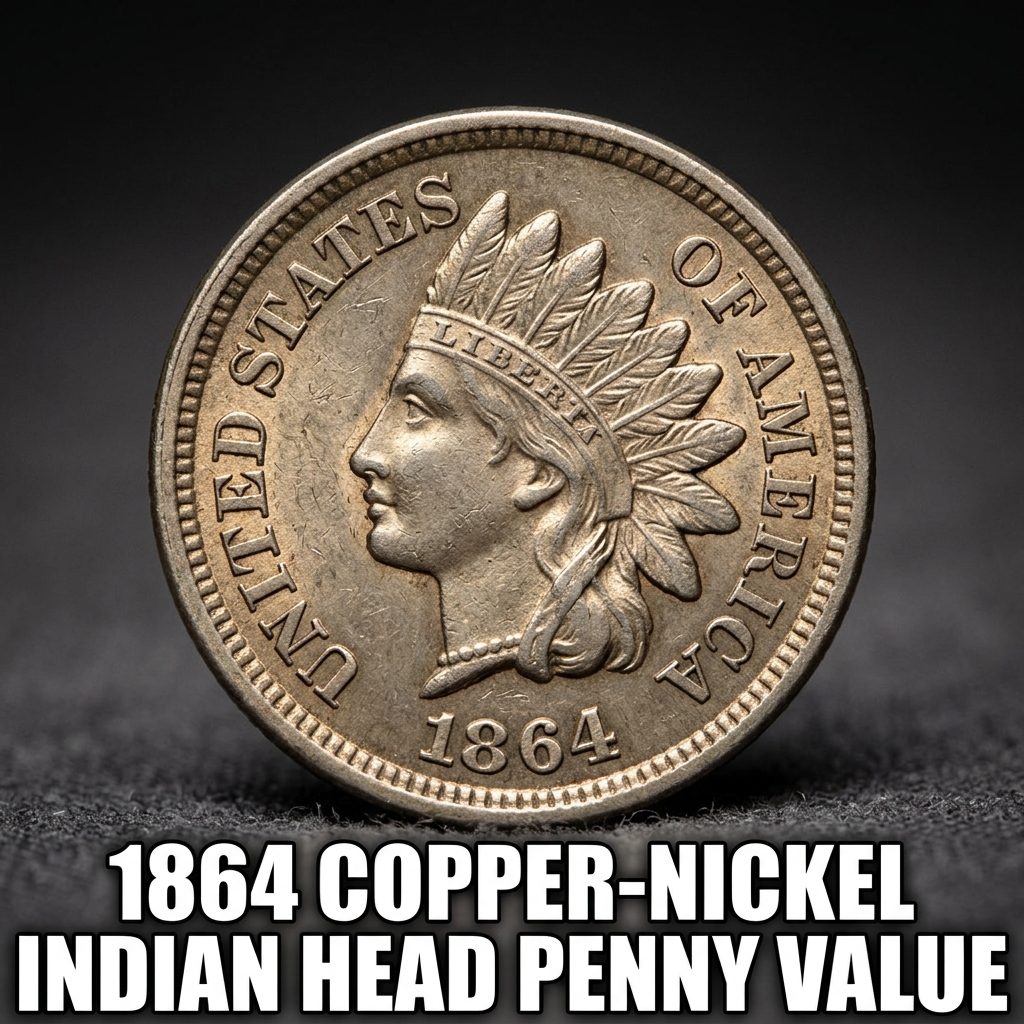
The 1864 Copper-Nickel Indian Head Penny is worth anywhere from $10 in heavily worn condition to over $150 or more in mint state. If you’ve stumbled across one of these coins in an old jar or inherited coin collection, you might be sitting on a genuine piece of American history — and a little bit of money too.
What Makes the 1864 Copper-Nickel Penny Special
The year 1864 is actually a fascinating turning point in United States coinage history. The U.S. Mint produced two very different versions of the Indian Head Penny that year — one made from copper-nickel (the earlier version) and one made from bronze (the later version). This guide focuses on the copper-nickel variety, which was struck early in the year before the metal composition changed.
The copper-nickel cents were made from 88% copper and 12% nickel, giving them a lighter, almost grayish color compared to the warmer bronze coins. This composition had been used since 1859, but 1864 marked its final year. That transition makes the copper-nickel version a historically significant coin that collectors actively seek out.
If you’re not sure which type you have, a good coin identifier and value app can help you quickly figure out the metal composition and variety before you do anything else.
How Much Is the 1864 Copper-Nickel Indian Head Penny Worth
The value of your 1864 Copper-Nickel Indian Head Penny depends heavily on its condition — or what coin collectors call its “grade.” A coin pulled straight from circulation and worn smooth will be worth far less than one that has been carefully preserved for over 150 years.
Here’s a general value table to give you a quick sense of what to expect:
| Grade / Condition | Estimated Value |
|---|---|
| Good (G-4) | $10 – $15 |
| Very Good (VG-8) | $15 – $22 |
| Fine (F-12) | $22 – $35 |
| Very Fine (VF-20) | $35 – $60 |
| Extremely Fine (EF-40) | $65 – $100 |
| About Uncirculated (AU-50) | $100 – $130 |
| Mint State (MS-63) | $150 – $225+ |
For the most up-to-date pricing data, you can check the latest 1864 Indian Head Penny mint state prices and auction records directly. Values can shift based on recent sales and collector demand.
How to Tell the Condition of Your Coin
You don’t need to be an expert to get a rough idea of your coin’s grade. Start by looking at the high points of the design — Lady Liberty’s hair above the ear, the feathers in the headdress, and the ribbon lettering. If those areas are smooth and flat from wear, the coin is likely in Good to Fine condition.
If you can still see sharp detail in the hair curls and feather edges, you might have a Very Fine or better coin. A coin with full original luster — that subtle shine coins get straight from the mint — is a real prize.
One important tip: do not clean your coin. Even gentle scrubbing with a cloth can scratch microscopic lines into the surface, dramatically lowering its value. Collectors and dealers can spot a cleaned coin immediately, and it can cut the price nearly in half.
Is the 1864 Copper-Nickel Penny Rare
The 1864 Copper-Nickel Indian Head Penny had a mintage of approximately 13.7 million coins — not rare in the traditional sense. However, finding one in high grade is another story entirely.
After more than 150 years, most surviving examples are worn from everyday use. High-grade uncirculated specimens are genuinely scarce, and certified MS-65 or higher coins can fetch $400 or more at major auctions. The coin’s historical position as the last year of the copper-nickel composition adds to collector appeal.
If you’re curious how your coin compares to other Indian Head Penny dates and conditions, browsing Indian Head series value information and pricing comparisons can give you helpful context for the broader series.
The Easiest Way to Identify and Value Your Coin
If you’re holding a coin and wondering what it’s worth, the fastest and most convenient approach is to use CoinHix — a free app that helps everyday people identify old coins and get instant value estimates. Just snap a photo, and CoinHix walks you through the coin’s details, grade range, and approximate market value in seconds.
For anyone who finds coins in old collections, estate sales, or tucked away in grandma’s dresser drawer, CoinHix is genuinely one of the most useful tools you can have on your phone. No coin expertise required.
FAQ About the 1864 Copper-Nickel Indian Head Penny
Q: How do I know if my 1864 Indian Head Penny is copper-nickel or bronze?
A: The copper-nickel version has a lighter, slightly grayish tone and is a bit thicker and harder than the bronze version. The bronze coins have a warmer reddish-brown color. You can also weigh them — copper-nickel cents weigh 4.67 grams, while bronze cents weigh 3.11 grams. A digital postal scale can tell you quickly.
Q: Is it worth getting my 1864 Copper-Nickel Indian Head Penny professionally graded?
A: If your coin appears to be in Very Fine condition or better, professional grading by PCGS or NGC is worth considering. Graded coins sell for significantly more and give buyers confidence. For heavily worn examples worth under $25, the grading fee may not be worth it.
Q: Where is the best place to sell a 1864 Copper-Nickel Indian Head Penny?
A: eBay is a popular option with a large buyer base, but established coin dealers and coin shows often yield fair prices without the seller fees. For high-grade examples, major auction houses like Heritage Auctions can maximize your return.