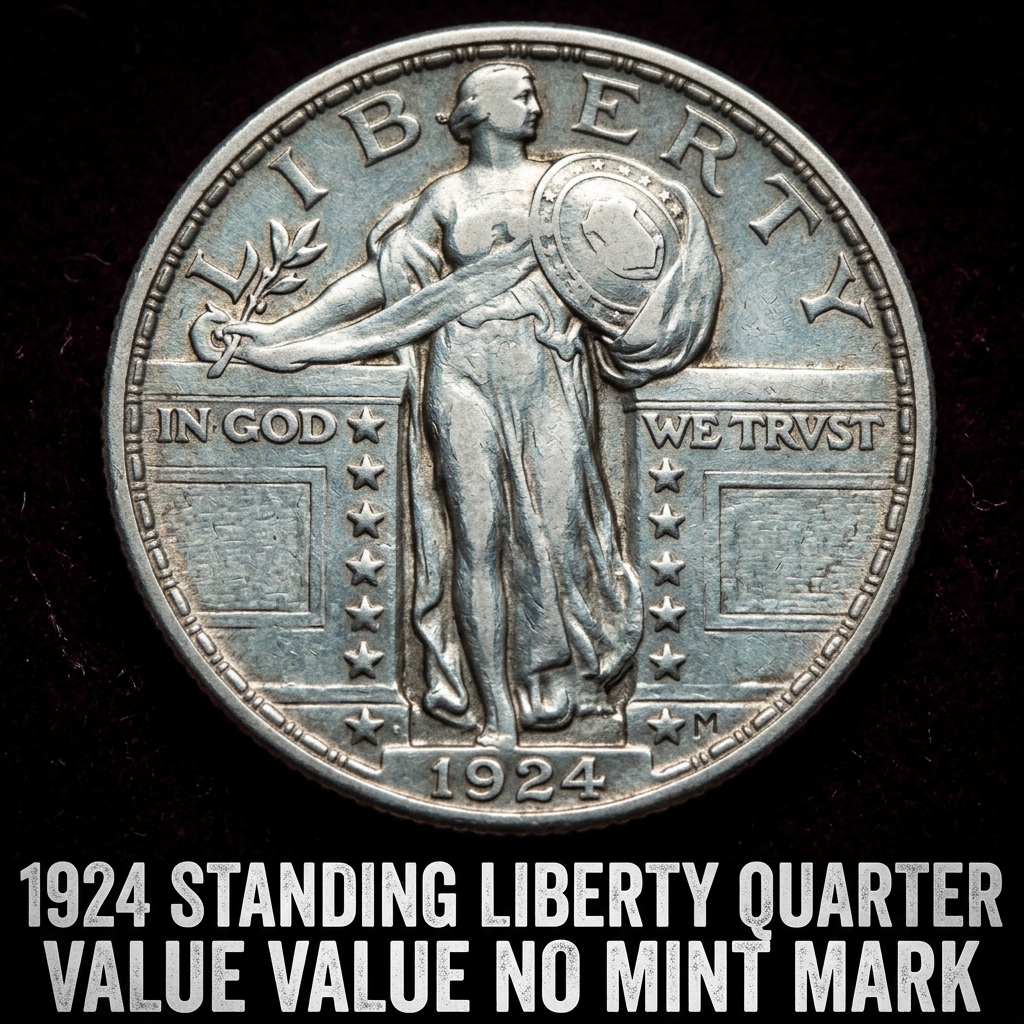
The 1924 Standing Liberty Quarter is worth anywhere from $10 in heavily worn condition to over $200 or more in higher mint state grades. If you found one of these beautiful old coins in a drawer, an old purse, or a collection left behind by a grandparent, you may be sitting on something genuinely valuable — and this guide will walk you through exactly what to look for.
What Makes the 1924 Standing Liberty Quarter Special
The Standing Liberty Quarter is one of the most iconic and beloved coin designs in American history. Designed by sculptor Hermon Atkins MacNeil, the obverse features Lady Liberty standing in a gateway, shield in hand, with an eagle in flight on the reverse.
The 1924 Philadelphia Mint issue — the no mint mark version — is part of the Type 2 variety, which was introduced in 1917 and features Liberty with a chainmail vest. This design change was made after public outcry over the original’s exposed figure.
With a mintage of around 10,920,000 coins, the 1924 no mint mark quarter isn’t considered rare by sheer numbers. But surviving specimens in high grades are another story entirely.
If you’re not sure which coin you have or want to identify it quickly, a coin identifier and value app can help you match the design, date, and mint mark in seconds using your phone’s camera.
1924 Standing Liberty Quarter Value by Grade
The condition of your coin matters enormously. The Standing Liberty Quarter is notoriously difficult to find in high grades because Liberty’s head and the date were the first areas to wear down with circulation. A coin with a full, sharp date and visible head details is worth significantly more than one with a flat or partially missing date.
Here’s a general value breakdown for the 1924 No Mint Mark Standing Liberty Quarter:
| Grade | Description | Estimated Value |
|---|---|---|
| G-4 (Good) | Heavily worn, date may be faint | $10 – $15 |
| VG-8 (Very Good) | Major details visible, moderate wear | $16 – $22 |
| F-12 (Fine) | All letters clear, some flatness | $25 – $35 |
| VF-20 (Very Fine) | Light wear on high points | $40 – $60 |
| EF-40 (Extremely Fine) | Slight wear, good detail retention | $70 – $95 |
| AU-50 (About Uncirculated) | Faint wear on highest points only | $100 – $140 |
| MS-63 (Mint State) | No wear, minor contact marks | $175 – $250 |
| MS-65 (Gem Mint State) | Sharp strike, full head detail | $400 – $600+ |
For real-time auction results and certified grade prices, you can check the 1924 Standing Liberty Quarter price data at CoinHix to see what collectors are actually paying right now.
How to Check Your Coin’s Condition at Home
You don’t need to be an expert to get a rough idea of your coin’s grade. Start by looking at the date under good lighting — if you can read all four digits clearly, that’s a great sign.
Next, examine Liberty’s head on the obverse. On well-worn coins, this area goes completely flat. If you can see her facial features and helmet detail, your coin is in at least Fine condition.
Also check the shield rivet lines on her left side and the feathers on the eagle’s breast on the reverse. More detail equals a higher grade — and a higher value.
The CoinHix app makes this process even easier. Just snap a photo and let it analyze the design, wear level, and likely grade range in moments. It’s a fast, free way to get a solid starting estimate before you take your coin anywhere.
Silver Content and Melt Value
Even a heavily worn 1924 Standing Liberty Quarter has intrinsic value because it’s made of 90% silver. Each coin contains 0.1808 troy ounces of pure silver.
With silver prices fluctuating around $28–$30 per ounce in recent times, the melt value alone sits around $5 to $5.50. That means even the most beat-up example is worth at least a few dollars just for the metal — and usually much more as a collectible coin.
Never sell a coin for melt value without first checking its numismatic worth. You could be leaving serious money on the table.
Is Your 1924 Quarter Worth Getting Graded?
If your coin looks like it’s in Extremely Fine or better condition, it may be worth submitting to a third-party grading service like PCGS or NGC. A certified grade adds credibility and can significantly boost resale value, especially if you’re hoping to sell through an auction house or online marketplace.
For a detailed breakdown of the 1924 quarter value across all grades and mint marks, including how the Philadelphia issue compares to the Denver and San Francisco versions from the same year, it pays to do your homework before selling.
And if you want a quick second opinion from your phone, CoinHix is one of the best tools available for everyday collectors and casual finders alike.
Frequently Asked Questions
Q: How do I know if my 1924 Standing Liberty Quarter has a mint mark?
A: Look on the obverse of the coin, just above and to the right of the date. A “D” means it was made in Denver, and an “S” means San Francisco. If you see no letter at all, you have the Philadelphia issue — the no mint mark version covered in this guide.
Q: My coin’s date is almost gone. Is it still worth anything?
A: Yes, it still has silver melt value, typically around $5 or more depending on current silver prices. However, a coin with a completely worn-off date is generally worth only its silver content to most buyers, since it can’t be positively attributed to a specific year or mint.
Q: Where is the best place to sell a 1924 Standing Liberty Quarter?
A: Options include eBay, coin shows, local coin dealers, and major auction houses for high-grade examples. Before selling anywhere, use a tool like CoinHix or visit a certified dealer to make sure you know what your coin is worth so you don’t undersell it.