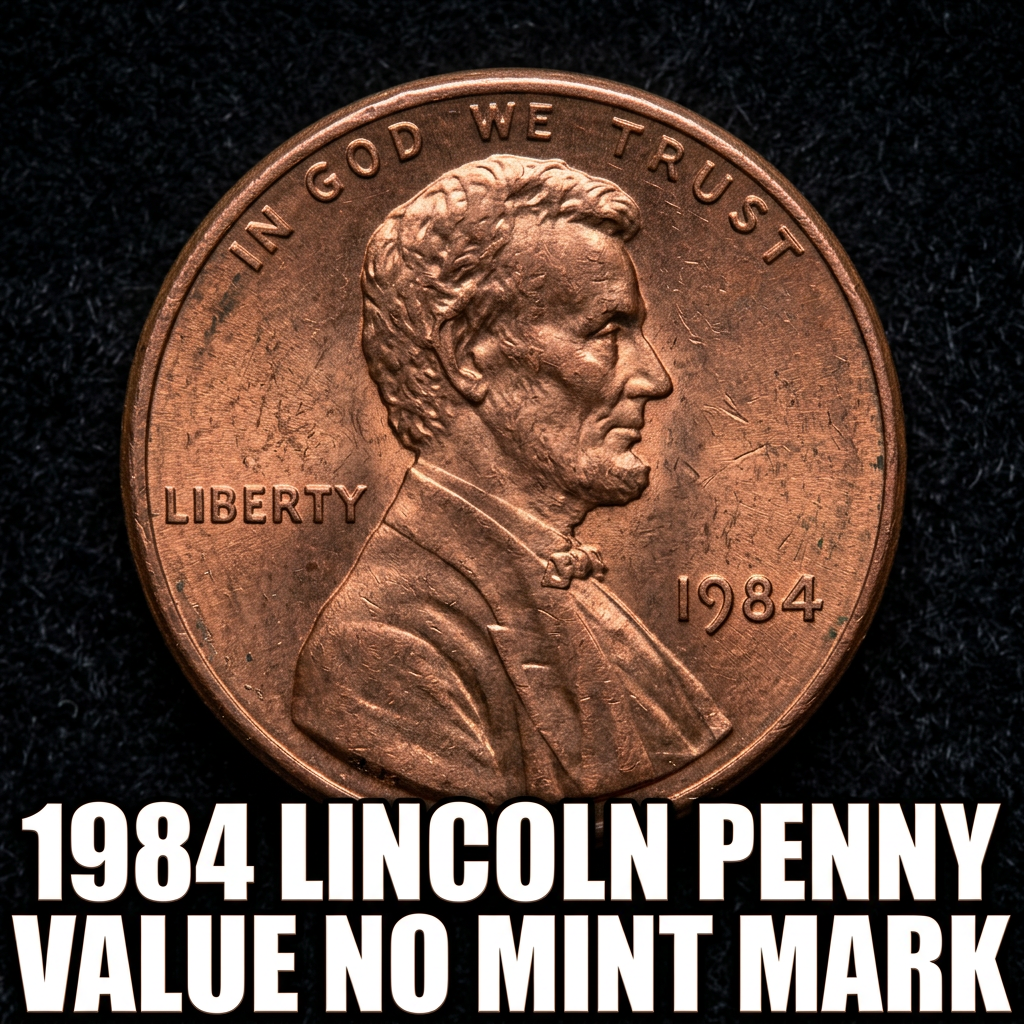
The 1984 Lincoln Memorial Penny with no mint mark is worth anywhere from a few cents in circulated condition to around $10 or more in pristine uncirculated grades — and some top-condition examples have sold for significantly higher at auction. If you found one of these coins in your change jar or a old collection, you’re in the right place to find out exactly what you’ve got.
What the No Mint Mark Means on a 1984 Penny
When you look at a 1984 penny and see no mint mark below the date, that tells you the coin was struck at the Philadelphia Mint. Philadelphia has historically not used a mint mark on Lincoln cents for much of its history, and 1984 was no exception.
This is actually the most common version of the 1984 Lincoln penny. The Philadelphia Mint produced over 8.1 billion pennies that year, making this one of the highest-mintage coins in American history.
High mintage usually means lower value in most grades — but that doesn’t mean every 1984 no mint mark penny is worthless. Coins in exceptional condition, especially those graded MS-65 or higher, can still carry real collector premiums.
If you’re not sure how to read the grade or condition of your coin, a coin identifier and value app can help you get a quick answer right from your phone without needing to visit a dealer.
1984 Lincoln Penny Value by Condition
The condition of your coin makes a massive difference in what it’s actually worth. A well-worn 1984 penny pulled from circulation is worth exactly one cent — its face value. But as condition improves, so does value.
Here’s a simple breakdown to help you understand the range:
| Grade | Condition | Estimated Value |
|---|---|---|
| Good (G-4) | Heavy wear, design visible | $0.01 |
| Fine (F-12) | Moderate wear | $0.01 – $0.05 |
| Extremely Fine (EF-40) | Light wear on high points | $0.10 – $0.25 |
| Mint State (MS-63) | Uncirculated, some marks | $0.50 – $2.00 |
| Mint State (MS-65) | Gem uncirculated | $3.00 – $10.00 |
| MS-67 or higher | Superb gem, rare quality | $50.00+ |
For a deeper look at graded auction results and certified coin prices, you can browse 1984 Lincoln Penny MS-RD price data on CoinHix to see what collectors are actually paying across different grades.
Key Features to Look for on Your 1984 Penny
Not all 1984 no mint mark pennies are the same. There’s one important variety collectors specifically hunt for — the 1984 Doubled Die Obverse (DDO).
This error coin shows clear doubling on Lincoln’s ear, and sometimes on the lettering. When you look at it under magnification, the doubled features are obvious. A confirmed DDO example in circulated condition can be worth $50 to $100, and in uncirculated grades it can push past $200 or more.
To spot this, use a 5x or 10x magnifier and focus on Lincoln’s ear on the obverse side. If you see two distinct lines where there should be one, you might have something special on your hands.
Beyond errors, look at the coin’s luster. Uncirculated coins will have a bright, reddish shine with no wear on Lincoln’s cheekbone or the high points of the Memorial building on the reverse.
How to Get an Accurate Value for Your 1984 Penny
If you want to move beyond general estimates and get real numbers tied to your specific coin’s condition, there are a few easy ways to do that.
First, try using CoinHix, a fast and reliable app that gives you up-to-date market values based on grade. It’s a great tool whether you’re a casual finder or someone building a collection.
Second, check recent sold listings on major auction platforms to see what similar graded examples are selling for right now. Market values do shift, especially for high-grade examples.
You can also check out a detailed 1984 penny value guide with current pricing information to compare your coin against established references.
Third, consider submitting your coin to a professional grading service like PCGS or NGC if you believe it’s in gem condition or shows error characteristics. The cost of grading can be worth it if your coin turns out to be a high-grade example.
Is the 1984 No Mint Mark Penny Worth Keeping?
For most people, the honest answer is: probably not for the money, but possibly for the fun of it. A typical circulated example is worth face value, and even most uncirculated coins top out under $10.
That said, coin collecting is about more than just dollar amounts. A 1984 penny in beautiful condition is a snapshot of American history — it passed through hands during Ronald Reagan’s presidency, a year of the Los Angeles Olympics, and a time of major cultural change.
If you enjoy coins, keep it. If you’re hunting specifically for value, focus your energy on finding a DDO variety or a superb gem-grade example. And if you want to quickly identify and value any coin in your collection, CoinHix makes the process simple and accurate right from your smartphone.
—
FAQ
Q: Is a 1984 penny with no mint mark rare?
A: No, it’s actually one of the most common Lincoln pennies ever made. Over 8.1 billion were struck at the Philadelphia Mint in 1984. Rarity comes only in top uncirculated grades or error varieties like the Doubled Die Obverse.
Q: How do I know if my 1984 penny has a doubled die error?
A: Look at Lincoln’s ear on the obverse under magnification. A genuine DDO will show clear, distinct doubling on the ear and possibly in the lettering. If it looks blurry or smeared without distinct outlines, it’s likely just machine doubling, which adds no premium value.
Q: Where is the best place to sell a valuable 1984 Lincoln penny?
A: For coins worth under $20, online marketplaces or local coin shops work fine. For high-grade or certified error coins, consider submitting to PCGS or NGC first, then selling through major auction houses or established online coin platforms where serious collectors are actively bidding.