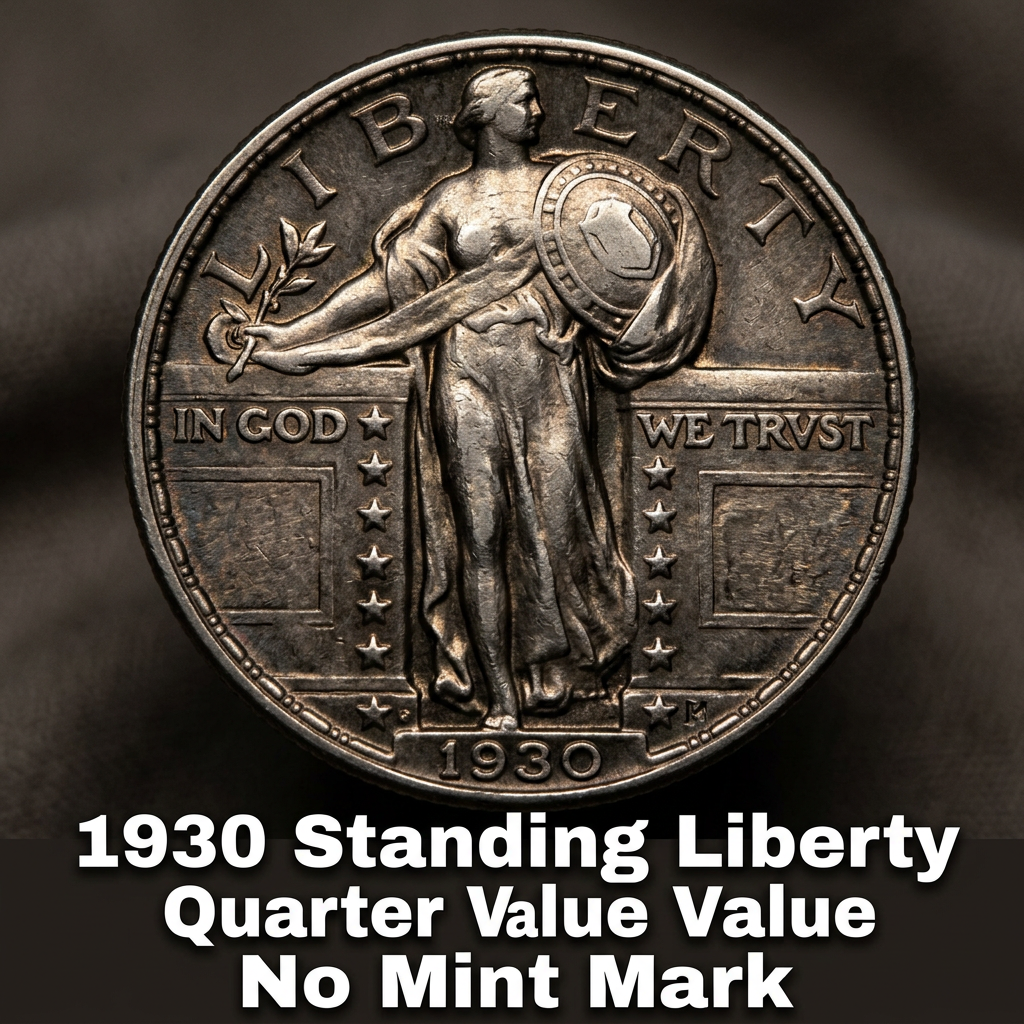
The 1930 Standing Liberty Quarter is worth anywhere from $6 to $15 in heavily worn condition, but well-preserved examples can fetch $30 to $100 or more — and top-grade mint state coins have sold for several hundred dollars at auction. If you found one of these old quarters in a drawer or inherited collection, you’re holding a piece of American history that could be worth real money.
What Makes the 1930 Standing Liberty Quarter Special
The Standing Liberty Quarter was minted from 1916 to 1930, making the 1930 issue the final year of this classic design. Designed by Hermon Atkins MacNeil, the coin features a bold image of Lady Liberty standing in a gateway, shield in hand — a symbol of America’s readiness to defend peace.
The 1930 Philadelphia issue carries no mint mark, meaning it was struck at the main U.S. Mint in Philadelphia. A total of 5,632,000 coins were produced that year, which is a relatively modest mintage. This makes it more desirable to collectors than high-mintage issues.
If you’re not sure which coin you have or want to quickly identify it, a coin identifier and value app can help you confirm the date, mint mark, and estimated value in seconds — no coin experience required.
How Much Is a 1930 Standing Liberty Quarter Worth Without a Mint Mark
The value of your 1930 Standing Liberty Quarter depends heavily on its condition — called “grade” in the coin world. Coins that have been in circulation for decades will show heavy wear on Liberty’s head and the shield, which brings the value down. Coins that were saved early and show sharp detail are much more valuable.
Here’s a general value breakdown:
| Grade / Condition | Estimated Value |
|---|---|
| Good (G-4) | $6 – $9 |
| Very Good (VG-8) | $9 – $14 |
| Fine (F-12) | $14 – $22 |
| Very Fine (VF-20) | $22 – $35 |
| Extremely Fine (EF-40) | $35 – $65 |
| About Uncirculated (AU-50) | $65 – $100 |
| Mint State (MS-63) | $150 – $300+ |
For the most up-to-date pricing based on recent auction results, you can check the 1930 Standing Liberty Quarter price data across multiple mint state grades to see exactly how the market is trending right now.
What to Look for When Checking Your Coin’s Condition
One of the first things collectors check on Standing Liberty Quarters is the date. On many worn examples, the date was the first detail to disappear entirely because it sat on a raised area of the design. If you can clearly read “1930” on your coin, that’s already a positive sign.
Next, look at Liberty’s head and the rivets on the shield. In well-worn coins, these details become flat and merged together. In higher-grade examples, you can see individual rivets and the detail in Liberty’s hair and face clearly defined.
Also flip the coin over to examine the eagle. In circulated examples, the feathers on the eagle’s breast will show wear. A coin with full, sharp breast feathers is considered a “Full Head” (FH) variety — and these carry a significant premium in value.
CoinHix is a great tool for tracking these grade-based price differences. The app shows real-time auction data so you always know what the market is actually paying.
Silver Content and Melt Value of the 1930 Quarter
Even if your 1930 Standing Liberty Quarter is too worn to be worth much as a collectible, it still has intrinsic silver value. These coins are made of 90% silver and contain 0.1808 troy ounces of silver per coin.
With silver prices fluctuating around $28–$30 per ounce in recent times, the melt value of one of these quarters sits around $5.00 to $5.50. This means no matter the condition, your coin is always worth more than face value just for its metal content.
That said, most collectors and dealers will pay above melt for any recognizable 1930 quarter, especially one with a readable date and decent detail. So even a heavily worn example is worth holding onto.
For a full breakdown of the 1930 quarter’s value across all grades and mint marks, this resource gives a comprehensive side-by-side comparison that’s easy to understand.
How to Find Out What Your Coin Is Really Worth
If you want a quick answer without spending hours researching, the easiest approach is to photograph your coin under good lighting and use CoinHix to get an instant value estimate. The app uses real auction records and grading data to give you an accurate current market price — not outdated price guide numbers.
You can also bring your coin to a local coin dealer for a free verbal appraisal, or submit it to PCGS or NGC for professional grading if you believe you have a high-grade example. A professionally graded coin in a sealed holder always sells for more at auction.
—
FAQ
Q: How do I know if my 1930 Standing Liberty Quarter has no mint mark?
A: Look on the obverse (front) of the coin, to the right of the date area. Philadelphia-minted coins have no mint mark at all. If you see an “S,” your coin was made in San Francisco and may have different value.
Q: Is a worn 1930 Standing Liberty Quarter worth keeping?
A: Yes. Even heavily worn coins are worth several dollars above face value for their silver content alone. Any coin with a clear date and some design detail is collectible and worth more than melt.
Q: What is the most valuable version of the 1930 Standing Liberty Quarter?
A: The highest-value examples are Full Head (FH) designated coins in mint state condition. A 1930 No Mint Mark quarter graded MS-65 FH can sell for $500 to well over $1,000 at major coin auctions.