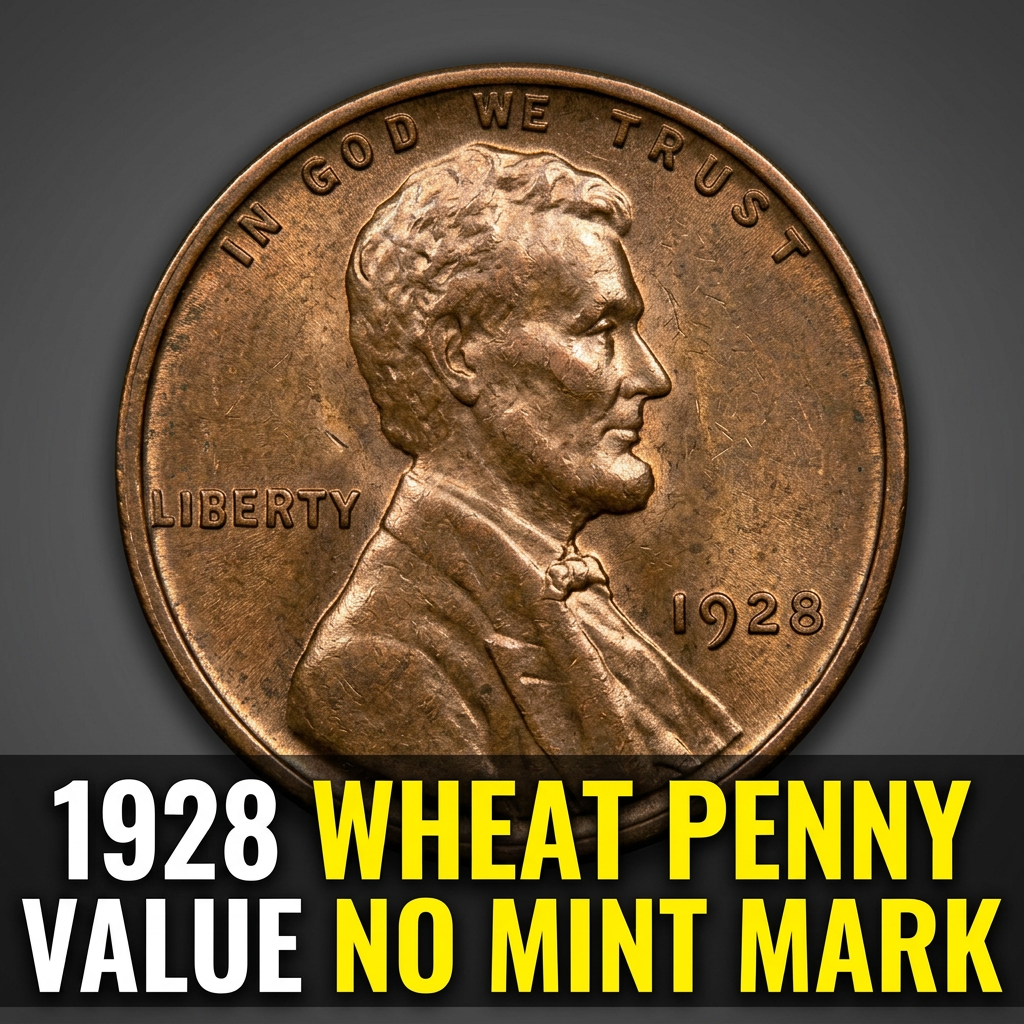
The 1928 Wheat Penny with no mint mark is worth anywhere from $0.15 in heavily worn condition to over $50 or more in high-grade mint state. If you pulled one of these old Lincoln cents out of a drawer or jar, you’re in the right place to find out exactly what it might be worth.
What Is the 1928 No Mint Mark Wheat Penny?
The 1928 Lincoln Wheat Penny without a mint mark was struck at the Philadelphia Mint. During this era, Philadelphia did not use a mint mark on its coins, so a blank space below the date is actually your clue that it came from Philly.
Over 134 million of these pennies were produced in 1928, making them relatively common among coin collectors. However, that doesn’t mean they’re worthless — condition plays a huge role in determining value.
If you’ve ever wished you had a quick way to identify old coins and look up their values, a coin identifier and value app can save you a lot of time and guesswork. Just snap a photo and get instant results right from your phone.
How Much Is the 1928 Wheat Penny Worth by Grade?
Coin value is heavily tied to condition, which collectors call “grade.” A coin that looks shiny and sharp is worth far more than one that’s been rubbed smooth from years of handling.
Here’s a general value breakdown for the 1928 no mint mark Wheat Penny:
| Grade / Condition | Estimated Value |
|---|---|
| Good (G-4) | $0.15 – $0.35 |
| Very Good (VG-8) | $0.50 – $1.00 |
| Fine (F-12) | $1.00 – $2.00 |
| Very Fine (VF-20) | $2.00 – $5.00 |
| Extremely Fine (EF-40) | $5.00 – $12.00 |
| About Uncirculated (AU-55) | $15.00 – $25.00 |
| Mint State (MS-63 and up) | $30.00 – $60.00+ |
For more precise and up-to-date figures, you can check the 1928 Wheat Penny MS Red price data on CoinHix to see how mint state examples with original red color are trending in today’s market.
What Makes a 1928 Wheat Penny More Valuable?
Not every 1928 penny is created equal. A few key factors can push the value significantly higher.
Color is one of the biggest ones. Copper coins are graded not just by wear but also by their original color. A coin described as “Red” (RD) has retained most of its original copper luster and is worth more than one labeled “Brown” (BN), which has darkened over time.
Strike quality also matters. Some coins from this era were struck with more detail than others. A well-struck coin with sharp Lincoln portrait details and clear wheat stalks on the reverse will always attract more collector interest.
Errors and varieties can make a dramatic difference too. If your coin shows doubling in the lettering or date, that could be a doubled die variety — and those can be worth much more than a regular issue. Always examine your coins under a loupe or magnifying glass before selling.
CoinHix is a great resource if you want to track market prices and auction results for coins like this one. It gives you real data so you’re never guessing when it comes to value.
The 1928 Penny Compared to Other Mint Marks
In 1928, three mints produced Lincoln Wheat Pennies: Philadelphia (no mint mark), Denver (D), and San Francisco (S). The Philadelphia issue is actually the most common of the three.
The 1928-S is the scarcest, with only about 17 million made. In circulated grades it’s worth a few dollars more, and in top mint state grades it can bring serious premiums.
The 1928-D sits in the middle with roughly 31 million coins struck. It’s worth a bit more than the no mint mark version across most grades.
If you’re not sure which version you have, look just below the date on the front of the coin. A “D” means Denver, an “S” means San Francisco, and nothing at all means Philadelphia.
For a full breakdown of all three 1928 penny varieties, the complete 1928 penny value guide at CoinValueApp walks you through each mint mark with detailed pricing charts and grading tips.
Should You Get Your 1928 Wheat Penny Graded?
If your coin looks like it’s in better-than-average condition — still showing clear details, some original shine, and no major damage — it might be worth getting professionally graded by a service like PCGS or NGC.
A certified grade gives buyers confidence and can significantly increase what collectors are willing to pay.
That said, for most circulated examples worth a few dollars, the cost of professional grading won’t make financial sense. Use CoinHix or another trusted price guide to estimate value first, and then decide if grading is worth the investment.
—
Frequently Asked Questions
Q: How do I know if my 1928 penny has no mint mark?
A: Look at the front (obverse) of the coin just below the date. If there’s no letter there — no “D” and no “S” — then it was made at the Philadelphia Mint and has no mint mark. That’s completely normal for Philadelphia coins from this period.
Q: Is a 1928 Wheat Penny rare?
A: Not particularly. With over 134 million struck, the 1928 no mint mark penny is one of the more common Wheat cents. However, coins in high grades with original red color are genuinely scarce and collectible.
Q: What’s the most ever paid for a 1928 Wheat Penny?
A: Top-grade examples in MS-66 or MS-67 Red have sold at auction for hundreds of dollars. The record prices typically go to coins with exceptional eye appeal and no post-mint damage. Most everyday examples are worth under $10, but premium specimens can surprise you.