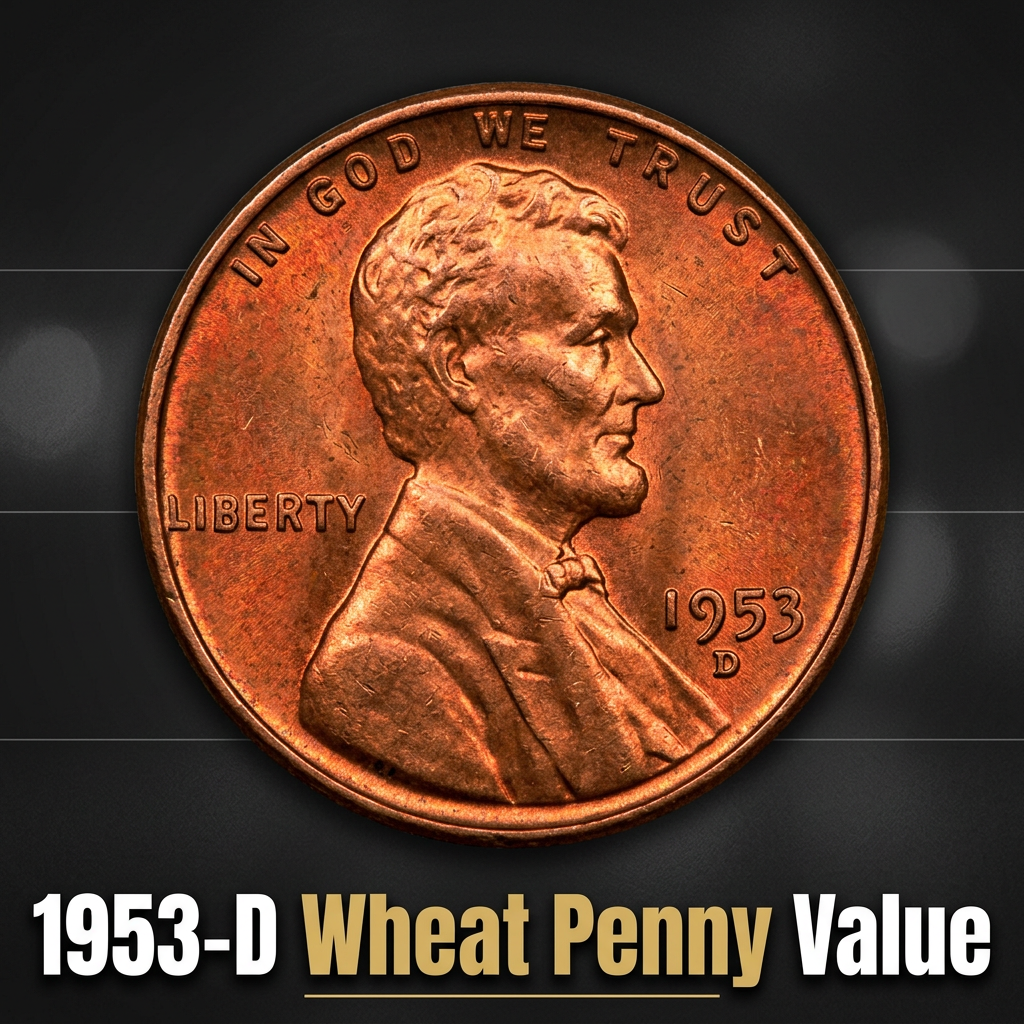
The 1953-D Wheat Penny is worth anywhere from $0.10 in heavily worn condition to over $10 in well-preserved circulated grades — and in mint state, certified examples can fetch $25 or more. If you found one of these old Lincoln cents in a jar, a drawer, or an inherited coin collection, you’re in the right place to find out exactly what it’s worth.
What Is the 1953-D Wheat Penny?
The 1953-D Wheat Penny was struck at the Denver Mint and carries a small “D” mintmark on the obverse, just below the date. It’s part of the Lincoln Wheat Cent series, which ran from 1909 to 1958. These coins are nicknamed “Wheat Pennies” because of the two stalks of wheat that frame the word “ONE CENT” on the reverse.
In 1953, the Denver Mint produced over 700 million of these cents — so they’re not rare by any stretch. But that doesn’t mean they’re worthless. Condition matters enormously when it comes to coin values, and even a common date like the 1953-D can be worth good money if it’s been well preserved.
If you’re not sure how to tell a Denver Mint coin from a Philadelphia issue, or just want a quick way to identify old pennies, a coin identifier and value app can save you a lot of time and guesswork.
1953-D Wheat Penny Value by Grade
Like all collectible coins, the 1953-D Wheat Penny is valued based on its grade — a numerical score from 1 to 70 that reflects its level of wear and preservation. Coins that have been handled a lot show flat, worn details, while uncirculated examples look nearly as sharp as the day they left the mint.
Here’s a general value breakdown for the 1953-D Wheat Penny:
| Grade | Description | Estimated Value |
|---|---|---|
| Good (G-4) | Heavy wear, outline visible | $0.10 – $0.25 |
| Fine (F-12) | Moderate wear, details clear | $0.25 – $0.50 |
| Extremely Fine (EF-40) | Light wear on high points | $1.00 – $3.00 |
| About Uncirculated (AU-55) | Slight wear, mostly original luster | $3.00 – $6.00 |
| MS-63 (Uncirculated) | No wear, some bag marks | $8.00 – $15.00 |
| MS-65 Red (Gem) | Bright red luster, minimal marks | $25.00 – $50.00+ |
For deeper auction results and certified 1953-D Wheat Penny price data in MS Red grades, it’s worth checking dedicated coin pricing databases that track real sales over time.
What Makes Some 1953-D Pennies Worth More?
While most 1953-D Wheat Pennies you find in pocket change are worth just a few cents, certain factors can push the value higher.
Color designation is one of the biggest factors in uncirculated coins. Copper cents are graded as Red (RD), Red-Brown (RB), or Brown (BN). A coin that retains most of its original bright red color is significantly more valuable than one that has turned brown over time.
Striking quality and eye appeal also matter. Some 1953-D cents came out with sharper details than others, and a coin with strong wheat stalk detail on the reverse and a well-struck Lincoln portrait will always command a premium with collectors.
Error coins are another story entirely. Although no major errors are widely documented for the 1953-D specifically, doubled die varieties and off-center strikes occasionally show up. If your coin looks unusual in any way — letters or numbers that appear doubled, a design that seems shifted — it’s worth having it examined by a specialist.
How to Check Your 1953-D Penny’s Value
The easiest way to get a quick value estimate is to compare your coin to grading images online or use a dedicated tool. CoinHix is a great resource for tracking real market prices on wheat pennies and other U.S. coins. Whether you’re a first-time finder or a seasoned collector, CoinHix makes it easy to see what coins like yours have actually sold for at recent auctions.
You can also explore a full breakdown of 1953 penny values across all mint marks and grades to compare how the Denver issue stacks up against its Philadelphia counterpart.
If you want to go further, CoinHix and similar apps let you scan or search coins by year, mintmark, and condition — giving you a fast, reliable starting point before you decide whether to hold, sell, or get a coin professionally graded.
Is the 1953-D Wheat Penny Worth Keeping?
For most people, a circulated 1953-D Wheat Penny in average condition is a fun piece of history but not a financial windfall. However, if your coin shows minimal wear, retains a reddish copper color, and has no cleaning or damage, it could easily be worth $10 to $50 or more.
Getting a coin professionally graded by PCGS or NGC is usually worth it only if you believe your coin is Mint State and red. Grading fees typically start around $30–$40 per coin, so it only makes financial sense for nicer examples.
Either way, Wheat Pennies are one of the most popular areas of U.S. coin collecting — they’re affordable, historically significant, and widely recognized. Even if yours isn’t a treasure, it’s still a 70-year-old piece of American history that’s worth knowing about.
—
Frequently Asked Questions
Q: How do I know if my penny is the 1953-D version?
A: Look just below the date on the front of the coin (the obverse). If you see a small letter “D,” your penny was made at the Denver Mint. No mintmark means it was made in Philadelphia, and an “S” means San Francisco.
Q: Is a 1953-D Wheat Penny rare?
A: No, it’s one of the more common Wheat Pennies. The Denver Mint produced over 700 million of them. However, finding one in gem uncirculated condition with full red color is genuinely uncommon and collectible.
Q: Should I clean my 1953-D Wheat Penny before selling it?
A: Never clean a coin you plan to sell or get graded. Cleaning removes the original surface and drastically lowers its value in the eyes of collectors and grading services. Even a dirty coin with original patina is worth more than a polished one.