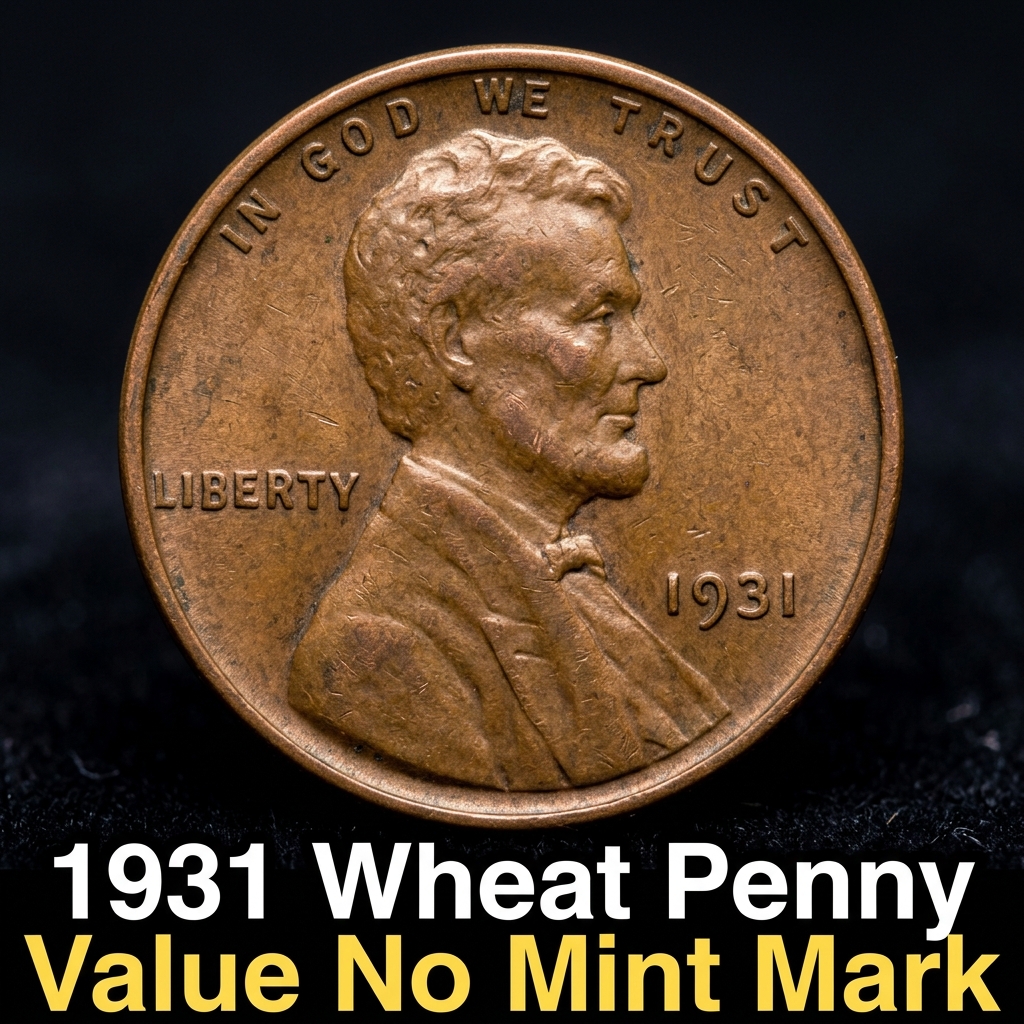
The 1931 Philadelphia Wheat Penny (no mint mark) is worth anywhere from $0.50 in heavily worn condition to over $100 or more in uncirculated mint state grades. If you found one of these old Lincoln cents in a jar or coin roll, you’re in the right place — let’s break down exactly what it’s worth and why.
What Makes the 1931 No Mint Mark Wheat Penny Special
The 1931 Lincoln Wheat Penny without a mint mark was struck at the Philadelphia Mint. During the Great Depression, the U.S. Mint drastically reduced coin production to cut costs, and 1931 was no exception. The Philadelphia Mint produced just 19,396,000 pennies that year — a significant drop compared to earlier years of the decade.
That lower mintage is one of the key reasons collectors pay attention to this coin. While it’s not a rare coin by strict standards, it’s far less common than Wheat Pennies from the 1940s and 1950s.
If you’re not sure which mint made your penny, look at the back of the coin just below the wheat stalks and above “ONE CENT.” No letter means Philadelphia. A small “D” means Denver, and an “S” means San Francisco — and the 1931-S is one of the most valuable Wheat Pennies ever made.
Using a coin identifier and value app can help you quickly figure out your coin’s mint mark and get an instant value estimate right from your phone.
1931 Wheat Penny Value No Mint Mark by Grade
The condition of your coin — called its “grade” — makes a huge difference in what it’s worth. A coin that’s been in circulation for decades will show wear on Lincoln’s cheek, hair, and the wheat stalks on the back. A coin that was saved early and never used can look almost new.
Here’s a general value breakdown for the 1931 no mint mark Wheat Penny:
| Grade / Condition | Description | Estimated Value |
|---|---|---|
| Good (G-4) | Heavy wear, major details visible | $0.50 – $1.00 |
| Fine (F-12) | Moderate wear, clearer lettering | $1.50 – $3.00 |
| Extremely Fine (EF-40) | Light wear on high points | $8 – $15 |
| About Uncirculated (AU-55) | Slight wear, mostly sharp | $20 – $35 |
| MS-63 (Uncirculated) | No wear, some bag marks | $40 – $60 |
| MS-65 Red (Gem Uncirculated) | Bright red luster, very few marks | $100 – $150+ |
For the most up-to-date auction results and certified coin prices, you can check out the 1931 Wheat Penny MS Red price data on CoinHix to see what these coins are actually selling for right now. CoinHix tracks real market sales so you get accurate, current numbers — not guesses.
How to Tell If Your 1931 Penny Is Worth More
Color plays a big role in uncirculated coin values. Wheat Pennies graded “Red” (RD) command the highest prices because they’ve kept their original copper color. “Red-Brown” (RB) coins are worth a little less, and “Brown” (BN) coins are worth the least among uncirculated examples.
Look at your coin under good lighting. Does it still have any orange-red shine? If so, that’s a great sign.
Also check for any errors or varieties. The 1931 Philadelphia issue doesn’t have a major well-known doubled die like some other years, but strike quality and die condition can vary. Any doubling you notice in the lettering or Lincoln’s portrait could add value.
If you want a more detailed look at how this coin grades and what the full 1931 penny value range looks like across all conditions and mint marks, that resource breaks it down clearly and is worth bookmarking.
Should You Get Your 1931 No Mint Mark Penny Graded
If your coin looks uncirculated or close to it, professional grading by PCGS or NGC can significantly increase its resale value and buyer confidence. Grading fees typically start around $20–$30 per coin, so it only makes financial sense if the coin appears to be in Mint State condition.
For circulated examples worth just a few dollars, grading doesn’t make economic sense. Clean storage in a coin flip or album will protect it just fine.
Not sure where to start? CoinHix is a great resource not just for prices, but for understanding what collectors look for in Lincoln Wheat Pennies. And if you want to identify and value multiple coins at once, the CoinHix app makes it easy to scan, identify, and track your entire collection from your phone.
Frequently Asked Questions
Q: How do I know if my 1931 penny is from Philadelphia?
A: If there is no mint mark on the reverse side of the coin (below the wheat stalks, above “ONE CENT”), it was made at the Philadelphia Mint. That’s your 1931 no mint mark penny.
Q: Is a 1931 Wheat Penny rare?
A: It’s not considered rare, but its mintage of about 19.3 million is relatively low for a Philadelphia Wheat Penny. It’s more of a semi-key date that collectors actively look for, especially in higher grades.
Q: Where is the best place to sell a 1931 Wheat Penny?
A: eBay, coin shows, and local coin dealers are all good options. For uncirculated examples, consider submitting to PCGS or NGC first to maximize value. You can also use CoinHix to research recent sale prices before listing.