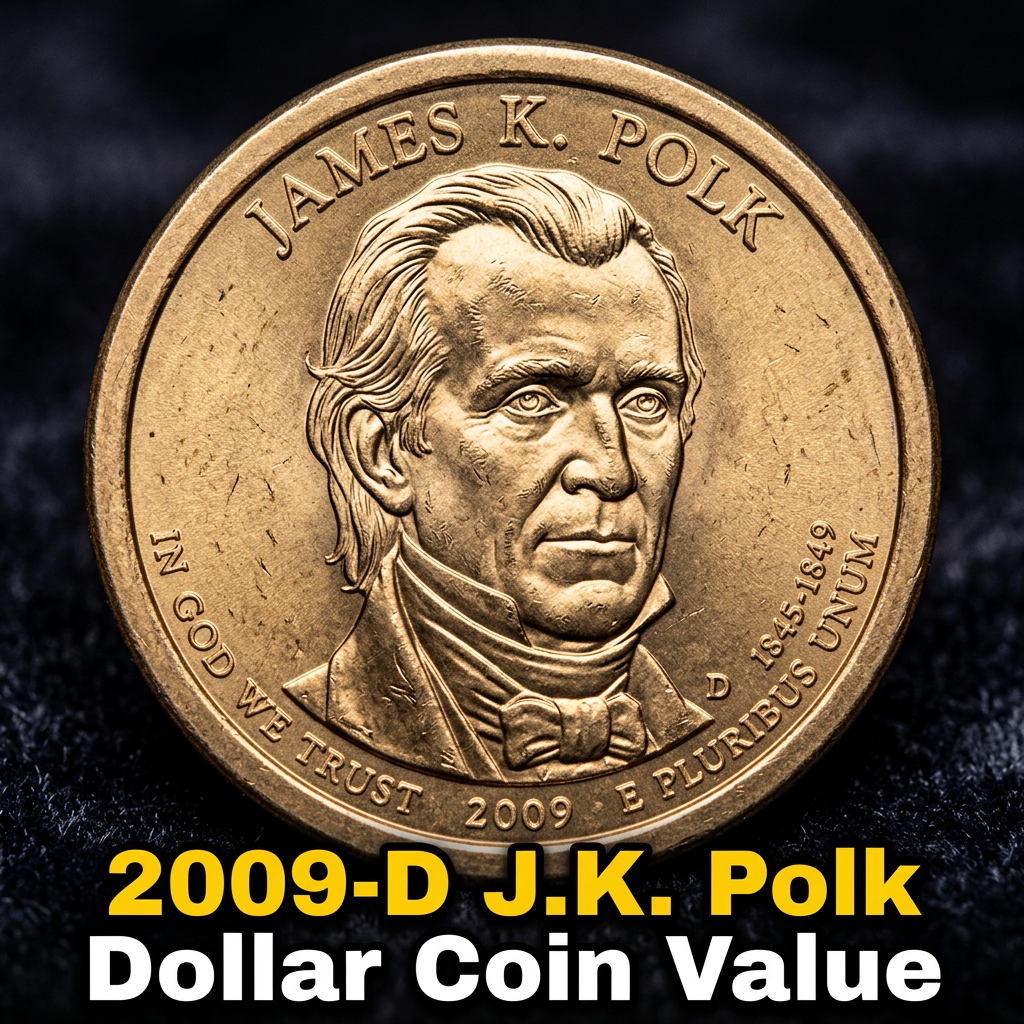
The 2009-D James K. Polk Dollar coin is worth anywhere from $1 to $2 in typical circulated condition, but well-preserved examples graded MS65 or higher can fetch $10 to $30 or more from serious collectors. If you stumbled across one of these golden-colored coins in a drawer or old collection, you’re in the right place — let’s break down exactly what you have.
What Is the 2009-D James K. Polk Dollar?
The 2009-D James K. Polk Dollar is part of the U.S. Presidential Dollar series, which ran from 2007 to 2016. Each coin honors a former U.S. president in order of service, and James K. Polk — the 11th president — got his turn in 2009. The “D” in the name tells you this coin was minted at the Denver Mint.
These coins were produced in large quantities and released into general circulation, which means most examples you find today are worth close to face value. However, collectors care a lot about condition, and that’s where the real value differences show up.
If you’re not sure what you have, a coin identifier and value app can help you quickly figure out the coin’s name, mint mark, and estimated worth just by snapping a photo.
How Much Is the 2009-D Polk Dollar Worth?
For most people who find this coin in loose change or an old jar, the honest answer is: it’s probably worth $1 to $2. Circulated coins that show wear, scratches, or dullness don’t carry much of a premium above face value.
But if your coin looks bright, sharp, and uncirculated — meaning it was never used as everyday money — that changes things. Coins in MS64 to MS66 grade can sell for $5 to $30 at auction or through coin dealers. Ultra-high grades like MS67 or MS68 are rare for this issue and can push values into the $50 to $100+ range.
Here’s a quick value reference table:
| Grade / Condition | Description | Estimated Value |
|---|---|---|
| Circulated (VF-EF) | Normal wear from use | $1 – $2 |
| About Uncirculated (AU) | Light wear on high points | $2 – $4 |
| MS63 – MS64 | Uncirculated, minor marks | $4 – $8 |
| MS65 – MS66 | Gem uncirculated | $8 – $30 |
| MS67+ | Superb gem, rare quality | $50 – $100+ |
You can also check detailed 2009 Presidential Dollar value data to compare prices across the full set of that year’s coins and see how the Polk dollar stacks up against others in the series.
How Many 2009-D Polk Dollars Were Made?
The Denver Mint struck approximately 36,400,000 of these coins in 2009. That’s a healthy mintage, and it’s a big reason why circulated examples don’t carry much of a premium. When tens of millions of coins are made, supply is rarely a problem for collectors.
That said, high-grade examples (MS66 and above) are still genuinely hard to find. The U.S. Mint wasn’t focused on producing collector-quality finishes for circulation coins — most were just bagged and shipped to banks. Finding a truly flawless 2009-D Polk Dollar takes patience and a good eye.
The Denver Mint also produced Satin Finish versions included in Mint Sets, which have a slightly different surface texture. These can carry small premiums over their circulated counterparts, especially in top grades.
What Factors Affect the 2009-D Polk Dollar Value?
Beyond grade, a few other things influence what someone will pay for your coin.
Mint errors are a big one. Some Presidential Dollars are known to have edge lettering errors (the date, mint mark, and “E Pluribus Unum” are inscribed on the coin’s edge rather than the face). Missing edge lettering or doubled edge lettering can turn an otherwise common coin into a $50–$200 piece. Always examine the edge carefully.
Toning and eye appeal matter too. Original, natural toning can enhance a coin’s look, while harsh cleaning dramatically reduces value. Never clean your coins — it almost always hurts them.
Certification from PCGS or NGC can add credibility and value, especially for high-grade coins. A raw MS65 might sell for $10, but a PCGS-graded MS65 can sell for more simply because buyers trust the grade.
Apps like CoinHix make it easy to look up graded coin prices and recent auction results right from your phone, so you can get a real-time sense of what buyers are actually paying.
Where to Sell Your 2009-D Polk Dollar
If your coin is circulated, your best bet is to spend it or keep it as a novelty — it’s simply not worth the effort to sell a $1–$2 coin. But if it’s uncirculated and attractive, you have real options.
eBay is the most accessible marketplace, with a wide audience of collectors willing to pay fair prices. Local coin shows and coin dealers are worth visiting for a hands-on appraisal. Online dealer platforms and auction houses like Heritage Auctions handle higher-value certified coins.
For real-time pricing, you can check current market data for 2009 dollar coins in MS grade to understand what the collector market looks like right now. And CoinHix is a great tool to track prices over time so you know the best moment to sell.
—
Frequently Asked Questions
Q: Is the 2009-D James K. Polk Dollar rare?
A: No, it’s not considered rare. Over 36 million were minted at Denver, making it a common coin for its type. However, superb gem examples graded MS67 or higher are genuinely scarce and can be worth real money to collectors.
Q: How do I know if my Polk Dollar has an error?
A: Check the edge of the coin carefully. If the lettering (date, mint mark, motto) is missing, doubled, or poorly applied, you may have a valuable error coin. Using CoinHix or visiting a certified coin dealer can help you confirm whether what you’re seeing is a true error.
Q: Should I clean my 2009-D Polk Dollar before selling it?
A: Absolutely not. Cleaning a coin — even gently — removes the natural surface and lowers its grade and value significantly. Collectors strongly prefer original, uncleaned coins, even if they look a little dull. Leave it exactly as you found it.