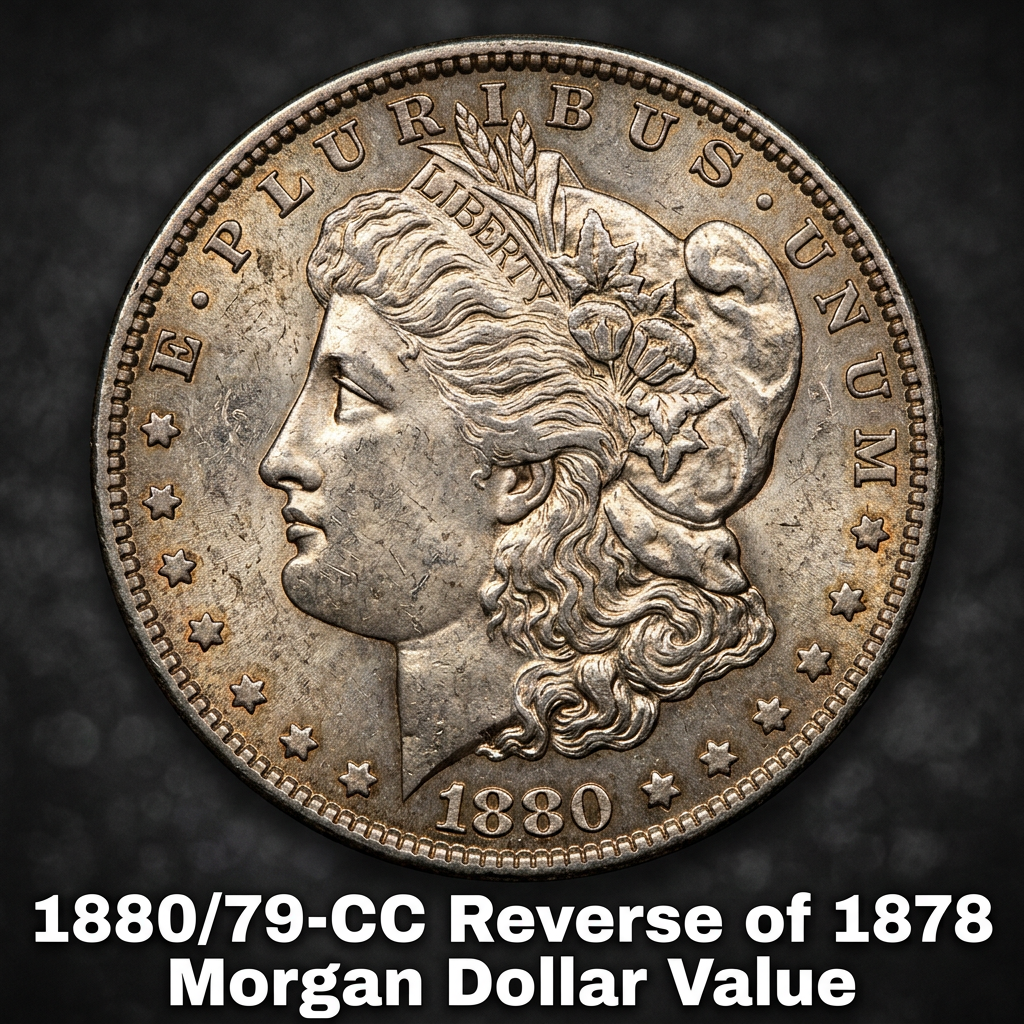
The 1880/79-CC Reverse of 1878 Morgan Dollar is worth anywhere from $150 in heavily worn condition to well over $3,000 or more in high mint state grades — and some certified examples have sold for even higher at auction. If you found one of these silver dollars tucked away in an old collection or family heirloom, you may be sitting on something genuinely valuable.
What Makes the 1880/79-CC Reverse of 1878 Morgan Dollar Special
This coin is a fascinating piece of American numismatic history, and it’s not something you stumble across every day. The “1880/79” part of the name refers to an overdate — meaning the mint accidentally used a die that still showed traces of the 1879 date underneath the newly punched 1880 digits. Under magnification, you can actually see the ghost of the earlier date peeking through.
On top of that, “Reverse of 1878” means the back of the coin uses an older eagle design — one with eight tail feathers arranged in a specific pattern — rather than the updated reverse design used later. The combination of both features on a Carson City (CC) mint coin makes this variety particularly sought after by collectors.
Not every 1880-CC dollar has these traits. You need both the overdate AND the older reverse to qualify as this specific variety. That’s exactly why using a good coin identifier and value app can save you a lot of guesswork when you’re trying to figure out exactly what you have.
How Much Is the 1880/79-CC Reverse of 1878 Morgan Dollar Worth
Value depends heavily on the coin’s condition, also called its “grade” in collector terms. A coin that has been heavily circulated — with lots of scratches, worn details, and dull surfaces — is worth far less than one that spent most of its life in a drawer untouched.
Here’s a general value table based on typical market prices:
| Grade | Description | Estimated Value |
|---|---|---|
| G-4 (Good) | Heavy wear, outline visible | $150 – $200 |
| VF-20 (Very Fine) | Moderate wear, details clear | $300 – $500 |
| EF-40 (Extremely Fine) | Light wear on high points | $600 – $900 |
| MS-63 (Mint State) | Uncirculated, minor blemishes | $1,500 – $2,500 |
| MS-65 (Gem) | Full luster, sharp strike | $3,500+ |
For the most current pricing on certified examples, you can browse 1880 Morgan Dollar auction results and market prices to see exactly what collectors have been paying in recent sales. Prices do shift over time depending on collector demand and silver values.
How to Identify This Variety on Your Coin
The first thing you’ll want to do is look at the mintmark. Flip the coin over to the reverse (eagle side) and look just above the “DO” in DOLLAR. If you see a small “CC,” that tells you the coin was made at the Carson City Mint in Nevada — the right starting point.
Next, examine the date closely. The 1880/79-CC overdate is visible with a good magnifying loupe (at least 5x). Look at the 8 and the 0 — traces of the previous year’s digits should appear underneath. Finally, count the eagle’s tail feathers. The Reverse of 1878 design shows eight tail feathers with a slight overlap or “arrow” shape on the left side.
If you’re not sure what you’re looking at, CoinHix is a great tool to help you identify the variety quickly. You can scan the coin and compare it against known die varieties in the database without needing to be an expert yourself.
Carson City Mint Coins and Why They’re So Popular
The Carson City Mint operated from 1870 to 1893, and coins from this facility have always held a special place in American collecting. Nevada was silver country — the famous Comstock Lode supplied enormous quantities of silver ore — and the CC mint was built specifically to turn that local silver into U.S. coinage.
Because the Carson City Mint had lower production numbers than Philadelphia or New Orleans, CC coins are generally scarcer. The 1880-CC had a total mintage of around 591,000 coins — respectable for a CC issue, but still a fraction of what other mints produced that year.
When you add the overdate variety and the older reverse design into the mix, the pool of surviving examples shrinks considerably. Collectors love the story behind this coin — it connects them to the Old West, the silver rush, and the quirky imperfections of 19th-century minting.
For a full breakdown of 1880 Silver Dollar values across all mint marks and varieties, it’s worth reviewing a dedicated guide that covers the complete series in one place.
Should You Get It Certified
If your coin looks like it might be in very fine condition or better — meaning the details are still fairly sharp and it hasn’t been cleaned — getting it certified by a service like PCGS or NGC is absolutely worth considering. Certification costs around $30 to $50 per coin but can dramatically increase both the coin’s verified value and its resale appeal.
A certified MS-63 example of the 1880/79-CC Reverse of 1878 Morgan Dollar will always sell more easily — and for more money — than a raw, uncertified coin of the same quality. Dealers and auction houses trust slabbed coins, and so do serious buyers.
The CoinHix app can also help you track certified coin values over time so you know when market conditions are favorable for selling or buying.
Frequently Asked Questions
Q: How do I know if my 1880-CC Morgan Dollar is the “Reverse of 1878” variety?
A: Look at the eagle’s tail feathers on the reverse side. The Reverse of 1878 design has eight tail feathers, with the top ones arranged in a specific overlapping pattern. Compare your coin to reference images from a variety guide or use an app like CoinHix to help confirm the variety.
Q: Is the 1880/79-CC Morgan Dollar rare?
A: It’s considered a scarce variety rather than extremely rare, but it’s significantly harder to find than a standard 1880-CC dollar. The combination of the overdate and older reverse design makes it a standout piece, and collector demand keeps values elevated across all grades.
Q: Can I sell this coin without getting it professionally graded?
A: Yes, you can sell it raw (ungraded), but you’ll typically get less money. Buyers take on more risk with uncertified coins, especially for higher-value varieties like this one. If your coin appears to be in Very Fine grade or better, the cost of professional grading is usually well worth it before selling.