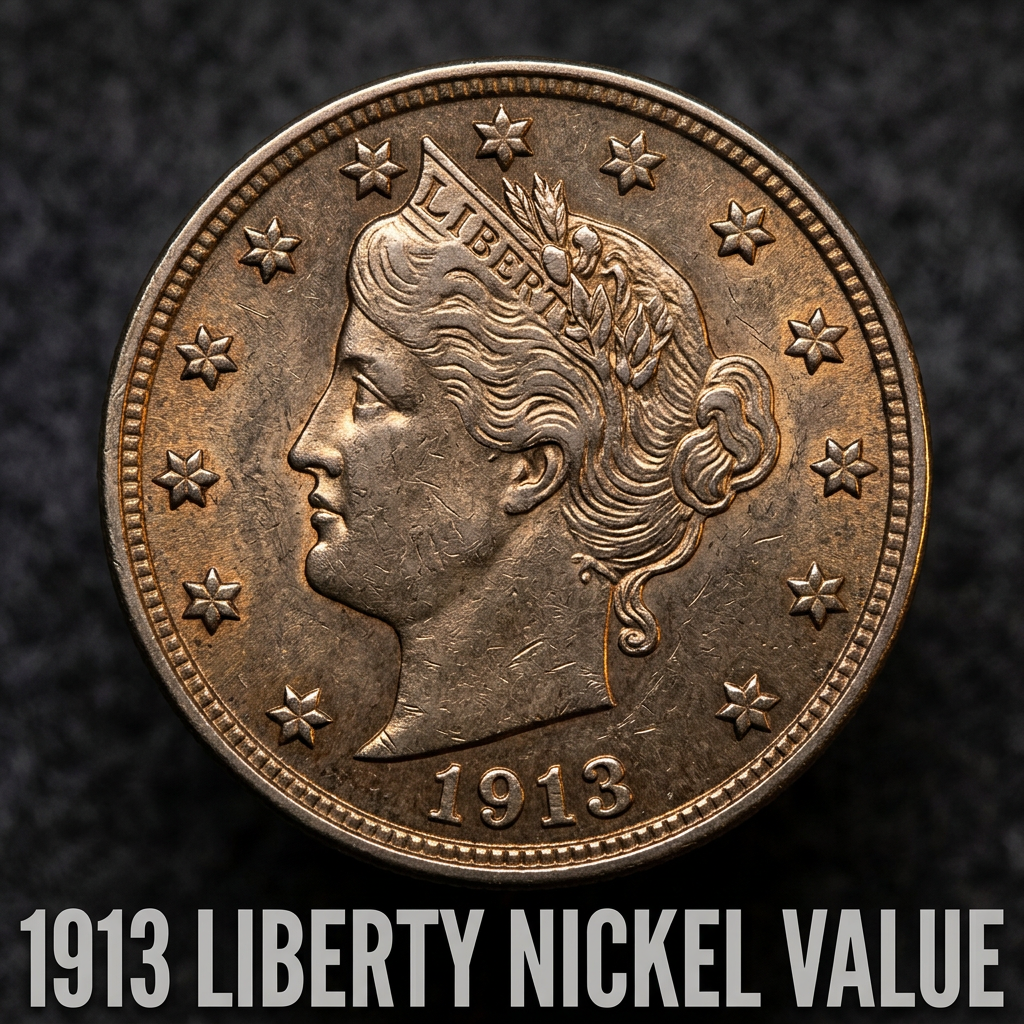
The 1913 Liberty Nickel is one of the most legendary coins in American numismatic history, worth anywhere from a few thousand dollars in circulated condition to over $4 million at auction — and yes, only five of them are known to exist. If you think you’ve found one, take a breath and keep reading.
The 1913 Liberty Nickel is not your ordinary old nickel. Unlike most coins that were officially minted and released into circulation, this coin was struck under mysterious circumstances — possibly unauthorized — at the U.S. Mint in Philadelphia. Because of that backstory, it has become the holy grail of American coin collecting.
If you’re just getting started identifying old coins, a reliable coin identifier and value app can be a great first step before you assume you’ve struck gold (or nickel, in this case). It helps you quickly narrow down what you actually have.
—
The Unusual Origin Story Behind the 1913 Liberty Nickel
By 1913, the Liberty Head Nickel design — which had been in production since 1883 — was officially replaced by the Buffalo Nickel. The U.S. Mint had no plans to strike any Liberty Nickels in 1913. And yet, five coins with that date exist.
The most widely accepted theory is that Samuel W. Brown, a former Mint employee, had them struck secretly and then strategically revealed them to the public in 1919. Whether that was legal or not is still debated, but the coins are now entirely legitimate collectibles and have sold at auction for jaw-dropping prices.
Each of the five known specimens has a name and a documented ownership history. They’ve passed through the hands of famous collectors, museums, and institutions. One sold at auction in 2010 for $3.7 million. Another reached over $4.5 million. These aren’t just coins — they’re pieces of American legend.
—
So What Is a 1913 Liberty Nickel Worth in Real Numbers?
Here’s the honest truth: if you’re a regular person who found a nickel in grandma’s jewelry box and it says “1913” on it, the chances that it’s a genuine 1913 Liberty Nickel are almost zero. But that doesn’t mean your coin has no value — it just means you likely have something else.
For the five authentic examples, value is essentially limitless and determined by private negotiation and auction results. For reference, you can check detailed 1913 Liberty Nickel value breakdowns by grade and condition to understand how these coins are graded and why condition matters so much even at this extreme price level.
| Coin | Known Examples | Estimated Value Range | Last Notable Sale |
|---|---|---|---|
| 1913 Liberty Nickel (Type 1) | 5 known | $3,000,000 – $5,000,000+ | $3.7M (2010), $4.5M (2018) |
| 1913 Buffalo Nickel (Type 1) | Common | $10 – $500+ | Varies by grade |
| 1912 Liberty Nickel (last official year) | Common | $5 – $150+ | Varies by grade |
—
What You Probably Have — and Why It Might Still Be Worth Something
Most people who think they have a 1913 Liberty Nickel actually have a 1913 Buffalo Nickel, which was the coin officially produced that year. The Buffalo Nickel (also called the Indian Head Nickel) features a Native American portrait on the front and a buffalo on the back — very different from the Liberty Head design.
A 1913 Buffalo Nickel is still a collectible and worthwhile coin. In heavily worn condition, it might bring $10 to $20. In better grades, values climb significantly. The 1913 Type 1 Buffalo Nickel — where the buffalo stands on a mound — is slightly more valuable than the Type 2 (flat ground). You can explore current market prices for the 1913 Type 1 Buffalo Nickel in mint state grades to see where your coin might fall.
If you’re not sure which coin you’re looking at, CoinHix makes it simple. Just scan your coin with the app and it will identify the design type, date, mintmark, and current estimated value — no numismatic degree required.
—
How to Tell If Your Old Nickel Is Worth Investigating
Before you get too excited — or dismiss an old coin too quickly — here are a few things to look for:
First, look at the design on the front. A Liberty Head nickel shows a woman wearing a crown that says “LIBERTY.” A Buffalo Nickel shows a Native American portrait. If you see a buffalo on the back, you have a Buffalo Nickel, not a Liberty Nickel.
Second, check for a mintmark. On Buffalo Nickels, the mintmark (D for Denver, S for San Francisco) appears on the back below the words “FIVE CENTS.” No mintmark means it was made in Philadelphia.
Third, consider the condition. Coins with sharp details, no heavy scratches, and good luster are worth significantly more than worn, flat examples. Even a coin worth only $15 in poor condition might be worth $100 or more in excellent shape.
CoinHix is one of the best tools available for quickly assessing all of this. It cross-references your coin’s details against a live pricing database so you get a real-world estimate, not just a guess.
—
FAQ
Q: Are there really only 5 genuine 1913 Liberty Nickels in existence?
A: Yes. All five have been authenticated, cataloged, and given individual names based on their ownership histories. They are among the rarest and most valuable coins in the world. No new examples have been verified as genuine in many decades.
Q: I found an old nickel dated 1913 — could it be worth millions?
A: Almost certainly not, but don’t panic. What you most likely have is a 1913 Buffalo Nickel, which is a different coin entirely. It’s still collectible and worth having identified. Use CoinHix to scan it and get a quick, accurate value estimate before assuming the worst or the best.
Q: How do I get a 1913 nickel authenticated or appraised?
A: For any coin you believe might be rare or valuable, start with a professional third-party grading service like PCGS or NGC. They authenticate, grade, and encapsulate coins for a fee. For everyday coins, a trusted coin identifier and value app or CoinHix is a great starting point before you spend money on a formal appraisal.