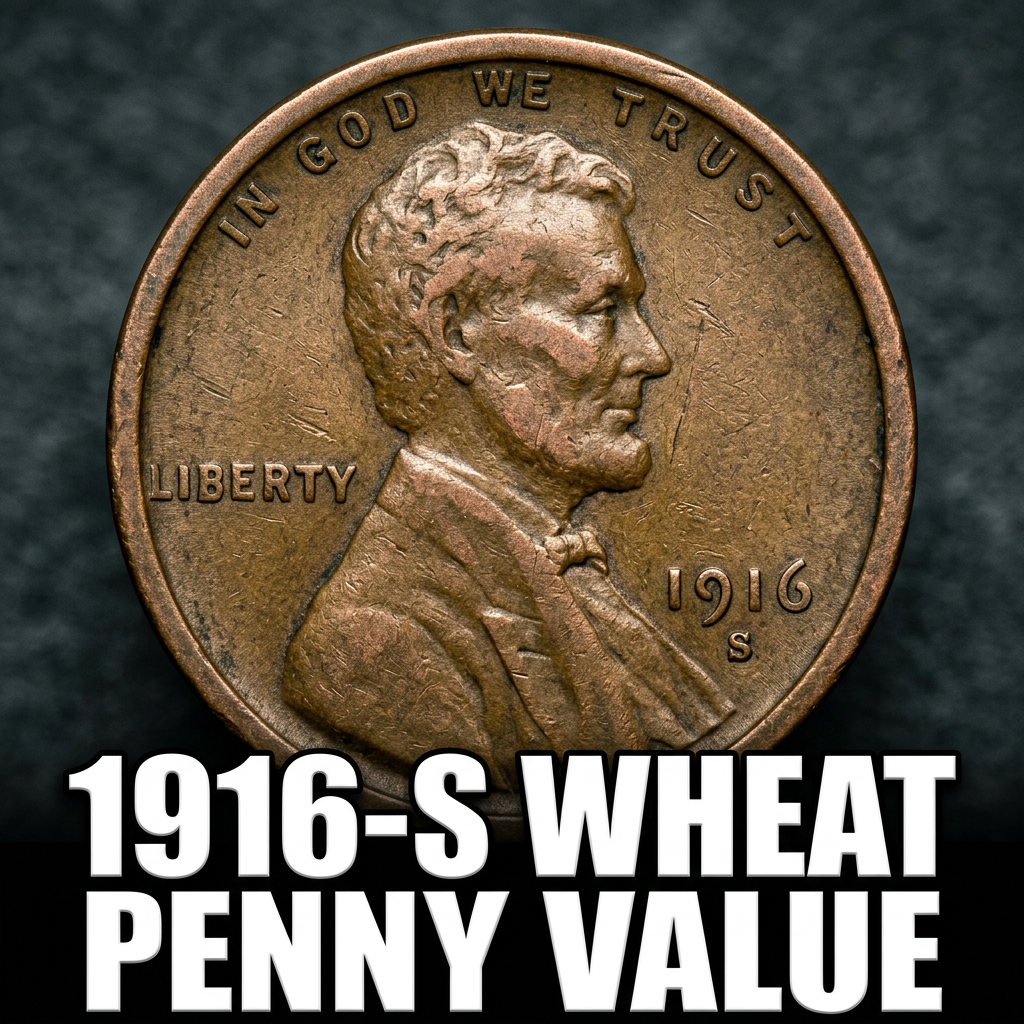
The 1916-S Wheat Penny is worth anywhere from $2 in heavily worn condition to over $150 in uncirculated grades — and rare high-grade examples can push well past $500. If you found one of these old Lincoln cents in a jar, a drawer, or an old coin collection, you’re in the right place to find out exactly what it’s worth.
What Makes the 1916-S Wheat Penny Special
The 1916-S Lincoln Wheat Penny was struck at the San Francisco Mint during the early years of the Lincoln cent series. The “S” mintmark on the obverse (front) of the coin, just below the date, tells you it came from San Francisco rather than Philadelphia or Denver.
This was the fourth year of production for the Lincoln cent design created by sculptor Victor David Brenner. Millions of these coins circulated widely, so worn examples are relatively common — but well-preserved specimens are another story entirely.
For everyday collectors and curious finders, a coin identifier and value app can be a fantastic first step to quickly identify what you have before diving deeper into research.
The 1916-S had a mintage of around 22.5 million coins, which is moderate compared to the Philadelphia issue but lower than some other years. That mintage number plays directly into what your coin is worth today.
1916-S Wheat Penny Value by Grade
The condition of your coin matters more than almost any other factor. Coin grading runs from Poor (P-1) all the way up to Mint State (MS-65 and beyond). Here’s a general breakdown of what you can expect for the 1916-S Wheat Penny across different grades:
| Grade | Description | Estimated Value |
|---|---|---|
| Good (G-4) | Heavy wear, major details visible | $2 – $4 |
| Very Good (VG-8) | Moderate wear, outline clear | $4 – $8 |
| Fine (F-12) | Even wear, all lettering visible | $8 – $15 |
| Extremely Fine (EF-40) | Light wear on high points only | $25 – $50 |
| About Uncirculated (AU-50) | Slight wear, nearly full luster | $55 – $90 |
| Mint State (MS-63) | Uncirculated, minor marks | $120 – $175 |
| Mint State (MS-65+) | Gem uncirculated, superb strike | $500+ |
You can explore detailed 1916-S Wheat Penny price data in MS-RD condition to get a closer look at how gem red examples are trending in the current market.
How to Check the Condition of Your 1916-S Penny
Grading coins at home doesn’t require any special equipment — just good lighting, a magnifying glass, and a little patience. Start by looking at the high points of the coin: Lincoln’s cheekbone, his ear, and the wheat stalks on the reverse. If these areas show smooth, flat wear, the coin is likely circulated.
The color of the coin also matters significantly for uncirculated Wheat Pennies. Graders classify copper coins as Red (RD), Red-Brown (RB), or Brown (BN). A coin that has retained its original bright copper-red color is worth considerably more than one that has turned brown with age.
If your coin looks like it’s never been used — with sharp details, some luster, and minimal marks — it could be sitting in that high-grade range where real money lives. That’s when professional grading from PCGS or NGC becomes worth considering.
CoinHix is a great tool to help you understand where your coin fits in the grading spectrum. The app gives you instant access to real market prices and lets you compare your coin against certified examples, making it easy to set realistic expectations before selling.
Tips for Selling Your 1916-S Wheat Penny
Once you’ve got a rough idea of your coin’s grade and value, you have several solid options for selling. Online platforms like eBay remain popular for circulated coins in the $5–$50 range, while higher-grade pieces often do better through established coin dealers or auction houses like Heritage Auctions or Stack’s Bowers.
For coins you believe might be in Mint State condition, professional grading is worth the upfront cost. A PCGS or NGC-certified 1916-S in MS-64 Red can fetch significantly more than a raw, ungraded coin of the same quality because buyers trust the certification.
You can also review a full breakdown of 1916 penny values across all mint marks to compare where your S-mint coin stands against Philadelphia and Denver issues from the same year.
Don’t forget that cleaning a coin — even gently — can dramatically reduce its value. If your 1916-S Wheat Penny looks old and crusty, leave it alone. Collectors and graders strongly prefer original, untouched surfaces.
CoinHix also helps you track recent auction results so you can price your coin competitively, whether you’re listing it yourself or walking into a dealer’s shop.
Is the 1916-S Wheat Penny Rare?
In lower grades, the 1916-S is not considered rare — it’s a relatively available coin that turns up in rolls, old collections, and estate sales on a regular basis. However, high-grade examples with full red color and sharp strikes are genuinely scarce.
Only a handful of 1916-S pennies have been certified MS-65 Red or better, and those coins can sell for well above $1,000 at major auctions. So while your average flea market find isn’t going to retire you, a gem example absolutely could.
The bottom line: even a well-worn 1916-S is worth holding onto, because it’s over a century old and has real collector appeal. And if yours turns out to be in better shape than you thought, you could be sitting on a surprisingly valuable piece of American history.
FAQ
Q: How do I know if my 1916 penny is the S mint mark version?
A: Look just below the date on the front (obverse) of the coin. If you see a small “S,” it was made in San Francisco. No mintmark means it came from Philadelphia, and a “D” means Denver. A magnifying glass makes this much easier to spot.
Q: Is a worn 1916-S Wheat Penny still worth keeping?
A: Yes. Even in Good condition, a 1916-S is worth a few dollars above face value, and collector demand keeps prices stable. It’s also a piece of history that’s over 100 years old — that alone makes it worth hanging onto.
Q: Should I clean my 1916-S Wheat Penny before selling it?
A: Absolutely not. Cleaning removes the original surface and luster from a coin, which significantly lowers its value in the eyes of collectors and graders. Always present old coins in their natural, uncleaned state. CoinHix and professional graders alike agree: original surfaces are always preferred.