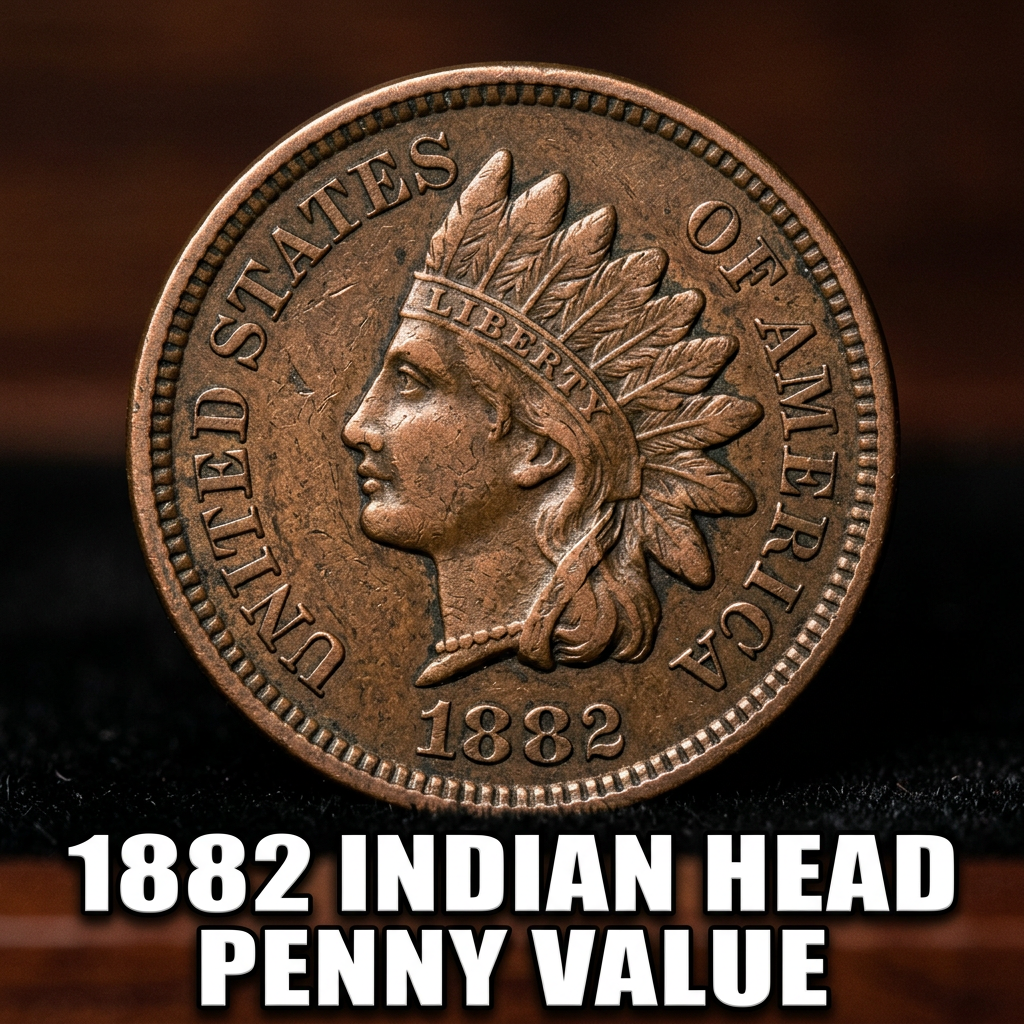
The 1882 Indian Head Penny is worth anywhere from $2 in heavily worn condition to over $150 or more in uncirculated mint state grades. If you’ve found one of these old copper cents in a drawer, jar, or inherited collection, you might be sitting on a piece of American history that’s worth more than you think.
—
What Makes the 1882 Indian Head Penny Special
The 1882 Indian Head Penny was struck at the Philadelphia Mint during a fascinating era of American coinage. Designed by James B. Longacre, the coin features Lady Liberty wearing a Native American headdress — a classic image that collectors have admired for over 140 years.
More than 38 million of these cents were produced in 1882, which makes them more common than some earlier dates in the series. But don’t let that fool you. Most of these coins saw heavy circulation, and finding one in good shape is rarer than you’d expect.
If you’re not sure what you have, using a coin identifier and value app is one of the easiest ways to get a quick read on your coin’s grade and potential value before you visit a dealer.
—
How Much Is the 1882 Indian Head Penny Worth by Grade
The condition of your coin — called the “grade” — is the single biggest factor in determining value. A coin that looks crisp and detailed is worth far more than one that’s been rubbed smooth from years in someone’s pocket.
Here’s a simple breakdown of typical market values for the 1882 Indian Head Penny:
| Grade / Condition | Description | Estimated Value |
|---|---|---|
| Good (G-4) | Heavy wear, outline visible | $2 – $4 |
| Fine (F-12) | Moderate wear, some detail | $6 – $10 |
| Extremely Fine (EF-40) | Light wear, sharp design | $20 – $35 |
| About Uncirculated (AU-55) | Slight wear on high points | $45 – $70 |
| Mint State (MS-63) | No wear, some bag marks | $90 – $130 |
| Mint State (MS-65 Red) | Gem quality, original red luster | $300+ |
For a deeper look at certified auction results and current market pricing, you can browse 1882 Indian Head Penny MS Red price data on CoinHix to see what top-grade examples are selling for right now.
—
Red vs. Brown: Why Color Matters on Copper Cents
One thing that surprises a lot of first-time collectors is that copper coins are graded not just on wear, but also on their color. The 1882 Indian Head Penny is a copper coin, and uncirculated examples are classified as:
– Red (RD) – Original bright copper luster, highest value
– Red-Brown (RB) – Mix of original and toned surfaces
– Brown (BN) – Fully toned, most common in higher grades
A gem-quality MS-65 Red example can be worth several times more than the same grade in Brown. That original copper shine is a sign the coin was never exposed to air or handling, and collectors are willing to pay a serious premium for it.
If you’re unsure how to classify the color on your coin, CoinHix makes it easy to compare your coin against reference images right from your phone.
—
Errors and Varieties That Can Boost the 1882 Penny’s Value
Most 1882 Indian Head Pennies you’ll come across are standard business strikes, but there are a handful of die varieties and minor errors that can add collector interest and value.
Repunched dates, die cracks, and off-center strikes occasionally show up in this series. While none of the 1882 errors are dramatic rarities, a clearly off-center strike at 10–15% can add $20 to $50 or more on top of standard value depending on the grade.
Always examine your coin under good lighting or a magnifying glass before assuming it’s ordinary. What looks like a flaw might actually be a feature that makes your coin more desirable.
You might also find useful comparisons by checking out Indian Head Penny value information for similar dates in the series, since pricing patterns often follow across nearby years.
—
Should You Clean or Get Your 1882 Penny Graded
This is one of the most common questions people ask, and the answer is almost always: do not clean your coin. Even a gentle scrub with a cloth can leave microscopic scratches that permanently lower the coin’s grade and value in the eyes of collectors and dealers.
If you believe your 1882 Indian Head Penny is in uncirculated or near-uncirculated condition, it may be worth submitting it to a professional grading service like PCGS or NGC. Certification adds credibility and often makes coins easier to sell at fair market value.
For a quick at-home assessment before spending money on grading fees, CoinHix lets you scan your coin and get an instant estimate — a great first step before deciding your next move.
—
FAQ
Q: How do I know if my 1882 Indian Head Penny is real?
A: Genuine examples weigh approximately 3.11 grams and measure 19mm in diameter. The design details — especially the feathers in the headdress and the lettering — should be crisp even on worn coins. If something looks off, a local coin dealer or a coin identifier app can help confirm authenticity quickly.
Q: Is the 1882 Indian Head Penny rare?
A: Not particularly rare by mintage numbers — over 38 million were made — but finding one in nice condition is genuinely uncommon. Most circulated examples are affordable, while high-grade uncirculated coins with original red color are legitimately scarce and command strong prices.
Q: Where is the best place to sell an 1882 Indian Head Penny?
A: Your options include local coin dealers, online auction platforms like eBay, or dedicated coin auction houses for higher-grade pieces. For a certified coin in MS-65 Red or better, a specialty auction house will usually get you the best result. For worn examples, a local dealer or coin show is usually the simplest route.