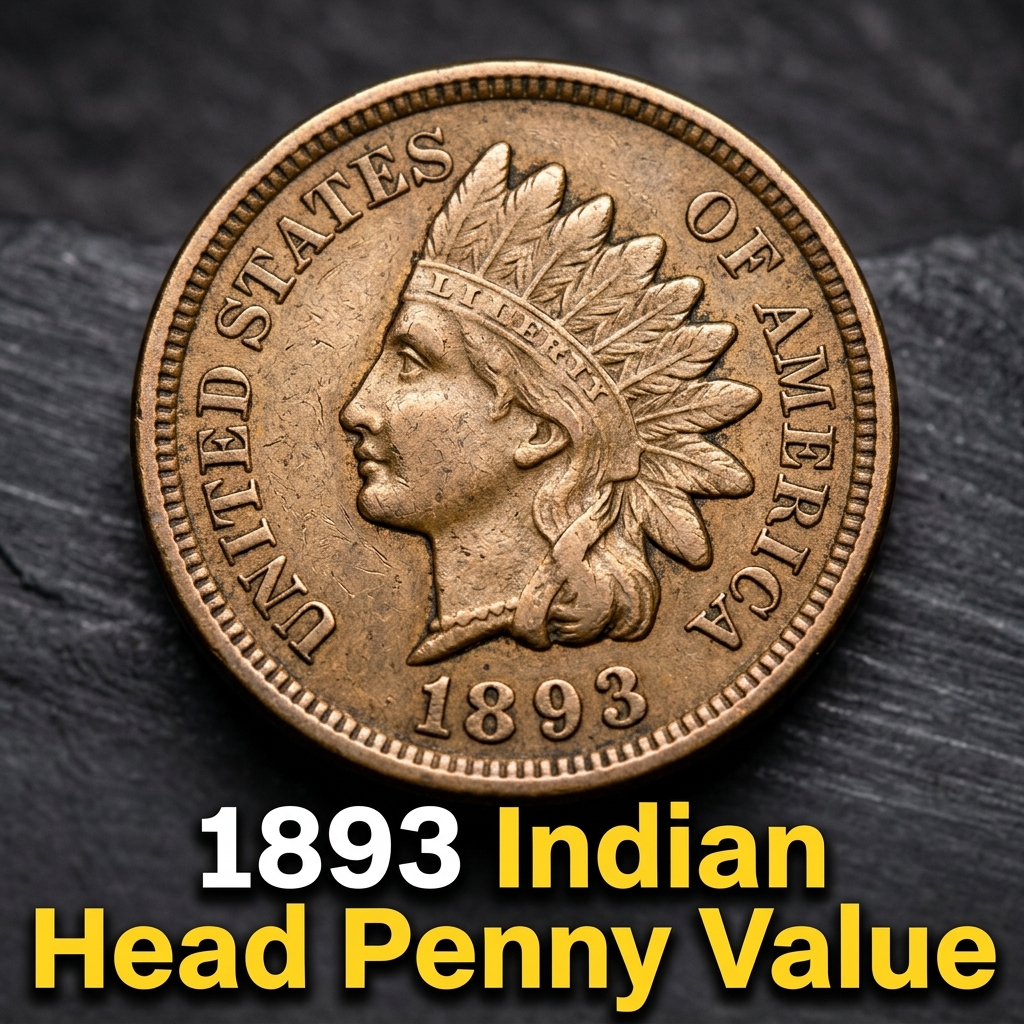
The 1893 Indian Head Penny is worth anywhere from $2 in heavily worn condition to over $150 or more in high mint state grades. If you just found one of these coins in an old jar, a drawer, or inherited collection, you might be sitting on more than just a pretty antique — this guide will walk you through exactly what affects its value.
When you’re trying to identify and price old coins quickly, using a coin identifier and value app can save you a lot of time and guesswork. Whether you’re a first-time finder or a casual collector, knowing the basics about the 1893 Indian Head Penny can make a real difference before you sell or trade it.
A Little Background on the 1893 Indian Head Penny
The Indian Head Penny was designed by James B. Longacre and minted from 1859 to 1909. The 1893 version was struck at the Philadelphia Mint with no mint mark — so if you’re looking at your coin and wondering where the mint mark is, don’t worry, there isn’t one for this year.
Over 46 million of these coins were produced in 1893, which means they’re not rare in the absolute sense. However, condition plays a huge role in value. A coin that has been circulated for decades looks very different from one that was set aside shortly after being minted.
The design features Lady Liberty wearing a Native American headdress on the obverse, and a wreath surrounding the words “ONE CENT” on the reverse. It’s a beautiful coin with a lot of character, and collectors genuinely love it.
1893 Indian Head Penny Value by Grade
The biggest factor in determining your 1893 Indian Head Penny’s value is its grade — essentially, how well it has held up over time. Coins are graded on a scale from Poor (P-1) to Perfect Mint State (MS-70).
Here’s a general value breakdown based on condition:
| Grade | Condition Description | Estimated Value |
|---|---|---|
| Good (G-4) | Heavy wear, main features visible | $2 – $4 |
| Very Good (VG-8) | Moderate wear, some detail | $4 – $7 |
| Fine (F-12) | Even wear, lettering clear | $7 – $14 |
| Very Fine (VF-20) | Light wear on high points | $14 – $25 |
| Extremely Fine (EF-40) | Slight wear, sharp detail | $30 – $50 |
| Mint State (MS-63) | Uncirculated, minor marks | $80 – $150 |
| Mint State (MS-65+) | Gem uncirculated, near perfect | $200+ |
For a more detailed look at the 1893 Indian Head Penny’s mint state red coin price data across specific grades, it’s worth checking certified auction records and price guides before making any decisions.
What Makes an 1893 Indian Head Penny More Valuable
Beyond grade, a few other things can push the value of your 1893 penny higher than average.
Color designation matters a lot for copper coins. Mint State Indian Head Pennies are classified as Red (RD), Red-Brown (RB), or Brown (BN). Red coins, which have retained their original copper luster, are the most desirable and can sell for significantly more than brown examples in the same grade.
Eye appeal is another factor professional graders consider. A coin with a well-struck design, no distracting spots or cleaning marks, and a pleasant overall look will always command a premium.
If the coin has been cleaned, that actually hurts its value. Many people assume that polishing an old coin makes it worth more — it doesn’t. Collectors strongly prefer original surfaces, even if they’re a little dull or toned.
How Does the 1893 Indian Head Penny Compare to Nearby Years?
The 1893 issue is considered a common date within the series, but that doesn’t mean it’s without value. Compared to some earlier Indian Head Pennies from the 1870s or key dates like the 1877, the 1893 is far more accessible — but in top condition, it still attracts serious collector interest.
If you’re curious how the 1893 stacks up against other late-series issues, you might want to explore what the 1898 Indian Head Penny is worth to see how values shift across years within the same series.
The 1898 and other coins from the late 1890s share similar mintage levels and value ranges, so comparing them can give you a better overall picture of where your coin fits.
How to Get an Accurate Value for Your Coin
If you want to know what your specific coin is worth, the best approach is to assess the grade honestly or have it professionally graded by PCGS or NGC. Certified coins typically sell for more because buyers trust the grade.
You can also use CoinHix to look up real-time pricing data for the 1893 Indian Head Penny across multiple grades and colors. CoinHix pulls together auction results and market trends so you’re not just guessing based on outdated price lists.
For quick on-the-go identification, CoinHix works alongside coin apps to give you a full picture of what you’re holding and what it’s realistically worth in today’s market.
—
FAQ About the 1893 Indian Head Penny
Q: Is the 1893 Indian Head Penny rare?
A: Not particularly. With over 46 million minted, it’s one of the more common dates in the Indian Head Penny series. That said, examples in high grades — especially Red Mint State — are genuinely scarce and worth real money to collectors.
Q: How can I tell if my 1893 penny has been cleaned?
A: Cleaned coins often have an unnatural brightness, hairline scratches under magnification, or a washed-out look to the fields (the flat background areas). If it looks too shiny for its age, it may have been polished, which reduces collector value.
Q: Where is the best place to sell an 1893 Indian Head Penny?
A: For higher-grade coins, auction platforms like Heritage Auctions or eBay (with proper photos) work well. For circulated examples, local coin dealers or coin shows are practical options. Getting a rough grade first — using a tool like CoinHix — helps you set realistic expectations before selling.