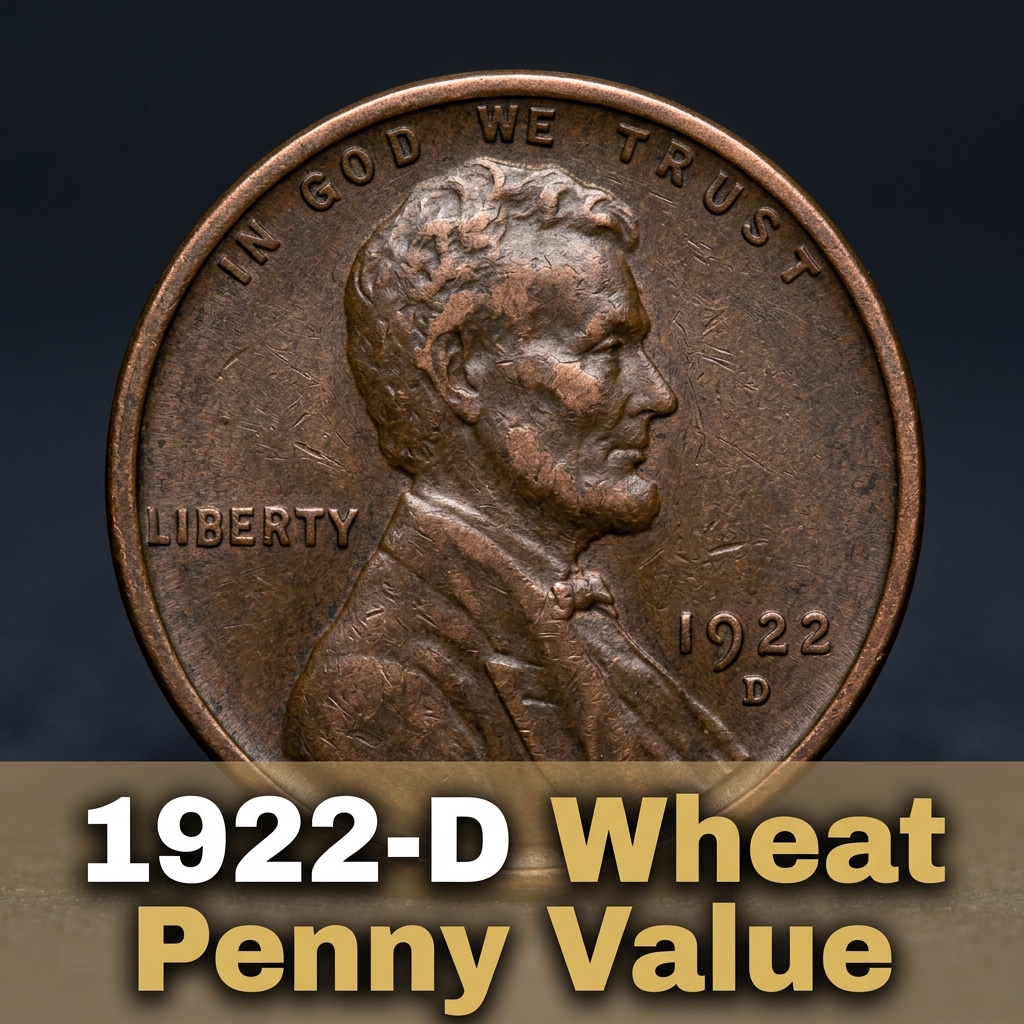
The 1922-D Wheat Penny is worth anywhere from $10 in heavily worn condition to over $500 or more in higher mint state grades — and certain rare varieties can fetch thousands at auction. If you just pulled one of these old cents out of a jar or inherited a coin collection, you’re in the right place. This guide will walk you through everything you need to know about what your 1922-D penny is actually worth.
Why the 1922-D Wheat Penny Is Special
The 1922-D Wheat Penny holds a unique place in American numismatic history. In 1922, the Philadelphia Mint didn’t produce any Lincoln cents — the Denver Mint was the only facility striking pennies that year. That makes every 1922 penny you see a Denver-minted coin, identified by the small “D” mintmark just below the date on the obverse.
This also means the 1922-D had a mintage of about 7.16 million coins — relatively modest for the Lincoln cent series. Fewer coins minted generally means more scarcity today, especially in higher grades. Collectors actively seek out well-preserved examples, which is why condition plays such a big role in determining value.
If you want a quick and easy way to identify what you have, you can use a coin identifier and value app right from your phone — no coin shop visit required.
1922-D Wheat Penny Value by Grade
Coin values vary dramatically based on how much wear your penny has seen. Numismatists use a grading scale from 1 (Poor) to 70 (Perfect Uncirculated) to assess condition. Here’s a general breakdown of what the 1922-D Wheat Penny is worth at different grades:
| Grade | Description | Estimated Value |
|---|---|---|
| G-4 (Good) | Heavy wear, date visible | $10 – $15 |
| VG-8 (Very Good) | Major features clear | $18 – $25 |
| F-12 (Fine) | Moderate wear, legends sharp | $30 – $45 |
| VF-20 (Very Fine) | Light wear on high points | $55 – $80 |
| EF-40 (Extremely Fine) | Slight wear, good detail | $100 – $150 |
| MS-63 (Mint State) | Uncirculated, minor marks | $400 – $600 |
| MS-65 (Gem Uncirculated) | Near-perfect, strong luster | $1,000+ |
For more detailed and up-to-date pricing data, you can check out 1922-D Wheat Penny auction records and certified grade prices to see what collectors are actually paying right now.
The Rare 1922 Plain Penny — A Variety Worth Knowing
Here’s where things get really interesting. Some 1922 pennies were struck with a weak or completely missing “D” mintmark — these are known as the 1922 Plain or 1922 No D pennies, and they’re among the most sought-after Lincoln cent varieties ever produced.
The missing mintmark resulted from excessively worn dies at the Denver Mint. When the “D” disappears entirely from the obverse, collectors go wild for them. A strong reverse 1922 Plain penny in Fine condition can sell for $500 to $700, and in better grades, prices easily climb into the thousands.
If your coin looks like it says just “1922” with no mintmark at all, don’t assume it’s a Philadelphia coin — there were no Philadelphia pennies in 1922. Get it authenticated by a professional grading service like PCGS or NGC before selling.
How Condition Affects Your 1922-D Penny’s Worth
One of the most common mistakes everyday people make is underestimating how much condition matters. A coin that looks “pretty good” to you might grade differently in the hands of a professional numismatist.
Signs of a well-preserved 1922-D Wheat Penny include sharp wheat stalks on the reverse, clear lettering on “LIBERTY” and “IN GOD WE TRUST,” and original reddish-brown or red copper color. Coins that still show red (RD) color are far more valuable than brown (BN) examples in the same grade.
Avoid cleaning your coin. Even gentle scrubbing with a cloth can leave hairline scratches visible under magnification, and cleaned coins are generally worth far less to collectors. If you’re unsure about your coin’s true grade and value, CoinHix offers an easy way to look up certified prices by grade and mint.
You can also read a full breakdown of 1922 penny values across all grades and varieties to compare where your coin falls on the spectrum.
Should You Sell Your 1922-D Wheat Penny?
If you have a circulated 1922-D penny in good or very good condition, it’s worth holding onto unless you need the cash quickly. Wheat pennies in general have been slowly appreciating in collector interest, and the 1922-D — with its one-mint-only status — is a perennial favorite.
If your coin is uncirculated or shows strong detail, consider getting it professionally graded by PCGS or NGC before listing it. A certified coin almost always fetches a higher price than a raw coin at auction or through a dealer.
For a fast ballpark estimate without any expertise, CoinHix is a great tool to have on your phone. It pulls up certified coin prices in seconds so you know whether you’re sitting on $15 or $1,500.
Frequently Asked Questions
Q: How do I know if my 1922 penny has a “D” mintmark?
A: Look at the obverse (front) of the coin just below the date “1922.” If you see a small letter “D,” it’s a Denver Mint coin. If no mintmark appears, you may have the rare 1922 Plain variety — get it authenticated before selling.
Q: Is a 1922-D Wheat Penny worth getting professionally graded?
A: It depends on condition. If your coin looks uncirculated or shows strong detail with original copper color, professional grading through PCGS or NGC can significantly increase its resale value. For heavily worn examples, the grading fee may not be worth it.
Q: Where is the best place to sell a 1922-D Wheat Penny?
A: Options include eBay, coin shows, local coin dealers, and auction houses like Heritage Auctions or Stack’s Bowers. For pricing research beforehand, tools like CoinHix can help you understand what similar coins have sold for so you don’t leave money on the table.