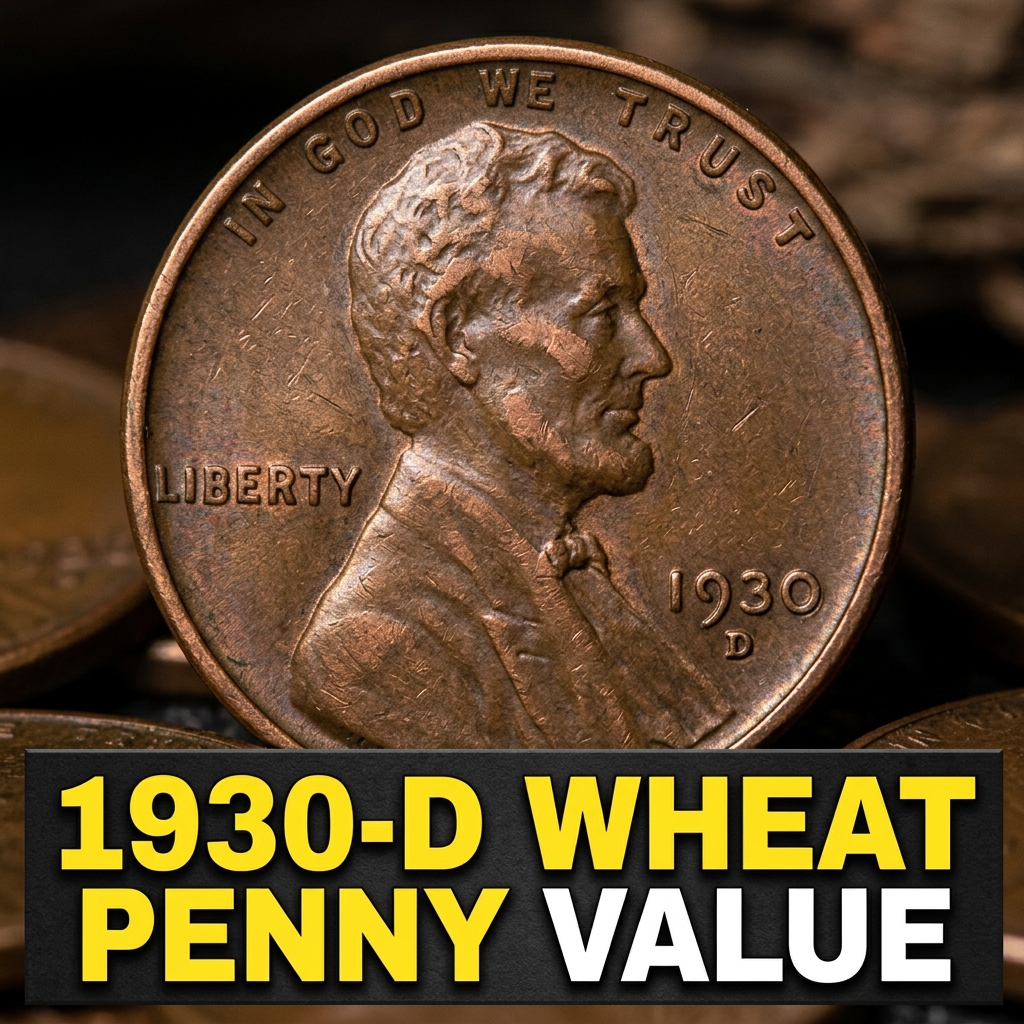
If you’ve recently come across a 1930-D Wheat Penny, you’re probably wondering whether it’s a keeper or just pocket change. The good news: the 1930-D Wheat Penny is worth anywhere from $0.25 in heavily worn condition to over $100 or more in high mint state grades — and a truly pristine example can push even higher.
What Makes the 1930-D Wheat Penny Special
The “D” mintmark on this coin tells you it was struck at the Denver Mint in 1930. That detail matters more than most people realize. During the early 1930s, the United States was on the edge of the Great Depression, and coin production numbers were shifting dramatically from year to year.
The Denver Mint produced about 40,100,000 of these cents in 1930 — a relatively healthy mintage compared to some other Lincoln Wheat Penny dates from that era. Because of that higher production number, the 1930-D isn’t considered a rare coin in circulated grades. However, well-preserved examples with original red luster are genuinely hard to find and are worth serious money to collectors.
If you’re not sure whether you have a Denver issue or a Philadelphia issue, look for a small “D” stamped just below the date on the obverse side of the coin. No mintmark means it was made in Philadelphia.
1930-D Wheat Penny Value by Grade
The condition of your coin makes an enormous difference in what it’s worth. A heavily worn coin that’s been rattling around in a jar for decades is worth far less than one that looks nearly brand new.
Here’s a general value chart to help you understand where your coin might land:
| Grade | Description | Estimated Value |
|---|---|---|
| Good (G-4) | Heavy wear, outlines visible | $0.25 – $0.50 |
| Fine (F-12) | Moderate wear, details clear | $1 – $3 |
| Extremely Fine (EF-40) | Light wear on high points | $5 – $10 |
| About Uncirculated (AU-55) | Slight wear, most luster intact | $12 – $25 |
| Mint State Red (MS-63 RD) | Uncirculated, strong red color | $45 – $75 |
| Mint State Red (MS-65 RD) | Gem uncirculated, full red | $100 – $150+ |
For the most current pricing data, you can view real-time 1930-D Wheat Penny price trends by grade on CoinHix, which tracks recent auction sales and dealer activity.
How to Identify Your Coin’s Condition at Home
You don’t need to be a professional numismatist to do a basic assessment. Start by looking at Lincoln’s cheekbone and the wheat stalks on the reverse — these are the first areas to show wear on a Wheat Penny.
If Lincoln’s cheek is smooth and flat with no texture, you’re probably looking at a coin in Good to Fine grade. If you can still see some fine hair detail above Lincoln’s ear and the wheat lines are sharp, you’re likely in the Extremely Fine range.
A coin that has never been used and still shows its original coppery-red shine is what collectors call “Mint State Red” — and those are the specimens that bring the highest prices. Brown or reddish-brown toning is normal for older cents and doesn’t necessarily hurt value, but full red coins are always the most desirable.
If you want a fast, reliable way to check your coin without guessing, try using a coin identifier and value app on your smartphone. These apps can help you match your coin to a grade range based on photos, saving you a trip to the coin shop.
What Collectors Look for in a 1930-D Penny
Serious collectors care about more than just grade. They also look at eye appeal, strike quality, and whether the coin has been cleaned or artificially altered. A cleaned coin — one that someone polished or dipped to make it look shiny — is actually worth less than a naturally toned coin of the same grade.
Color designation also plays a huge role at the mint state level. Grading services like PCGS and NGC will designate a coin as RD (Red), RB (Red-Brown), or BN (Brown). An MS-64 RD coin can be worth two to three times more than an MS-64 BN example.
CoinHix is a great resource for understanding how these distinctions affect real-world prices. The platform breaks down auction results by color and grade so you can see exactly what buyers are actually paying, not just what sellers are asking.
For a broader look at how the entire 1930 Lincoln cent series compares across mint facilities, check out this detailed 1930 Penny value guide covering all mint varieties and grades — it’s a helpful reference whether you have a D-mint, S-mint, or Philadelphia coin.
Should You Get Your 1930-D Penny Graded?
For most circulated examples, professional grading isn’t worth the cost. If your coin grades below AU-50, the grading fee alone would likely exceed the coin’s value.
However, if you believe you have a Mint State example — especially one with bright red color — submitting it to PCGS or NGC could be well worth it. A certified MS-65 RD coin commands a premium that far outweighs the submission cost, and collectors are much more willing to pay top dollar for slabbed coins with verified grades.
CoinHix can help you decide by showing you the price gap between raw and certified examples so you can make an informed call before spending money on grading fees.
—
FAQ
Q: Is the 1930-D Wheat Penny rare?
A: Not in circulated grades — the Denver Mint produced over 40 million of them. However, high-grade examples with full red mint luster are genuinely scarce and can be worth $100 or more.
Q: How do I tell a 1930-D from a 1930 Philadelphia cent?
A: Look directly below the date on the front of the coin. A small “D” mintmark indicates Denver. If there’s no mintmark, it was minted in Philadelphia.
Q: Should I clean my 1930-D Wheat Penny to make it look better?
A: No — please don’t. Cleaning a coin removes the natural patina and significantly lowers its collector value. Even a dirty-looking coin with original surfaces is worth more than a polished one to most buyers.