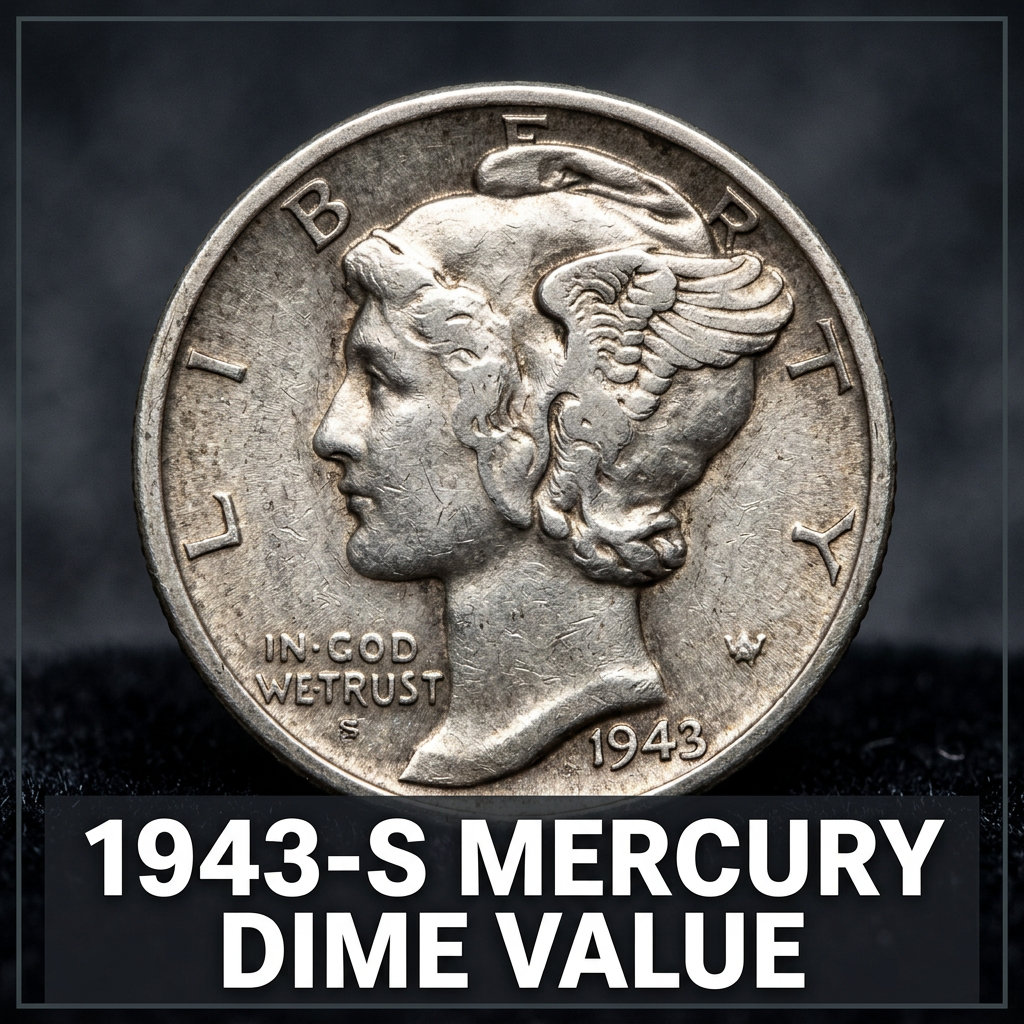
The 1943-S Mercury Dime is worth anywhere from $3 to $5 in heavily worn condition, all the way up to $50 or more in uncirculated grades — and in top mint state examples, values can climb into the hundreds. If you found one of these little silver coins tucked away in a drawer or old coin jar, you’re in luck.
What Makes the 1943-S Mercury Dime Special
The 1943-S Mercury Dime was struck at the San Francisco Mint during World War II. The “S” mintmark, found on the reverse side just above the “E” in “ONE,” tells you exactly where it came from. During this era, all three U.S. mints — Philadelphia, Denver, and San Francisco — were pumping out dimes at record pace to meet wartime demand for coins in circulation.
What makes this coin attractive to collectors isn’t just its age. It’s made of 90% silver, which gives it an intrinsic metal value even if the coin is worn flat. As of today, the silver melt value alone is around $2 to $2.50, depending on the spot price of silver.
If you’re not sure what you have, a coin identifier and value app can help you scan the coin and instantly get a sense of its grade and approximate market value — no experience needed.
How to Read the Condition of Your 1943-S Dime
Coin value is almost entirely driven by condition, and Mercury Dimes are no exception. Collectors use a grading scale from 1 (barely identifiable) to 70 (perfect mint state). Here’s a simple breakdown of what to look for:
Look at the bands on the torch on the reverse side. If those bands are sharp and fully separated, you may have what collectors call “Full Bands” (FB) — a detail that can dramatically boost the coin’s value.
Check the high points of the design — the hair above Liberty’s ear and the bands on the fasces. If those areas show heavy flatness or wear, it’s a lower-grade coin. If the design is crisp and the luster is still visible, you’re looking at a much more valuable piece.
1943-S Mercury Dime Value by Grade
Here’s a quick reference table for current estimated values of the 1943-S Mercury Dime:
| Grade | Description | Estimated Value |
|---|---|---|
| G-4 (Good) | Heavy wear, major design visible | $3 – $4 |
| VF-20 (Very Fine) | Moderate wear, details clear | $5 – $8 |
| EF-40 (Extremely Fine) | Light wear on high points | $10 – $15 |
| MS-63 (Uncirculated) | No wear, some contact marks | $25 – $45 |
| MS-65 FB (Full Bands) | Sharp, fully split torch bands | $100 – $300+ |
For the most current auction results and dealer prices, you can browse detailed 1943-S Mercury Dime price data by grade at CoinHix, which tracks real market sales across multiple sources.
Where to Sell Your 1943-S Mercury Dime
Once you know what your coin is worth, the next step is figuring out where to sell it. Your options include local coin dealers, online marketplaces like eBay, and coin shows. For mid-grade circulated examples, a local dealer will likely offer you melt value or slightly above. For uncirculated coins or Full Bands examples, an online auction typically gets you closer to market price.
Before you walk into any coin shop, it helps to do a little homework. CoinHix is a great tool for tracking recent sale prices so you know what buyers are actually paying — not just what sellers are asking. Being informed means you won’t leave money on the table.
If you want a broader overview of what your coin is worth across multiple grade levels, the complete 1943 Mercury Dime value guide at CoinValueApp gives an easy-to-read breakdown with current estimates.
Tips for Protecting and Storing Your Coin
If you believe you have a higher-grade 1943-S Mercury Dime, the worst thing you can do is clean it. Even a gentle rinse can leave micro-scratches that drop the coin’s grade and cut its value significantly.
Store it in a non-PVC coin flip or hard plastic holder. Avoid touching the face of the coin — oils from your fingers cause long-term damage. If you think the coin might be MS-63 or above, consider sending it to PCGS or NGC for professional grading. A certified coin almost always sells for more than a raw one, especially when dealing with unknown buyers online.
CoinHix also lets you track your collection’s value over time, which is especially useful if silver prices rise and push up the melt and collector value of your 1943-S dime simultaneously.
—
FAQ
Q: How do I know if my 1943-S Mercury Dime has Full Bands?
A: Look at the torch on the reverse. The horizontal bands that wrap around the center of the torch should appear as two fully separated, complete lines. If they’re merged or faint, they don’t qualify as Full Bands. A magnifying glass or loupe makes this much easier to see.
Q: Is a 1943-S Mercury Dime made of silver?
A: Yes. All Mercury Dimes, including the 1943-S, are composed of 90% silver and 10% copper. Each coin contains approximately 0.0723 troy ounces of silver, giving it a base melt value that fluctuates with the silver market.
Q: What’s the difference between the 1943, 1943-D, and 1943-S Mercury Dimes?
A: The difference is the mint that struck each coin. No mintmark means Philadelphia, “D” means Denver, and “S” means San Francisco. The 1943-S had a mintage of over 60 million coins, making it relatively common in circulated grades, though high-quality examples with Full Bands remain scarce and valuable.