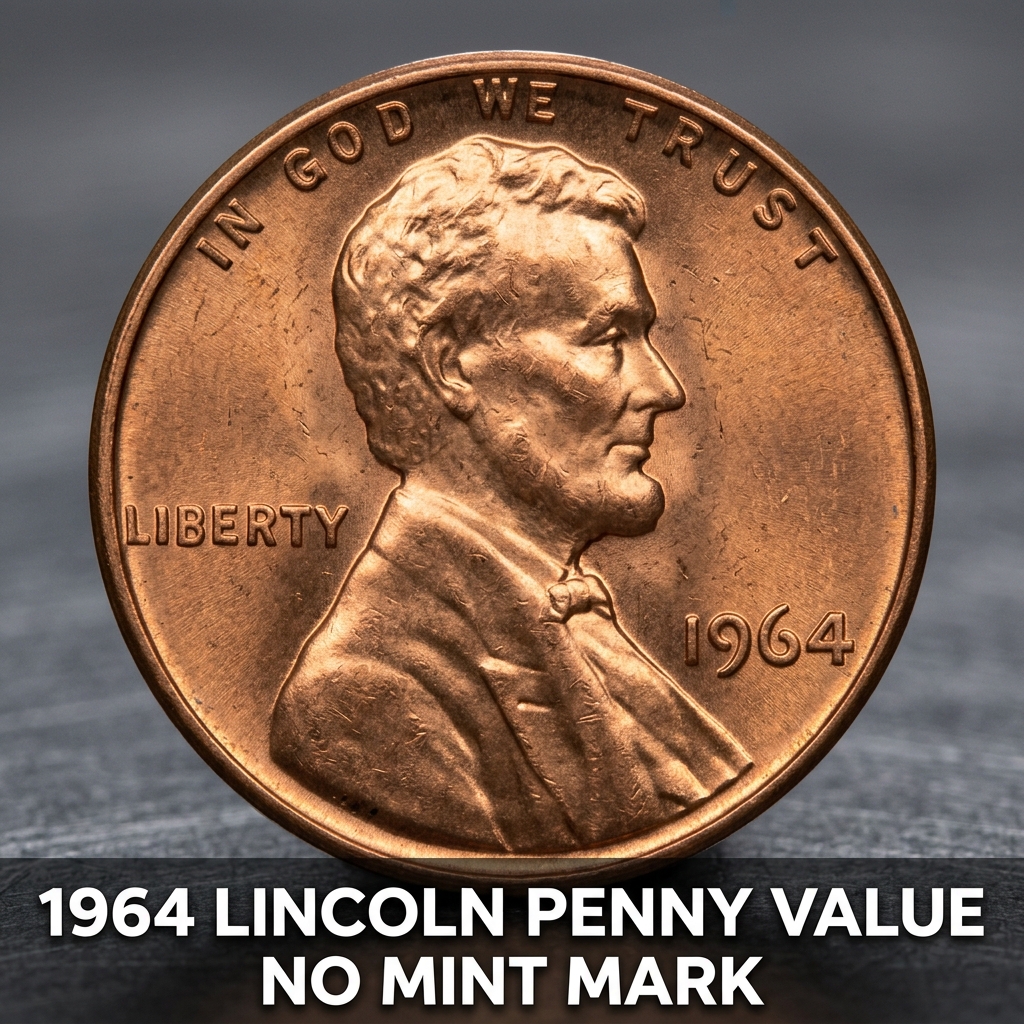
The 1964 Lincoln Memorial Penny with no mint mark is worth anywhere from 1 cent in heavily circulated condition to over $10 or more in pristine mint state — and rare error coins can fetch hundreds of dollars from the right buyer.
If you just found one of these coins in a drawer, a jar, or tucked inside an old wallet, you’re in good company. Millions of Americans discover old pennies every day and wonder the same thing: is this worth anything? The answer depends on condition, errors, and a few other key details we’ll walk you through below. If you want to identify your coin quickly and get an instant value estimate, a coin identifier and value app can be a great starting point before you dig deeper.
What Does No Mint Mark Mean on a 1964 Penny?
When a coin has no mint mark, it means it was struck at the Philadelphia Mint. Philadelphia has historically been the main U.S. minting facility, and for many years it didn’t stamp its coins with a “P” — it simply left that space blank.
So if you flip your 1964 Lincoln penny over and look just below the date on the obverse (front) side, you’ll notice there’s no letter. No “D” for Denver, no “S” for San Francisco — just nothing. That means your penny came from Philadelphia.
This is actually the most common version of the 1964 penny. The Philadelphia Mint produced a staggering 2,648,575,000 pennies that year — that’s over 2.6 billion coins. So don’t get too excited just yet. But keep reading, because condition and errors can still make these coins very valuable.
1964 Lincoln Penny Value by Condition
The grade of a coin is everything when it comes to value. A coin that’s been jingling around in someone’s pocket for 60 years is worth very little. But a coin that was put away in a collection the day it was minted? That’s a different story.
Here’s a general breakdown of what your 1964 no mint mark penny might be worth:
| Condition / Grade | Estimated Value |
|---|---|
| Poor to Fair (P-1 to F-2) | Face value ($0.01) |
| Very Fine (VF-20 to VF-35) | $0.05 – $0.25 |
| Extremely Fine (EF-40 to EF-45) | $0.25 – $0.75 |
| About Uncirculated (AU-50 to AU-58) | $0.75 – $2.00 |
| Mint State Red (MS-63 RD) | $3 – $6 |
| Mint State Red (MS-65 RD) | $8 – $15 |
| MS-67 RD (Superb Gem) | $200+ |
For the most up-to-date pricing data, you can check the 1964 Lincoln Penny MS Red price charts which track real auction results and market trends.
Errors That Can Make Your 1964 Penny Worth Real Money
Here’s where things get exciting. While a standard 1964 no mint mark penny in average condition is essentially worth face value, error coins are a completely different ballgame.
Some errors to look for include:
Doubled Die Obverse (DDO): Look closely at Lincoln’s portrait and the inscriptions. If you see doubling — where letters or features appear slightly duplicated — you may have a doubled die coin worth $25 to $150 or more.
Off-Center Strike: If Lincoln’s image is not centered on the coin and a crescent of blank copper is visible, the coin may be worth $10 to $50 depending on how far off-center the strike is.
Repunched Date: Some 1964 pennies show faint extra impressions on one or more of the date digits. These repunched date varieties can bring a premium among specialists.
Always examine your coin under a magnifying glass in good lighting before dismissing it as ordinary.
How to Check Your 1964 Penny Value Today
If you want a reliable value estimate for your specific coin, there are a few easy steps to follow. First, assess the condition honestly — look for scratches, dullness, or worn details. Then check for any errors or varieties as described above.
You can also browse detailed 1964 penny value information organized by grade and variety to better understand where your coin falls on the spectrum.
For a faster and more hands-on approach, try CoinHix — a free app that lets you photograph your coin and instantly get a value estimate. It’s perfect for everyday folks who aren’t professional numismatists but still want to know what they’ve got. CoinHix covers thousands of U.S. coins and updates values regularly so you always see current market prices.
Is It Worth Getting a 1964 Penny Graded?
For most circulated 1964 no mint mark pennies, professional grading isn’t worth the cost. Grading services like PCGS or NGC typically charge $20–$40 per coin — and if your penny is only worth $0.25, the math doesn’t work.
However, if your coin looks brand new with its original red copper luster and no visible marks, or if you believe you have an error coin, professional grading makes sense. A certified MS-67 Red example can sell for several hundred dollars at auction.
CoinHix can help you decide whether grading is worth pursuing by giving you a quick snapshot of estimated value before you spend money on submission fees.
—
FAQ
Q: Is a 1964 penny with no mint mark rare?
A: No. The 1964 Philadelphia penny is one of the most common coins in U.S. history with over 2.6 billion minted. However, high-grade examples and error coins can still be quite valuable.
Q: How do I know if my 1964 penny is in good enough condition to be worth money?
A: Look for original red or red-brown color, sharp details on Lincoln’s portrait and the Memorial on the reverse, and no heavy scratches or corrosion. Coins in Mint State condition (never circulated) are worth the most.
Q: Where can I sell a valuable 1964 penny?
A: eBay is a popular option for selling coins directly to collectors. You can also try local coin shops, coin shows, or auction houses like Heritage Auctions for higher-value pieces. Make sure you know the current market value before listing — apps like CoinHix can help you price your coin fairly.