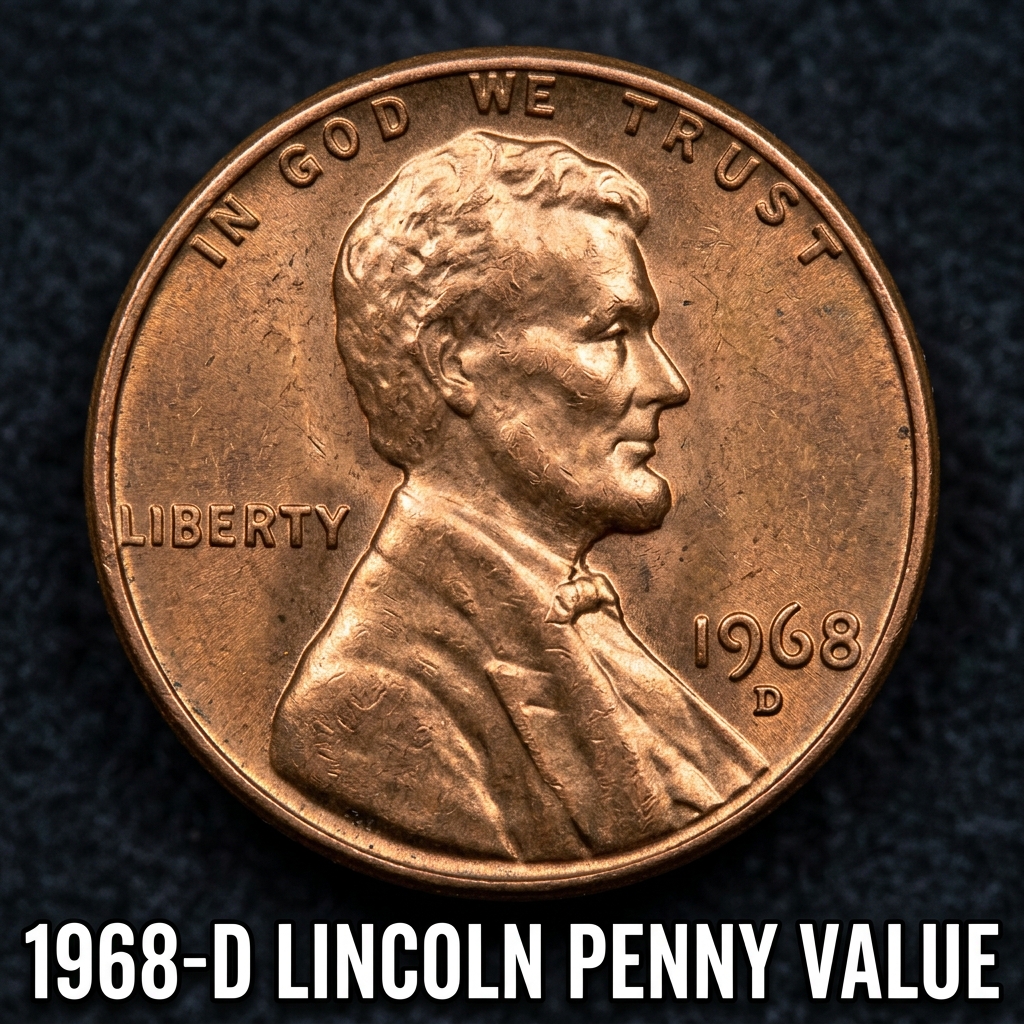
The 1968-D Lincoln Penny is worth anywhere from a few cents in heavily circulated condition to over $20 or more in mint state — and certain gem-quality examples have sold for hundreds of dollars at auction. If you’ve got one sitting in a jar of old coins, it’s worth taking a closer look.
What Is the 1968-D Lincoln Penny?
The 1968-D Lincoln Penny was struck at the Denver Mint, which is why you’ll see a small “D” mintmark just below the date on the obverse side of the coin. That little letter tells you exactly where the coin was made.
In 1968, the U.S. Mint produced over 2.8 billion Lincoln cents at the Denver facility alone — so this is not a rare coin in the traditional sense. But don’t let those high mintage numbers fool you. Most of those coins went into circulation and took a beating over the decades. Finding one in truly pristine, uncirculated condition is actually harder than you might think.
If you’re trying to identify old coins and figure out what they’re worth, a coin identifier and value app can save you a lot of time and guesswork. Just snap a photo and get instant results.
How Much Is a 1968-D Penny Worth?
The value of a 1968-D Lincoln Penny depends heavily on its condition, also known as its “grade.” A coin that’s been passed through thousands of hands will look very different from one that was tucked away in a collection decades ago.
Here’s a general value breakdown to give you a starting point:
| Condition / Grade | Estimated Value |
|---|---|
| Good (G-4) | $0.02 – $0.05 |
| Fine (F-12) | $0.05 – $0.10 |
| Extremely Fine (EF-40) | $0.15 – $0.35 |
| Uncirculated (MS-63) | $0.50 – $3.00 |
| Gem Uncirculated (MS-65) | $5 – $20+ |
| MS-67 Red (Top Grade) | $100 – $400+ |
For the most current market pricing, you can check the latest 1968-D Lincoln Penny price data by grade and color designation, which is updated regularly based on auction results.
Understanding Coin Color and Why It Matters
One thing that surprises a lot of beginners is that Lincoln cents are graded not just by wear, but also by color. A copper penny can be classified as Red (RD), Red-Brown (RB), or Brown (BN).
Red coins have retained their original copper luster and are the most valuable. Brown coins have toned significantly over time and carry the lowest premium. Red-Brown falls in between.
A 1968-D penny graded MS-65 Red will be worth considerably more than one graded MS-65 Brown. This small detail can make a meaningful difference in what a collector is willing to pay. If your coin still has that bright, warm copper glow, that’s a very good sign.
CoinHix is a great tool for looking up exact grades and color designations for your Lincoln cents — and seeing what those grades have actually sold for in recent auctions.
Errors and Varieties That Can Spike the 1968-D Penny’s Value
Not all 1968-D pennies are equal. Some coins from this year were struck with mint errors, and those can be worth dramatically more than a standard example.
One of the most talked-about is the doubled die variety, where design elements appear slightly doubled due to an error in the die-making process. Look closely at the lettering and Lincoln’s portrait under magnification — any doubling could be significant.
Other errors to watch for include off-center strikes, where the design isn’t centered on the coin, and repunched mintmarks, where the “D” was stamped more than once at a slightly different angle. These varieties attract serious collector interest and can push values well beyond normal ranges.
For a deeper look at 1968 penny pricing across all grades and varieties, this detailed 1968 penny value guide breaks down what your coin could realistically sell for depending on its condition and any errors it might have.
How to Find Out What Your 1968-D Penny Is Worth
So you’ve got a 1968-D Lincoln Penny and you want to know if it’s worth selling. Here’s what to do.
First, don’t clean it. Cleaning a coin — even gently — almost always reduces its value in the eyes of collectors. Second, examine it under good lighting and a magnifier to check for any errors or strong mint luster. Third, compare it to grading photos online to get a rough sense of its condition.
If you think you might have a high-grade or error coin, it may be worth submitting to a professional grading service like PCGS or NGC. Certified coins generally sell for more and are easier to sell with confidence.
For everyday coin checking, CoinHix makes it simple to look up values by grade and see real auction data right from your phone. It’s one of the most practical tools out there for casual collectors and first-time coin finders alike.
—
Frequently Asked Questions
Q: Is a 1968-D penny worth keeping?
A: Most circulated examples are only worth face value or a tiny premium. But if yours is in uncirculated condition with original red color, it could be worth $5 to $20 or more — and top-grade examples have sold for hundreds.
Q: How can I tell if my 1968-D penny has an error?
A: Use a magnifying glass or loupe to examine the lettering, date, and mintmark carefully. Look for doubling, off-center designs, or a mintmark that looks like it was punched twice. Any of these could add significant value.
Q: Where is the mintmark on a 1968-D Lincoln Penny?
A: The “D” mintmark is located on the obverse (front) of the coin, just below the date on the right side. This indicates the coin was struck at the Denver Mint.