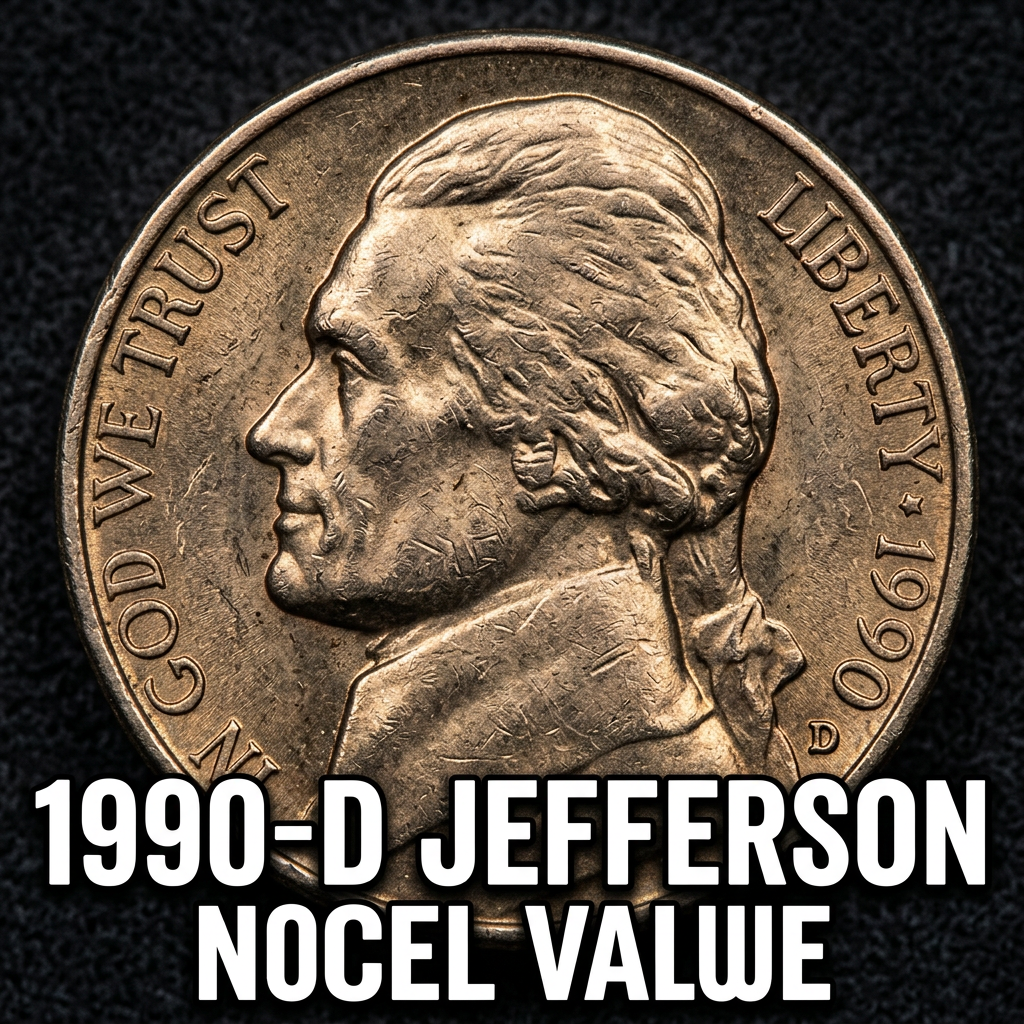
The 1990-D Jefferson Nickel is worth anywhere from face value (5 cents) in heavily worn condition to $10 or more in pristine, uncirculated grades — and a handful of top-tier examples have sold for well over $100 at auction. If you just found one of these coins in your change jar or an old collection, you’re in the right place to find out exactly what it’s worth.
When you’re trying to figure out the value of any coin you’ve found at home, a coin identifier and value app can save you a lot of time and guesswork. These tools let you snap a photo and get an instant estimate, which is a great starting point before you dig deeper into the details.
—
What Is the 1990-D Jefferson Nickel?
The 1990-D Jefferson Nickel was struck at the Denver Mint, which is why it carries the small “D” mintmark on the coin’s obverse (front), just to the right of Jefferson’s portrait. Denver produced a massive number of these coins — over 663 million pieces — making the 1990-D one of the most common Jefferson Nickels from that era.
Because so many were made, most circulated examples aren’t rare at all. You’ll find them in pocket change, coin rolls, and old jars across the country. That said, condition is everything in coin collecting. A well-worn 1990-D is essentially worth face value, while one that never saw circulation can command a surprisingly solid premium.
The coin features the classic Felix Schlag design: Thomas Jefferson’s portrait on the front and Monticello on the reverse. It’s made of a 75% copper and 25% nickel composition, standard for Jefferson Nickels since 1946.
—
1990-D Jefferson Nickel Value by Grade
Here’s a quick breakdown of typical values based on coin condition:
| Grade | Condition Description | Estimated Value |
|---|---|---|
| Good (G-4) | Heavy wear, major details visible | Face value ($0.05) |
| Fine (F-12) | Moderate wear, all lettering clear | $0.10 – $0.25 |
| Extremely Fine (EF-40) | Light wear on high points | $0.25 – $0.75 |
| About Uncirculated (AU-58) | Slight wear, nearly full luster | $0.75 – $2.00 |
| Mint State (MS-63) | Uncirculated, some contact marks | $1.50 – $4.00 |
| Gem Mint State (MS-65) | Uncirculated, sharp strike, minimal marks | $5.00 – $15.00 |
| Superb Gem (MS-67+) | Near perfect, very rare at this level | $50.00 – $150.00+ |
For a deeper look at certified mint state Jefferson Nickel auction prices and recent sales data, it’s worth checking dedicated coin pricing databases where real transactions are tracked.
—
What Makes a 1990-D Nickel More Valuable?
While most 1990-D Nickels are common coins, a few factors can push the value significantly higher.
Full Steps designation is one of the biggest value drivers for Jefferson Nickels. This refers to the steps of Monticello on the reverse — if all five or six steps are fully struck and clearly visible with no wear or weakness, the coin earns a “FS” label from grading services like PCGS or NGC. A 1990-D MS-65 FS can be worth many times more than a standard MS-65.
Strike quality and luster also matter. Denver-minted coins from this period sometimes suffered from weak strikes or bag marks from the mint’s production process. A coin with an unusually sharp strike and brilliant, original luster stands out in the marketplace.
Errors are another category worth watching for. Although no major varieties are widely reported for the 1990-D, doubling on lettering, off-center strikes, and die cracks occasionally appear and can attract collector interest.
—
How to Check the Value of Your 1990-D Nickel
The easiest way to get a ballpark value on your coin is to compare it to recent sold listings on eBay or Heritage Auctions. Look for coins in similar condition to yours and see what buyers actually paid — not just asking prices.
If you want a quick, on-the-go solution, CoinHix is a popular app among casual collectors and serious hobbyists alike. CoinHix allows you to look up Jefferson Nickel prices by date, mintmark, and grade, giving you a realistic range based on real market data rather than outdated price guides.
For a comprehensive overview of 1990 nickel values across all mint marks and conditions, dedicated coin value resources can walk you through the full picture, including Philadelphia and San Francisco issues from the same year.
If you believe your coin might grade MS-65 or higher, professional grading through PCGS or NGC is well worth the submission fee. A certified high-grade example is far easier to sell and typically commands a stronger price than a raw, ungraded coin.
—
FAQ
Q: Is a 1990-D Jefferson Nickel rare?
A: No, the 1990-D is not considered a rare coin. With over 663 million minted, it’s one of the more common Jefferson Nickels. However, high-grade examples — especially those with Full Steps — are genuinely scarce and can be worth significant money to collectors.
Q: How can I tell if my 1990-D nickel has Full Steps?
A: Look at the base of Monticello on the reverse side of the coin. Count the horizontal lines (steps) at the bottom of the building. If you can clearly see five or six complete, uninterrupted steps with no weakness or wear, your coin may qualify for a Full Steps designation. A magnifying glass or loupe helps with this. You can also use CoinHix to understand what graders look for in Full Steps coins.
Q: Where is the mintmark on a 1990-D nickel?
A: The “D” mintmark is located on the obverse (front) of the coin, just to the right of Jefferson’s portrait near the rim. It’s a small letter but easy to spot with good lighting and a basic magnifier.