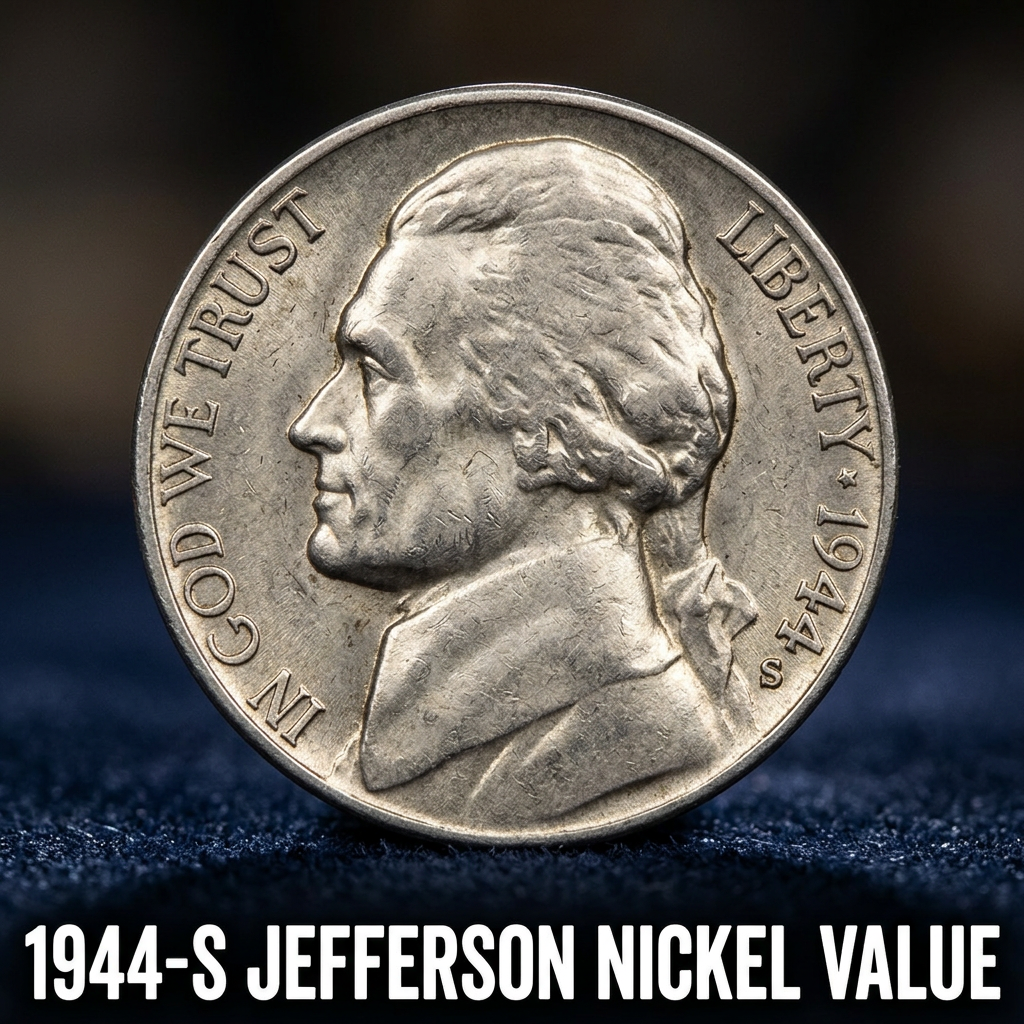
The 1944-S Jefferson Nickel is worth anywhere from $0.50 in heavily worn condition to over $50 or more in mint state, with top-grade examples occasionally selling for hundreds of dollars at auction. If you’ve stumbled across one of these old wartime nickels, you’re in the right place — let’s break down exactly what you might have.
The 1944-S Jefferson Nickel comes from the San Francisco Mint and is part of a fascinating wartime series that most people don’t know about. During World War II, the U.S. government needed nickel for the war effort, so from 1942 to 1945, the five-cent coin was made from a special alloy of 56% copper, 35% silver, and 9% manganese — no nickel at all!
That silver content alone makes these coins more interesting than your average pocket change. If you’re not sure what you’re holding, a good coin identifier and value app can help you confirm the date, mint mark, and grade before you decide what to do with it.
How to Identify a 1944-S Wartime Jefferson Nickel
The easiest way to confirm you have a 1944-S Jefferson Nickel is to flip it over and look at the top of Monticello on the reverse side. Wartime nickels from this era have a large mint mark — “S” for San Francisco — placed above the dome of the building. This is different from pre-war nickels, which had a small mint mark on the right side of the reverse.
On the obverse (heads side), you’ll see Thomas Jefferson’s portrait facing left, with the date 1944 clearly stamped to the right. The coin should measure 21.2mm in diameter and weigh about 5 grams.
One thing to check carefully is whether the coin has any surface corrosion or cleaning marks. Cleaned coins lose significant collector value, even if they look shiny. A coin in natural, original condition — even if a little worn — is almost always worth more to a serious collector than one that’s been polished.
1944-S Jefferson Nickel Value by Grade
The condition of your coin makes a huge difference in what it’s worth. Coin collectors use a grading scale from 1 to 70, with circulated coins generally falling below MS-60 and uncirculated mint state coins grading MS-60 and above.
Here’s a general value table to help you understand where your coin might fall:
| Grade | Condition Description | Estimated Value |
|---|---|---|
| G-4 (Good) | Heavy wear, design visible | $0.50 – $1.50 |
| VF-20 (Very Fine) | Moderate wear, clear details | $2 – $5 |
| EF-40 (Extremely Fine) | Light wear on high points | $5 – $10 |
| MS-63 (Uncirculated) | No wear, some bag marks | $15 – $35 |
| MS-65 (Gem Uncirculated) | Sharp strike, minimal marks | $50 – $150+ |
| MS-67+ (Superb Gem) | Near-perfect, top registry | $300 – $1,000+ |
For the most up-to-date auction results and dealer prices, you can check current 1944 Jefferson Nickel MS grade price data to see what buyers are actually paying right now.
What Makes the 1944-S Nickel Worth More or Less
Beyond the grade, a few other factors can push the value of your 1944-S Jefferson Nickel up or down. Full Steps (FS) designation is one of the biggest. On the reverse, Monticello has a staircase at the base. If five or six of those steps are fully struck and clearly visible, the coin can be worth dramatically more — sometimes 5 to 10 times the standard price for the same grade.
Strike quality is another factor. San Francisco Mint nickels from this era are known to sometimes have soft or weak strikes, making a sharply struck example harder to find and more desirable.
Toning can also matter. Natural, even toning that developed over decades can actually enhance a coin’s eye appeal and collector value. Artificial or blotchy toning, however, is a red flag for most buyers.
CoinHix is a great tool to scan and identify these details quickly if you’re not sure what you’re looking at. With the app, you can photograph your coin and get instant feedback on grade, key features, and estimated value — all from your phone.
How Many 1944-S Jefferson Nickels Were Made?
The San Francisco Mint produced approximately 21,640,000 Jefferson Nickels in 1944. That’s a reasonably large mintage, which is why most circulated examples are affordable and easy to find.
However, uncirculated specimens in high grades are considerably scarcer than the overall mintage suggests. Most of these coins were spent in everyday commerce during and after the war, and very few were saved in top condition. This is why MS-65 and above examples command meaningful premiums.
For a deeper dive into how condition and rarity affect pricing, this detailed 1944 nickel value breakdown by grade and mint mark is well worth reading before you buy or sell.
Should You Sell, Hold, or Grade Your 1944-S Nickel?
If your coin looks well-worn and shows no special characteristics, it’s probably worth face value to a few dollars at most. But if it looks crisp, bright, and uncirculated with sharp steps on Monticello, it could be worth getting professionally graded by PCGS or NGC.
Professional grading adds credibility and typically increases resale value — especially if your coin grades MS-65 or higher. The cost to submit a coin is usually $20–$40, so it’s only worth doing if your coin realistically has strong eye appeal and strike.
Not sure where to start? CoinHix lets you do a quick preliminary assessment right from your camera roll. It’s a smart first step before spending money on professional grading services.
—
FAQ About the 1944-S Jefferson Nickel
Q: Does the 1944-S Jefferson Nickel contain silver?
A: Yes! Wartime Jefferson Nickels minted between 1942 and 1945, including the 1944-S, are made from 35% silver. The large mint mark above Monticello on the reverse confirms it’s a silver war nickel.
Q: What does “Full Steps” mean and why does it matter for the 1944-S nickel value?
A: Full Steps (FS) refers to the complete, sharp striking of the steps on Monticello’s base on the reverse. Coins with 5FS or 6FS are much rarer and command significant premiums — sometimes several times the value of a non-FS example in the same grade.
Q: How can I tell if my 1944-S Jefferson Nickel has been cleaned?
A: Cleaned coins often show fine parallel lines (hairlines) under a loupe or magnifying glass, an unnatural brightness, or a washed-out look that doesn’t match the coin’s age. Original, uncleaned coins have a more mellow, natural surface. When in doubt, use CoinHix to scan the coin and get a second opinion before assuming it’s pristine.