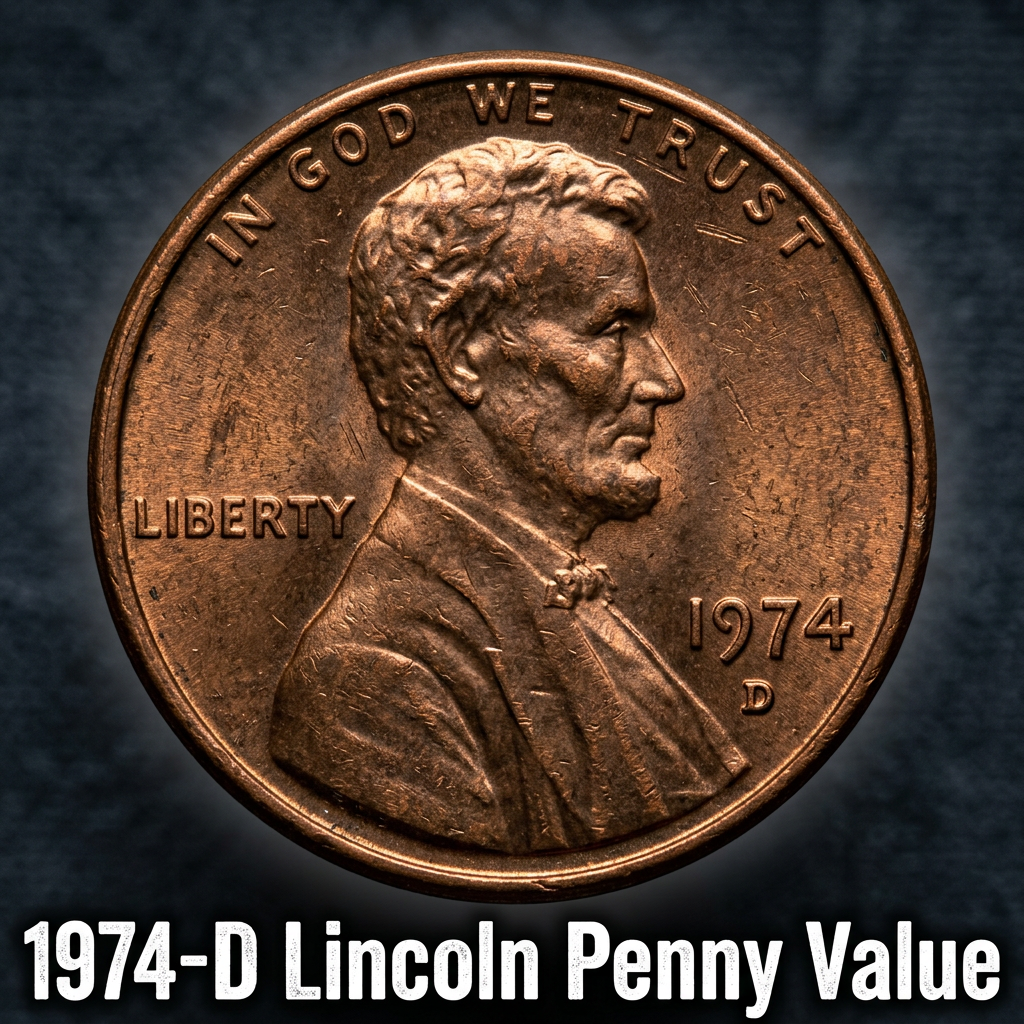
The 1974-D Lincoln Penny is worth anywhere from a few cents in heavily circulated condition to $10 or more in uncirculated grades — and in rare high-grade examples, collectors have paid significantly more. If you found one of these coins in a jar, drawer, or old wallet, you’re in the right place to find out exactly what you’ve got.
What Is the 1974-D Lincoln Penny?
The “D” in 1974-D stands for Denver, meaning this penny was struck at the U.S. Mint’s Denver facility. In 1974, the Denver Mint produced over 4.2 billion Lincoln cents — making this one of the higher-mintage years in modern U.S. coinage history.
Because so many were made, most 1974-D pennies that you’ll find in circulation are common and worth only face value or close to it. However, that doesn’t mean every single one is worthless. Condition is everything when it comes to coin collecting, and even a “common” coin in perfect condition can surprise you.
If you’re not sure how to grade your coin or identify it properly, using a coin identifier and value app is one of the easiest ways to get started — especially if you’re new to coin collecting.
How Much Is a 1974-D Lincoln Penny Worth?
The value of your 1974-D penny depends almost entirely on its grade — a term collectors use to describe a coin’s physical condition. A coin that has been passed around in pockets and registers for decades will show wear on Lincoln’s cheek, the lettering, and the high points of the design. These are considered “circulated” coins.
Uncirculated coins, on the other hand, were never used as money. They still have their original mint luster and sharp details. These are the ones collectors want — and pay more for.
Here’s a quick look at typical values:
| Grade | Condition Description | Estimated Value |
|---|---|---|
| Good (G-4) | Heavy wear, outline visible | $0.01 – $0.05 |
| Fine (F-12) | Moderate wear, some detail | $0.05 – $0.10 |
| Extremely Fine (EF-40) | Light wear on high points | $0.10 – $0.25 |
| Uncirculated (MS-63) | No wear, some marks | $0.50 – $2.00 |
| Gem Uncirculated (MS-65) | Near perfect, strong luster | $3.00 – $10.00+ |
| MS-67 Red (Top Grade) | Virtually flawless, full red | $100.00+ |
For a deeper breakdown of certified sale prices by grade, you can check out the 1974-D Lincoln Penny price data across mint state grades — it’s a useful resource when comparing your coin to what’s actually selling.
The Red, Brown, and Red-Brown Distinction
One detail that surprises a lot of people is that Lincoln cents in uncirculated condition are graded not just by number, but also by color designation: Red (RD), Red-Brown (RB), or Brown (BN).
A fresh copper coin starts out bright red. Over time — even without circulation — the copper tones down to red-brown and eventually brown. “Red” coins are the most desirable because they’ve retained their original color.
A 1974-D penny graded MS-65 Red will be worth noticeably more than the same grade in Brown. If your coin still looks shiny and coppery, that’s a good sign. If it’s dark and dull, it may still be uncirculated but will fall into the lower color category.
This is where a grading tool or app really helps. CoinHix lets you look up exact certified values by grade and color designation, so you’re not just guessing — you’re seeing what real coins have actually sold for.
Are Any 1974-D Pennies Rare or Valuable Errors?
Most 1974-D pennies are common, but there is one famous anomaly tied to 1974 Lincoln cents — the 1974 Aluminum Penny. The U.S. Mint experimented with aluminum as a cheaper alternative to copper and struck around 1.5 million test pieces dated 1974. Nearly all were destroyed, but a small number slipped out. These are extremely rare and technically illegal to own, but they’ve made headlines for their potential value.
For the standard 1974-D copper penny, known errors include doubled die varieties, off-center strikes, and die cap errors. These are relatively uncommon but do appear from time to time. If your penny looks unusual — text that appears doubled, an off-center design, or strange shape — it could be worth getting examined by a professional.
You can also explore detailed 1974 penny value information including error varieties to see if your coin matches any known varieties.
Should You Get Your 1974-D Penny Graded?
For most circulated 1974-D pennies, professional grading isn’t worth the cost. Grading services like PCGS or NGC typically charge $20–$30 or more per coin, which far exceeds the value of a worn penny.
However, if your coin looks absolutely pristine — full red color, no scratches, sharp strike — it might be worth considering. An MS-67 Red example certified by PCGS has sold for over $100 at auction, and even an MS-65 Red can bring $5–$10 or more from the right buyer.
Not sure if yours qualifies? CoinHix is a great place to scan population reports and see how many coins have been graded at each level. If very few exist at a high grade, yours could be genuinely special. And if you want a quick answer on the go, the CoinHix app makes it easy to look up values and compare grades from your phone.
FAQ
Q: Is a 1974-D penny worth keeping?
A: Most circulated 1974-D pennies are only worth face value, but uncirculated examples — especially in high grades with full red color — can be worth anywhere from $2 to $100 or more. It’s always worth checking the condition before tossing it aside.
Q: How do I know if my 1974-D penny is uncirculated?
A: Look for original mint luster — a slight shine or cartwheel effect when you tilt the coin under light. There should be no flat or worn spots on Lincoln’s cheek or the lettering. If you’re unsure, a coin identifier app can help you compare your coin to graded examples.
Q: What makes a 1974-D penny valuable?
A: The biggest factors are grade and color. A coin that grades MS-65 Red or higher — meaning it’s virtually unworn and still has its original copper-red color — is the most desirable to collectors. Error coins with doubling or off-center strikes can also carry a premium depending on the variety and severity.