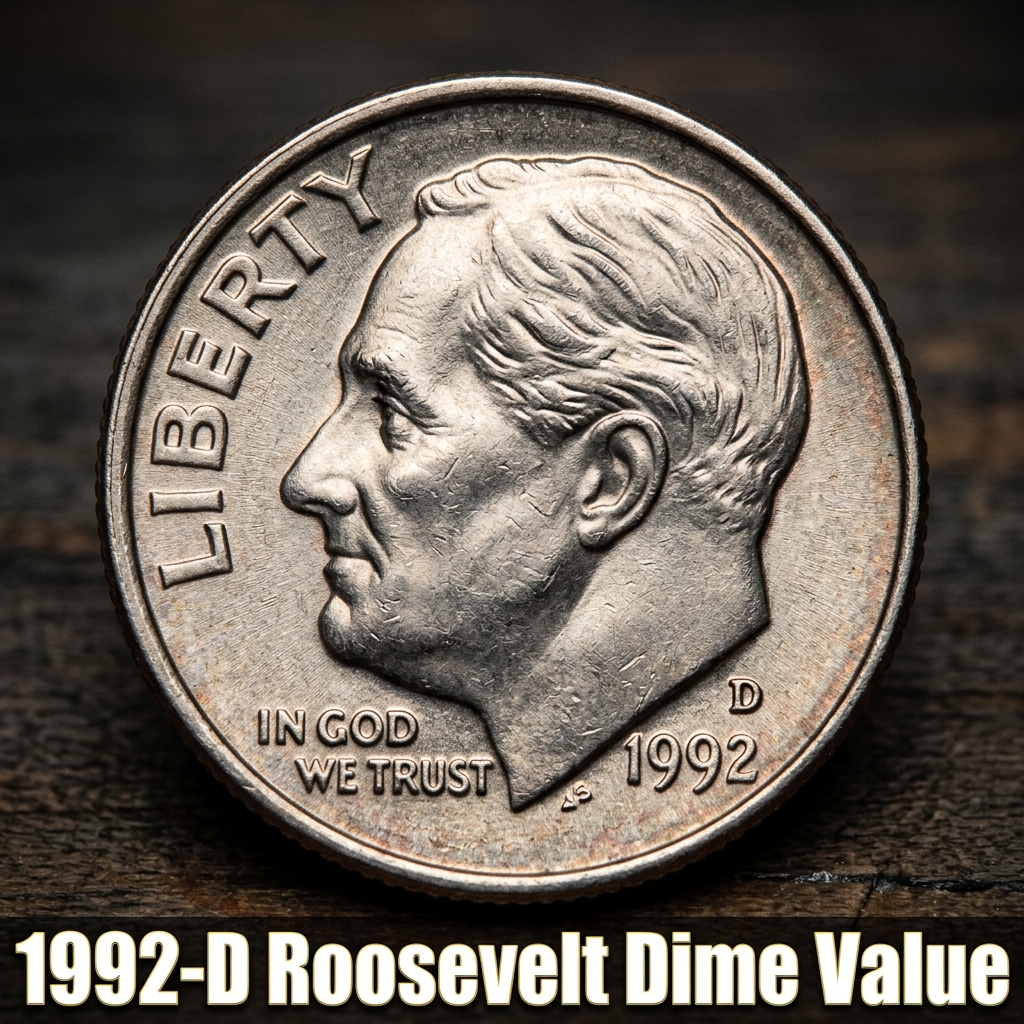
The 1992-D Roosevelt Dime is worth anywhere from 10 cents in heavily worn condition to around $10 or more in pristine uncirculated grades — and certain high-grade examples have sold for significantly higher at auction.
If you found one of these dimes in your change jar or an old coin collection, you’re probably wondering whether it’s just face value or something more exciting. The good news is that this coin has some real collector interest, and knowing what to look for can help you figure out exactly what you’ve got.
What Is the 1992-D Roosevelt Dime?
The 1992-D Roosevelt Dime was struck at the Denver Mint, indicated by the small “D” mintmark on the obverse (front) of the coin, just above the date. In 1992, the Denver Mint produced over 616 million of these dimes — so they’re not rare in the traditional sense.
Roosevelt dimes have been minted since 1946, honoring President Franklin D. Roosevelt. They’re made of a copper-nickel clad composition (75% copper, 25% nickel), which replaced the old 90% silver dimes used before 1965.
Because so many were made, most circulated 1992-D dimes are only worth face value. However, coins in uncirculated or mint state condition — meaning they never passed through everyday commerce — can carry a meaningful premium among collectors. That’s where the real value conversation gets interesting.
If you’re not sure how to read mintmarks or judge a coin’s condition, a coin identifier and value app can walk you through the basics right from your smartphone. These tools are especially helpful for beginners trying to figure out what they have before heading to a coin shop.
1992-D Roosevelt Dime Value by Grade
Coin grading is measured on a scale from 1 to 70, where higher numbers mean better condition. A coin graded MS-65 or above (MS stands for Mint State) is considered gem quality — sharp details, original luster, and very few contact marks.
Here’s a general value breakdown for the 1992-D Roosevelt Dime:
| Grade | Description | Estimated Value |
|---|---|---|
| Circulated (G–VF) | Worn, used in everyday transactions | Face value ($0.10) |
| MS-63 | Uncirculated, minor blemishes | $1–$3 |
| MS-65 | Gem uncirculated | $3–$8 |
| MS-67 | Superb gem, very few marks | $10–$50+ |
| MS-68 and above | Near-perfect, auction-level | $100+ |
For more detailed pricing data broken down by grade, you can check out current market values for Roosevelt Dimes in mint state condition to see how recent sales are trending.
What Makes a 1992-D Dime Worth More Than Face Value?
The biggest factor is coin condition. A dime that came straight from a mint roll and was never spent will have full, sharp detail on Roosevelt’s portrait and on the torch, olive branch, and oak branch on the reverse. The coin’s surface should have original mint luster — that subtle sheen that reflects light beautifully.
Coins that show heavy wear, scratches, or corrosion are simply not worth more than 10 cents to most collectors. But if you find one that still looks fresh and shiny, it’s worth taking a closer look.
Strike quality also matters. Some 1992-D dimes came off the press with weaker strikes, particularly on Roosevelt’s cheek and the bands of the torch on the reverse. A coin with “Full Bands” (often abbreviated FB) on the torch is considered more desirable and can command a higher price.
CoinHix is a great resource for tracking real-time coin prices and understanding how grade and strike quality affect value. Many collectors use CoinHix to monitor auction results and compare sales before buying or selling.
How to Tell If Your 1992-D Dime Is Uncirculated
Here’s a simple test: hold the coin at an angle under a lamp. Does it have a soft, flowing luster across the surface? If yes, it’s likely uncirculated. If the high points (Roosevelt’s cheek, hair, and the torch bands) look dull or flat, it’s been circulated.
Look for the “D” mintmark just above the date on the obverse. That confirms it came from Denver.
Also check for any spots, dark toning, or cleaning marks. Cleaned coins — even ones that look bright — are actually worth less to collectors because the original surface has been altered.
For a full breakdown of what the 1992-D Roosevelt Dime is worth across all grades and conditions, this guide covering the complete 1992 dime value and what to look for is a helpful reference for new and experienced collectors alike.
You can also download CoinHix to scan your coin and get an instant value estimate — no coin expertise required.
Is the 1992-D Roosevelt Dime a Good Coin to Collect?
For new collectors, Roosevelt dimes from the early 1990s are an excellent starting point. They’re affordable, widely available, and help you learn how to grade coins without spending a lot of money upfront.
The 1992-D isn’t a key date or a rare variety, but high-grade examples are harder to find than you might think. If you happen to have a roll of original uncirculated coins from 1992, checking each one for quality could be surprisingly rewarding.
Building a complete set of Roosevelt dimes from the 1990s is a fun and manageable project for beginners — and it gives you a reason to learn about mintmarks, grading, and coin history all at once.
FAQ
Q: Is the 1992-D Roosevelt Dime made of silver?
A: No. The 1992-D dime is made of copper-nickel clad, not silver. The U.S. Mint stopped making silver dimes for circulation after 1964. The only 1992 silver dimes were special Proof versions sold in collector sets.
Q: How many 1992-D Roosevelt Dimes were minted?
A: The Denver Mint produced approximately 616,273,000 dimes in 1992. Because so many were made, circulated examples are common and worth only face value. Uncirculated coins in higher grades are where collectors find value.
Q: Where can I get my 1992-D Roosevelt Dime appraised?
A: You can visit a local coin dealer, submit your coin to a professional grading service like PCGS or NGC, or use a digital tool like CoinHix to get a quick value estimate based on current market data. For rare or high-grade coins, professional grading is often worth the investment.