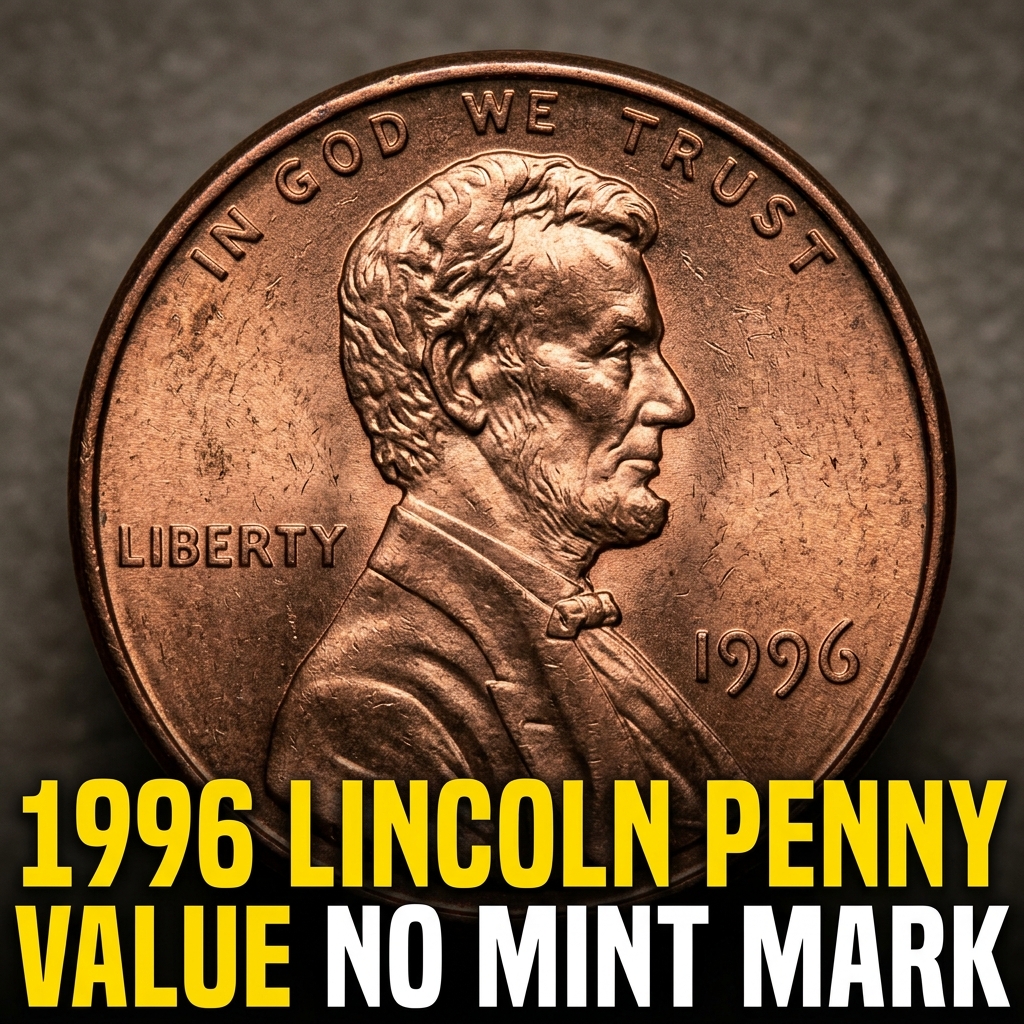
The 1996 Lincoln Penny with no mint mark is worth anywhere from 1 cent in heavily worn condition to over $10 or more in pristine, uncirculated grades — and certain high-grade examples have sold for significantly more at auction.
Most people toss pennies aside without a second thought, but if you’ve found a 1996 Lincoln cent with no mint mark sitting in an old jar or coin roll, it’s worth taking a closer look. This guide will walk you through everything you need to know about its value, condition, and what makes certain examples stand out.
What the No Mint Mark Means on a 1996 Penny
The mint mark — or lack thereof — tells you exactly where a coin was produced. A 1996 Lincoln Penny with no mint mark was struck at the Philadelphia Mint, which traditionally does not stamp a mint mark on its cents.
In 1996, the Philadelphia Mint produced over 6.6 billion Lincoln cents, making this one of the highest-mintage coins of the decade. Because so many were made, most circulated examples carry very little premium above face value.
That said, condition is everything in coin collecting. A well-preserved, uncirculated specimen is a completely different story from a well-worn pocket piece.
If you want a quick way to identify your coin and get an instant estimate, a coin identifier and value app can scan your penny using your phone’s camera and give you grade and value information in seconds — no experience needed.
1996 Lincoln Penny Value by Grade
Here’s a straightforward breakdown of what a 1996 Lincoln Penny (no mint mark) is worth based on its condition:
| Grade | Condition Description | Estimated Value |
|---|---|---|
| Good (G-4) | Heavy wear, flat details | $0.01 |
| Fine (F-12) | Moderate wear, some detail | $0.05–$0.10 |
| Extremely Fine (EF-40) | Light wear on high points | $0.15–$0.25 |
| Mint State 63 (MS-63) | Uncirculated, minor marks | $0.50–$2.00 |
| Mint State 65 (MS-65) | Gem uncirculated, strong luster | $3.00–$8.00 |
| Mint State 67 (MS-67) or Higher | Superb gem, near perfect | $50–$200+ |
For the most up-to-date auction results and dealer prices, you can check recent 1996 Lincoln Penny MS-RD price data to see what collectors are actually paying right now.
What Makes a 1996 Penny More Valuable
Even though billions were minted, not all 1996 no-mint-mark pennies are equal. A few factors push certain examples into surprisingly high value territory.
Full Red Designation (RD): Lincoln cents graded “Red” retain the original copper-red luster from the mint. These coins are far more attractive to collectors than brown or red-brown examples and command noticeably higher prices.
High Grade Population: At the MS-67 RD level and above, the population of surviving coins drops dramatically. PCGS and NGC census data show that only a handful of coins have achieved MS-68 or higher — and those can sell for hundreds of dollars.
Errors and Varieties: Some 1996 Lincoln cents show interesting minting anomalies like doubled dies, off-center strikes, or die cracks. These error coins attract specialty collectors and can be worth multiples of a regular example. Always examine your coin closely under good lighting before assuming it’s common.
Using CoinHix** on your phone is a smart starting point to get a preliminary grade estimate before deciding whether to send your coin to a professional grading service like PCGS or NGC.
How to Grade Your 1996 Lincoln Penny at Home
You don’t need to be an expert to get a general sense of your penny’s condition. Here’s a simple approach.
Start by looking at Lincoln’s cheekbone and hair above his ear — these are the first areas to show wear. If the details there are sharp and you can see every strand of hair, your coin is likely uncirculated or near-uncirculated.
Next, check the luster. Hold the coin under a single light source and tilt it slightly. An uncirculated coin will have a flowing, cartwheel luster that moves across the surface. Dullness, cloudiness, or cleaning marks will hurt the grade and value significantly.
Finally, look at the fields — the flat open areas of the coin. Bag marks and contact marks are common on mint-state coins but fewer marks means a higher grade. If your coin looks exceptional, consider having it professionally graded.
For a more detailed breakdown of 1996 penny values across all grades and mint marks, this 1996 penny value guide offers a thorough look at what collectors and dealers are paying today.
Should You Hold Onto Your 1996 No Mint Mark Penny
For most circulated examples, the honest answer is that they’re worth face value. But that’s not a reason to dismiss Lincoln cents from the 1990s entirely.
If you’re finding rolls of unsearched coins or sorting through old collections, it’s absolutely worth checking each penny before spending it. High-grade red examples and error coins do pop up occasionally, and missing one because you didn’t look twice would be a shame.
CoinHix makes it easy to scan coins one by one and keep a digital log of anything interesting you find, which is especially useful if you’re working through a large batch of old pocket change or estate coins.
The 1996 Lincoln Penny is never going to make you rich on its own — but developing the habit of checking coins carefully can pay off over time, especially as you start spotting genuinely scarce pieces in the mix.
—
FAQ About the 1996 Lincoln Penny No Mint Mark
Q: Is a 1996 penny with no mint mark rare?
A: No, it is not rare. The Philadelphia Mint produced over 6.6 billion of them in 1996, making it one of the most common Lincoln cents of the era. However, examples in superb gem uncirculated grades (MS-67 RD and above) are genuinely scarce and can be worth real money.
Q: How do I know if my 1996 penny is uncirculated?
A: Look for original mint luster — a flowing shine that moves across the coin when you tilt it under light. An uncirculated coin will also show sharp detail in Lincoln’s hair and on the Memorial reverse. Any flatness, rubbing, or dullness on the high points suggests the coin has circulated.
Q: What is the most valuable 1996 Lincoln penny ever sold?
A: Top-pop examples graded MS-68 RD by PCGS or NGC have sold for hundreds of dollars at major coin auctions. Error coins such as dramatic off-center strikes or clear doubled dies can also bring significant premiums depending on the severity and collector demand at the time of sale.