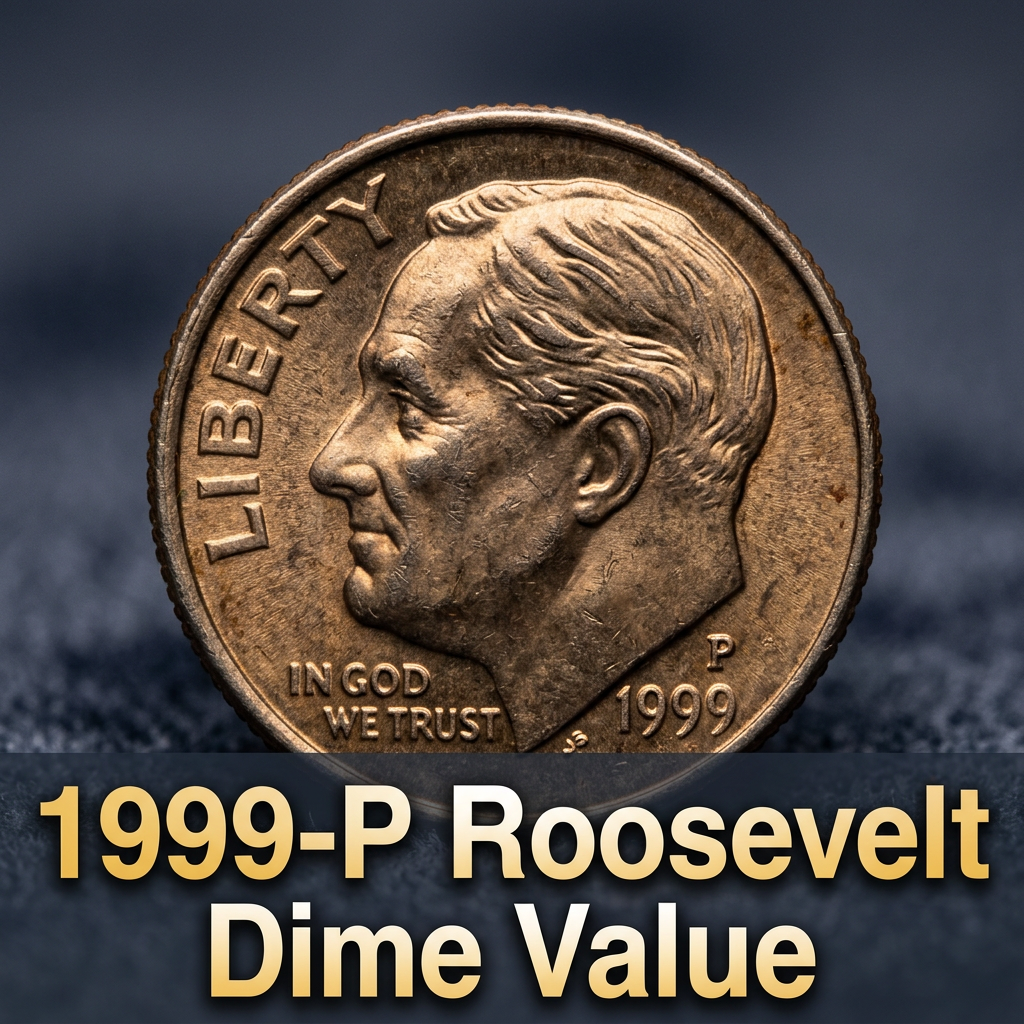
The 1999-P Roosevelt Dime is worth anywhere from face value (10 cents) in heavily worn condition to over $20 or more in pristine uncirculated grades. Most circulated examples you pull out of your pocket change are worth exactly 10 cents, but coins in top mint state grades can surprise you with real collector value.
What Makes the 1999-P Roosevelt Dime Special
The 1999-P Roosevelt Dime was struck at the Philadelphia Mint, indicated by the small “P” mintmark on the obverse just above the date. Philadelphia produced hundreds of millions of these dimes in 1999, making them common in circulated grades but still collectible in high-quality uncirculated condition.
Roosevelt dimes have been produced since 1946 and remain one of the most recognized coins in American history. The 1999-P issue is part of the modern clad series, meaning it’s made of a copper-nickel alloy rather than silver. Don’t let that discourage you — condition and eye appeal still drive value significantly for serious collectors.
If you’ve found one of these in a jar of old change or a coin collection you inherited, a good coin identifier and value app can help you quickly assess whether your coin is worth anything beyond face value.
1999-P Roosevelt Dime Value by Grade
The grade of your coin is the single biggest factor in determining its value. Circulated coins — ones that have been passed hand to hand over the years — show wear on Roosevelt’s cheek and hair details. These are generally worth only face value or a small premium.
Uncirculated coins, also called mint state coins, retain their original luster and sharp detail. The higher the grade on the Sheldon scale (from MS-60 to MS-70), the more valuable the coin becomes. A 1999-P dime graded MS-67 or higher can fetch meaningful premiums among registry set collectors.
Here’s a quick reference for 1999-P Roosevelt Dime values across different grades:
| Grade | Condition | Estimated Value |
|---|---|---|
| Good (G-4) | Heavy wear, major details visible | $0.10 (face value) |
| Fine (F-12) | Moderate wear, clear lettering | $0.10 – $0.25 |
| Extremely Fine (EF-45) | Light wear on high points | $0.25 – $0.75 |
| Mint State 63 (MS-63) | Uncirculated, some contact marks | $1 – $3 |
| Mint State 65 (MS-65) | Gem uncirculated, strong luster | $3 – $8 |
| Mint State 67 (MS-67) | Superb gem, near perfect | $15 – $25+ |
For more detailed grade-by-grade auction data, you can check out 1999-P Roosevelt Dime mint state price records and recent sales to see what collectors are actually paying at auction right now.
How to Check If Your 1999-P Dime Is Worth More
First, look at the coin in good lighting. Tilt it gently back and forth. If you can see an unbroken cartwheel shine (called luster), your coin likely hasn’t been circulated and could be worth grading.
Next, examine the mintmark. It should read “P” for Philadelphia. Coins without a mintmark are proof coins struck at San Francisco and are a completely different animal in terms of value and collector interest.
You can also use CoinHix to scan your coin and get an instant grade estimate and value range. CoinHix makes it easy for everyday people to understand what their coins might be worth without needing deep numismatic knowledge.
What Affects the 1999-P Roosevelt Dime Price Most
Beyond grade, a few other factors can bump up the value of your 1999-P Roosevelt Dime. Strike quality matters — some coins from this era show Full Bands (FB) on the torch on the reverse, which means the horizontal bands separating the torch’s flame are fully struck and clearly separated.
A coin certified as MS-67 FB or higher by PCGS or NGC can sell for considerably more than a regular MS-67 example. These Full Bands designations are prized by Roosevelt dime specialists.
Eye appeal also plays a role. A coin with no spots, no toning, and brilliant luster will always command a premium over a technically high-graded coin with distracting marks.
If you want to dig further into what factors drive the full value breakdown of 1999 dime varieties and grades, it’s worth reviewing variety-specific data before deciding whether to sell or hold.
Should You Get Your 1999-P Dime Graded?
Professional grading by PCGS or NGC costs money, so it only makes sense if your coin is in exceptional condition — think MS-66 or better. For most circulated 1999-P dimes, the grading fee will exceed the coin’s value.
However, if you have a roll of uncirculated coins from 1999 or inherited a mint set, it might be worth checking a handful of the best-looking pieces. Use CoinHix to get a quick pre-screening before committing to third-party grading costs.
Frequently Asked Questions
Q: Is the 1999-P Roosevelt Dime made of silver?
A: No. The 1999-P Roosevelt Dime is made of a clad composition — 91.67% copper and 8.33% nickel. Silver Roosevelt dimes were only produced from 1946 to 1964. If your dime’s edge shows a copper stripe, it’s clad, not silver.
Q: How many 1999-P Roosevelt Dimes were minted?
A: The Philadelphia Mint struck over 2.16 billion Roosevelt dimes in 1999 across both the P and D mints combined, making them very common in circulated grades. The sheer mintage is why circulated examples are essentially worth face value.
Q: Where is the best place to sell a high-grade 1999-P Roosevelt Dime?
A: For top-grade coins (MS-66 and above), eBay, major coin auction houses, or direct sales to Roosevelt dime specialists tend to fetch the best prices. Always get the coin certified first if you believe it’s in superb condition, as it significantly boosts buyer confidence and realized price.