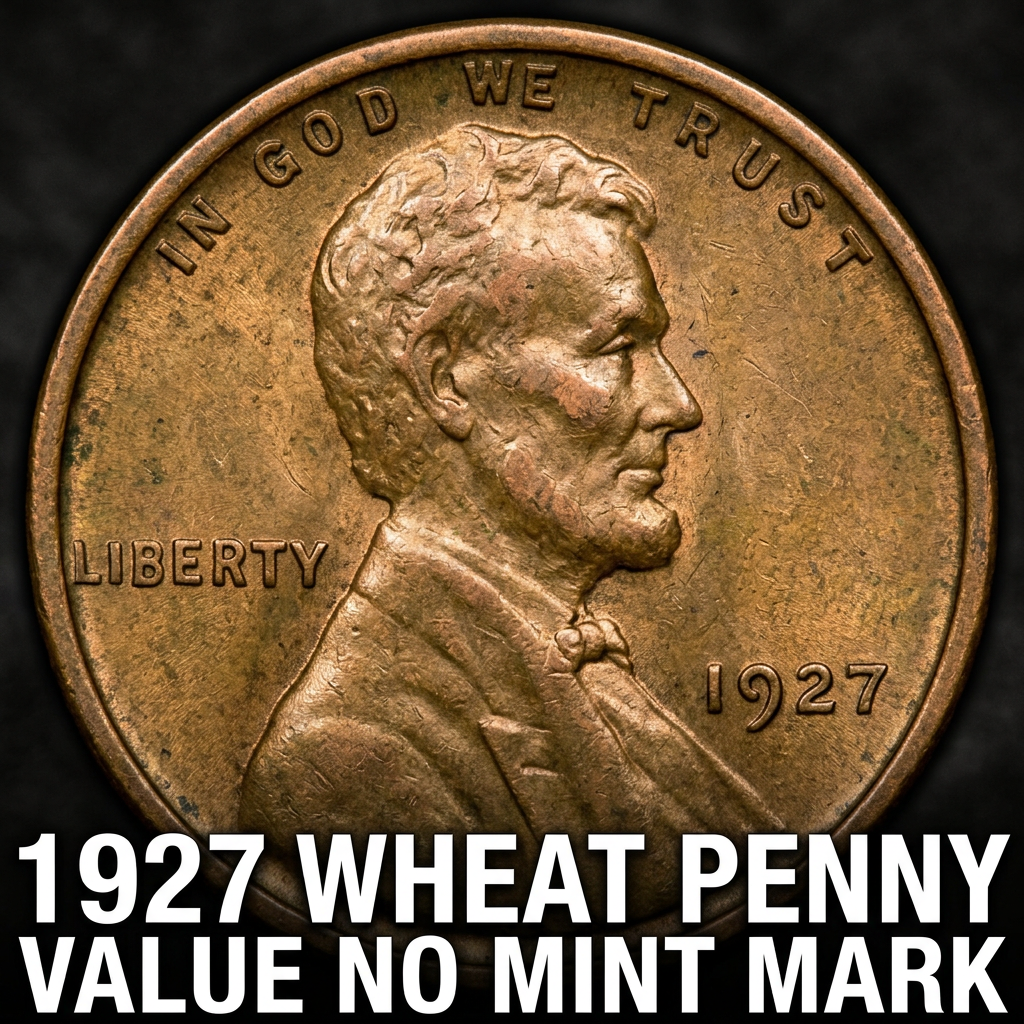
The 1927 Wheat Penny with no mint mark is worth anywhere from $0.25 in heavily worn condition to over $100 or more in top mint state grades. If you found one of these old Lincoln cents in a jar, a drawer, or an old wallet, you might be sitting on more than just a piece of history.
What the 1927 No Mint Mark Wheat Penny Actually Is
The 1927 Lincoln Wheat Penny without a mint mark was struck at the Philadelphia Mint, which was the main production facility for U.S. coinage at the time. Philadelphia coins never carried a mint mark, so a blank space below the date is completely normal — it doesn’t mean the coin is rare or damaged in any way.
That year, the Philadelphia Mint produced over 144 million of these pennies, making them fairly common in circulated grades. However, coins that survived in excellent condition are a different story. If you’re not sure what you’re looking at, using a coin identifier and value app is one of the easiest ways to get a quick read on what you have before paying for a professional appraisal.
The coin features Victor David Brenner’s iconic Lincoln portrait on the obverse and two wheat stalks flanking the words “ONE CENT” on the reverse. It’s made of 95% copper and weighs 3.11 grams — details that matter when authenticating your coin.
How Much Is the 1927 Wheat Penny Worth by Grade
The value of a 1927 no mint mark penny depends almost entirely on its condition, also called its grade. A coin that has been passed through millions of hands looks very different from one that sat untouched in a collection for decades.
Here’s a general breakdown of what collectors and dealers are paying for the 1927 Philadelphia Wheat Penny at different grade levels:
| Grade / Condition | Description | Estimated Value |
|---|---|---|
| Good (G-4) | Heavy wear, outline visible | $0.25 – $0.50 |
| Fine (F-12) | Moderate wear, details clear | $0.75 – $1.50 |
| Extremely Fine (EF-40) | Light wear on high points | $4 – $8 |
| About Uncirculated (AU-58) | Slight friction, nearly full luster | $15 – $25 |
| Mint State (MS-63) | Uncirculated, minor marks | $30 – $55 |
| Gem Mint State (MS-65+) | Superb, full red luster | $100 – $300+ |
For the most up-to-date market data on high-grade examples, you can check the 1927 Wheat Penny MS-RD price history and auction records to see what these coins are actually selling for right now.
What Makes a 1927 Penny Worth More
Color designation plays a big role in top-tier values. The professional grading services — PCGS and NGC — grade uncirculated copper coins as Red (RD), Red-Brown (RB), or Brown (BN). A full Red example with bright original copper luster commands the highest premiums by a wide margin.
Strike quality also matters. A sharply struck coin with full wheat stalk details on the reverse and crisp hair lines on Lincoln’s portrait will always outperform a weakly struck example in the same technical grade.
Watch out for cleaning. Many old pennies were polished or dipped by well-meaning collectors trying to make them shine. A cleaned coin loses significant value — sometimes 50% or more — even if the underlying detail looks great. Natural toning and original surfaces are always preferred.
How to Tell If Your 1927 Penny Is the Real Deal
Authentication is simpler than most people think. The 1927 Philadelphia Wheat Penny should weigh 3.11 grams on a postal or jewelry scale. The diameter is 19 millimeters. If the coin is magnetic, something is off — genuine Lincoln cents from this era are not magnetic.
Look at the date and lettering under good lighting. Genuine coins have sharp, even characters. If the date looks mushy or oddly spaced, it may have been altered from a different year, which is a known trick to fake rarer dates.
CoinHix is a great tool to help you cross-reference details and compare your coin against confirmed examples in their database. It takes the guesswork out of whether what you’re holding is authentic and gives you a realistic sense of value based on current market conditions.
Should You Get It Graded or Just Sell It As-Is
For circulated examples worth less than $5, professional grading through PCGS or NGC isn’t worth the cost — grading fees typically start around $25 to $40 per coin. But if your 1927 no mint mark penny looks like it’s never been touched, grading could significantly increase its resale value and buyer confidence.
If you want a full picture of the complete 1927 penny value across all mint marks and conditions, that resource walks through Philadelphia, Denver, and San Francisco issues side by side — helpful if you have a few different coins to sort through.
For a quick gut check before spending money on grading, CoinHix lets you scan and compare your coin in seconds, giving you a starting point on whether professional authentication makes financial sense.
—
Frequently Asked Questions
Q: Is a 1927 penny with no mint mark rare?
A: Not particularly. The Philadelphia Mint produced over 144 million of them in 1927, so worn examples are common. What’s rare is finding one in pristine, uncirculated condition with original red luster — those can be worth $100 or more.
Q: How do I know if my 1927 Wheat Penny is uncirculated?
A: An uncirculated coin will show no wear on Lincoln’s cheekbone or the high points of the wheat stalks. It may still have its original copper-red or orange color. Any rubbing or dullness on the high points means it entered circulation at some point.
Q: Where’s the best place to sell a 1927 Wheat Penny?
A: For common circulated examples, eBay or local coin shops are your best bet. For higher-grade or professionally graded specimens, major auction houses like Heritage Auctions or Stack’s Bowers will expose your coin to serious collectors willing to pay top dollar. Always compare a few recent sales before setting your price.