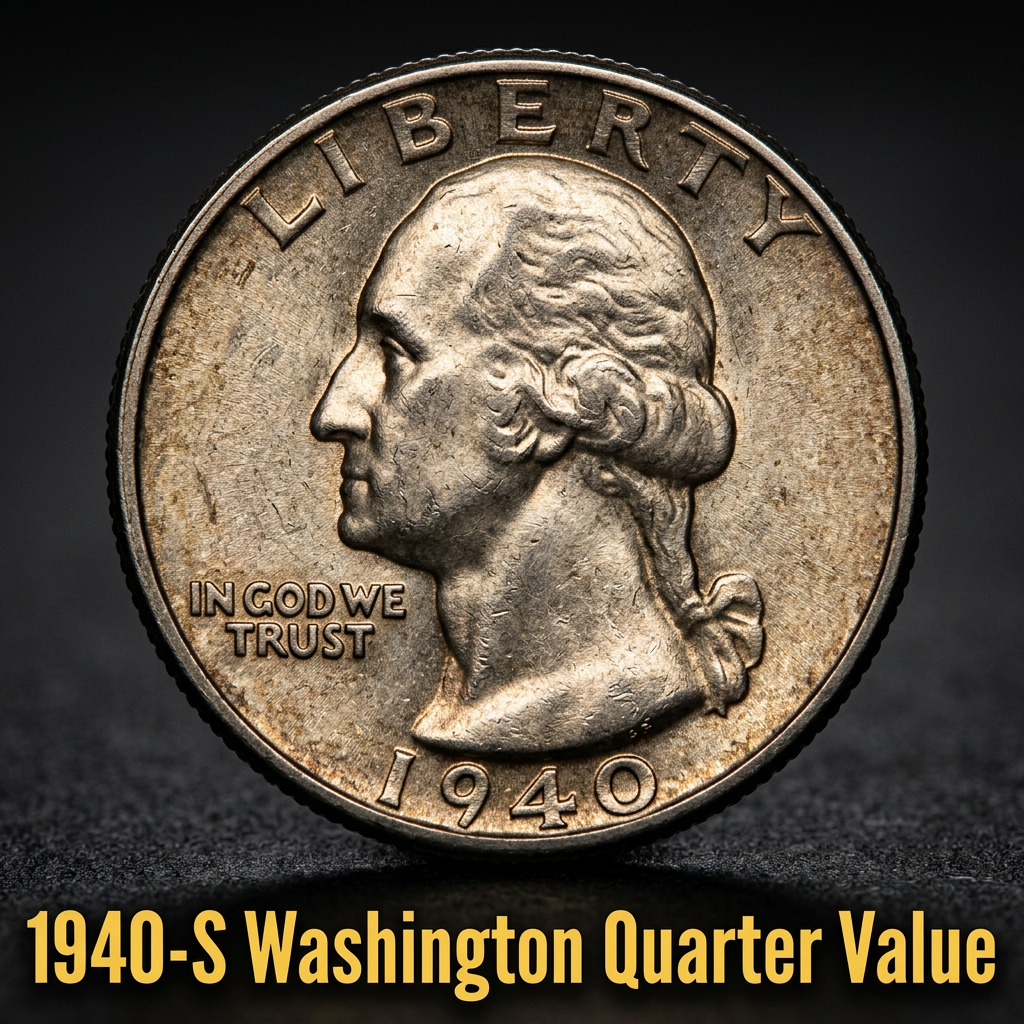
The 1940-S Washington Quarter is worth anywhere from $5 in heavily circulated condition to over $200 or more in high-grade mint state — and some certified examples have sold for even higher at auction. If you found one of these coins in an old jar, a drawer, or a collection, you might be sitting on more than pocket change.
What Makes the 1940-S Quarter Worth Collecting
The 1940-S Washington Quarter was struck at the San Francisco Mint, identified by the small “S” mintmark found on the reverse side, just above the “QUARTER DOLLAR” text. It was part of the early run of Washington Quarters, which began in 1932 and remain one of the most collected American coin series today.
George Washington’s portrait on the obverse was designed by sculptor John Flanagan, and the design features an eagle on the reverse. These coins were made from 90% silver and 10% copper, which gives them intrinsic metal value on top of any numismatic premium.
In 1940, the San Francisco Mint produced approximately 8,244,000 of these quarters — a mintage that is considered moderate for the series. That relative scarcity compared to Philadelphia issues helps boost the coin’s desirability among collectors, especially in higher grades.
If you’re just getting started identifying old coins, a coin identifier and value app can help you quickly figure out what you have and whether it’s worth pursuing further.
1940-S Washington Quarter Value by Grade
The condition of your coin — known as its “grade” in numismatic terms — makes a significant difference in how much it’s worth. A coin that has been heavily circulated and shows lots of wear is worth far less than one that looks nearly new.
Here’s a general value breakdown based on typical retail prices:
| Grade | Description | Estimated Value |
|---|---|---|
| Good (G-4) | Heavy wear, outlines visible | $5 – $7 |
| Very Fine (VF-20) | Moderate wear, clear details | $10 – $15 |
| Extremely Fine (EF-40) | Light wear on high points | $18 – $30 |
| About Uncirculated (AU-55) | Slight wear, nearly full luster | $35 – $55 |
| Mint State (MS-63) | No wear, some contact marks | $65 – $100 |
| Mint State (MS-65) | Gem quality, strong luster | $175 – $250+ |
For the most current and detailed 1940-S Washington Quarter price data across all mint state grades, it’s worth checking up-to-date auction records and certified coin sales.
Silver Melt Value and Why It Matters
Even if your 1940-S Washington Quarter is too worn to command a premium from collectors, it still has real value because of its silver content. Each Washington Quarter from this era contains 0.1808 troy ounces of pure silver.
With silver prices fluctuating around $25–$30 per troy ounce in recent times, that puts the base melt value of any 1940-S quarter at roughly $4.50 to $5.50, just from the metal alone. This means even the most beat-up examples aren’t worthless — they’re still 90% silver coins that dealers and silver buyers will happily purchase.
This is an important floor to keep in mind. No matter how worn your coin looks, it has at least the silver melt value behind it. Many everyday Americans are surprised to discover their old quarters are actually silver — it’s one of the most common “hidden treasure” discoveries people make when going through inherited collections or old piggy banks.
How to Check Your 1940-S Quarter’s Value at Home
If you’re not ready to take your coin to a dealer just yet, there are a few easy steps you can take at home. First, look for the “S” mintmark on the reverse — without it, you have a Philadelphia issue, which has different value characteristics.
Next, assess the coin’s condition honestly. Hold it under good lighting and look at Washington’s cheekbone, the hair above his ear, and the eagle’s feathers on the reverse. These are the high points that show wear first.
You can also use CoinHix to get a fast, reliable value estimate. CoinHix makes it easy to look up certified auction results and current market values without needing to be an expert. For a broader look at 1940 Washington Quarter values including all mint marks and grades, that resource breaks down exactly what collectors and dealers are paying today.
For hands-on identification right from your phone, CoinHix is one of the most practical tools available to everyday coin finders.
Is It Worth Getting Your 1940-S Quarter Certified?
If your coin appears to be in AU or better condition — meaning it still has a lot of luster and very little wear — getting it professionally graded by PCGS or NGC can be worthwhile. Certified coins typically sell for more because buyers trust the grade, and they’re easier to sell on major platforms.
However, for circulated examples in Good to Very Fine grades, the cost of certification often exceeds the coin’s collector value. In those cases, selling as-is to a silver buyer or coin dealer makes more practical sense.
The sweet spot for certification is generally MS-63 and above, where the premium from a certified grade can add $50 or more to the sale price compared to a raw coin of the same quality.
Frequently Asked Questions
Q: How do I know if my quarter is a 1940-S?
A: Look at the date on the obverse (front) — it should clearly say 1940. Then flip the coin over and look just above the text “QUARTER DOLLAR” near the bottom of the reverse. If you see a small “S” mintmark there, you have the San Francisco issue. No mintmark means it came from Philadelphia.
Q: Is the 1940-S Washington Quarter made of silver?
A: Yes. All Washington Quarters minted before 1965 are composed of 90% silver and 10% copper. Your 1940-S quarter contains 0.1808 troy ounces of pure silver, giving it a melt value that fluctuates with the silver market, typically in the $4–$6 range at current prices.
Q: Where is the best place to sell a 1940-S Washington Quarter?
A: For circulated examples, local coin dealers or silver buyers offer a quick and fair transaction. For higher-grade uncirculated coins, online platforms like eBay, Heritage Auctions, or PCGS CoinFacts connect you with serious collectors willing to pay full market value. Getting a certified grade first can significantly increase your selling price for nicer specimens.