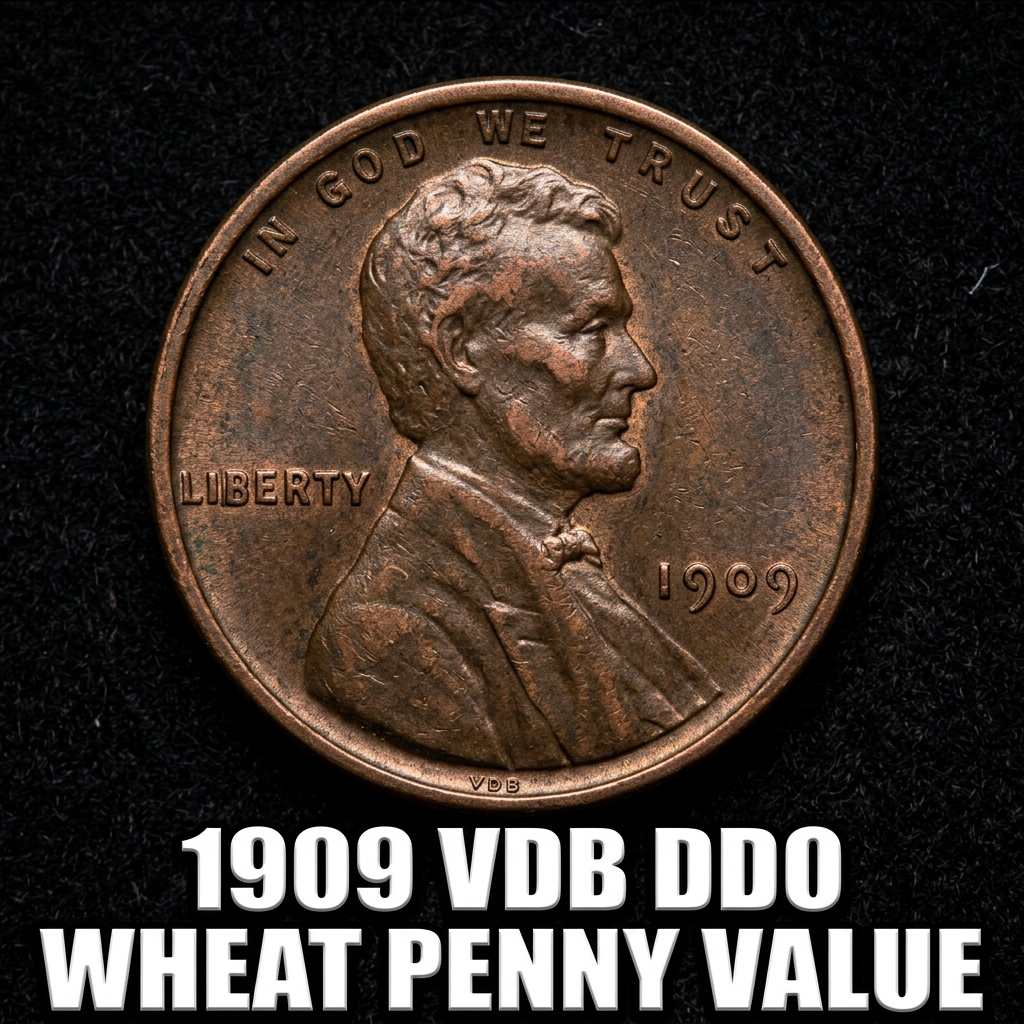
The 1909 VDB DDO Wheat Penny is one of the most exciting finds in American coin collecting, worth anywhere from $50 in heavily worn condition to well over $3,000 or more in high mint state grades. If you’ve stumbled across one of these coins, you’re holding something genuinely special.
The 1909 VDB cent already carries a legendary reputation among coin collectors. But add a DDO — that’s a Doubled Die Obverse — to the mix, and you’ve got a coin that makes even seasoned numismatists take a second look. Before you head to a coin shop or try to sell it online, it’s worth taking a few minutes to understand exactly what you have and what it could be worth. Using a coin identifier and value app is a great first step to get a quick read on your coin before talking to a dealer.
What Makes the 1909 VDB DDO So Special
The 1909 Lincoln Wheat Penny was the very first year Lincoln appeared on the cent, designed by sculptor Victor David Brenner — whose initials “VDB” were placed on the reverse. That alone made the coin controversial and historically significant.
Now, a Doubled Die Obverse happens when the coin die gets an extra impression during manufacturing that’s slightly offset. On the 1909 VDB DDO, this doubling is visible on Lincoln’s portrait, the date, and the inscriptions. You may notice a slight shadow or second outline on the lettering when you look closely under a magnifying glass.
This error variety is confirmed by major grading services like PCGS and NGC, and it commands a significant premium over a standard 1909 VDB cent. Not every 1909 VDB has the DDO, so verification matters enormously here.
1909 VDB DDO Wheat Penny Value by Grade
Coin values vary widely depending on condition. A coin that looks “old” to most people might grade anywhere from AG-3 (About Good) to MS-65 (Gem Mint State). Here’s a general value range for the 1909 VDB DDO Wheat Penny:
| Grade | Condition | Estimated Value |
|---|---|---|
| AG-3 / G-4 | Heavily Worn | $50 – $150 |
| VG-8 / F-12 | Moderate Wear | $150 – $400 |
| VF-20 / EF-40 | Light Wear | $400 – $900 |
| AU-50 / AU-58 | About Uncirculated | $900 – $1,800 |
| MS-63 / MS-65 | Mint State | $2,000 – $3,500+ |
For the most up-to-date pricing data, you can check the 1909 Wheat Penny price chart across all grades on CoinHix, which tracks real auction results and dealer prices in real time.
How to Tell If Your 1909 VDB Penny Has the DDO
The easiest way to check is with a 5x or 10x jeweler’s loupe. Look at the date “1909” and the word “LIBERTY” on the obverse. On a genuine DDO variety, you’ll see clear doubling — a second impression that’s visibly offset from the primary image.
Be aware that mechanical doubling (also called “machine doubling”) is common and is NOT the same as a true Doubled Die. Machine doubling produces a flat, shelf-like look, while a true DDO shows a rounded, distinct second image.
If you’re unsure, snap a few high-resolution photos and run them through CoinHix, which can help you compare your coin against confirmed variety examples. Getting a professional opinion before selling can make a huge difference in what you walk away with.
Should You Get It Graded
If your 1909 VDB DDO Wheat Penny looks to be in VF condition or better, professional grading is almost always worth the cost. PCGS and NGC both charge submission fees, but a certified coin in an official slab sells for significantly more than a raw (ungraded) coin.
Dealers and auction houses trust slabbed coins more, and buyers are willing to pay a premium for certified examples. For a coin potentially worth hundreds or thousands of dollars, a $30–$50 grading fee is a smart investment.
You can also explore detailed 1909 VDB penny value breakdowns by grade and mint mark to better understand where your coin fits on the spectrum before deciding whether to submit it for grading.
Once graded, listing through major platforms or specialist coin auctions gives you the best shot at full market value. CoinHix also offers tools to help you track comparable sales and understand what your certified coin is realistically worth right now.
FAQ
Q: How do I know if my 1909 penny is a VDB?
A: Flip the coin over and look at the bottom of the reverse, just below the wheat stalks. If you see the tiny initials “VDB,” your coin is a 1909 VDB Lincoln cent. Without those initials, it’s a standard 1909 cent, which is worth less.
Q: Is the 1909 VDB DDO a rare coin?
A: Yes, it’s significantly rarer than a standard 1909 VDB cent. The DDO variety was not widely recognized for many years, and confirmed examples in collectible grades are genuinely scarce. That rarity is a big part of why it commands such strong prices at auction.
Q: Can I sell a 1909 VDB DDO penny without getting it graded?
A: You can, but you’ll likely leave money on the table. Ungraded coins often sell for 30–50% less than certified examples of the same grade. If your coin is in decent condition, the grading fee pays for itself many times over in the final sale price.