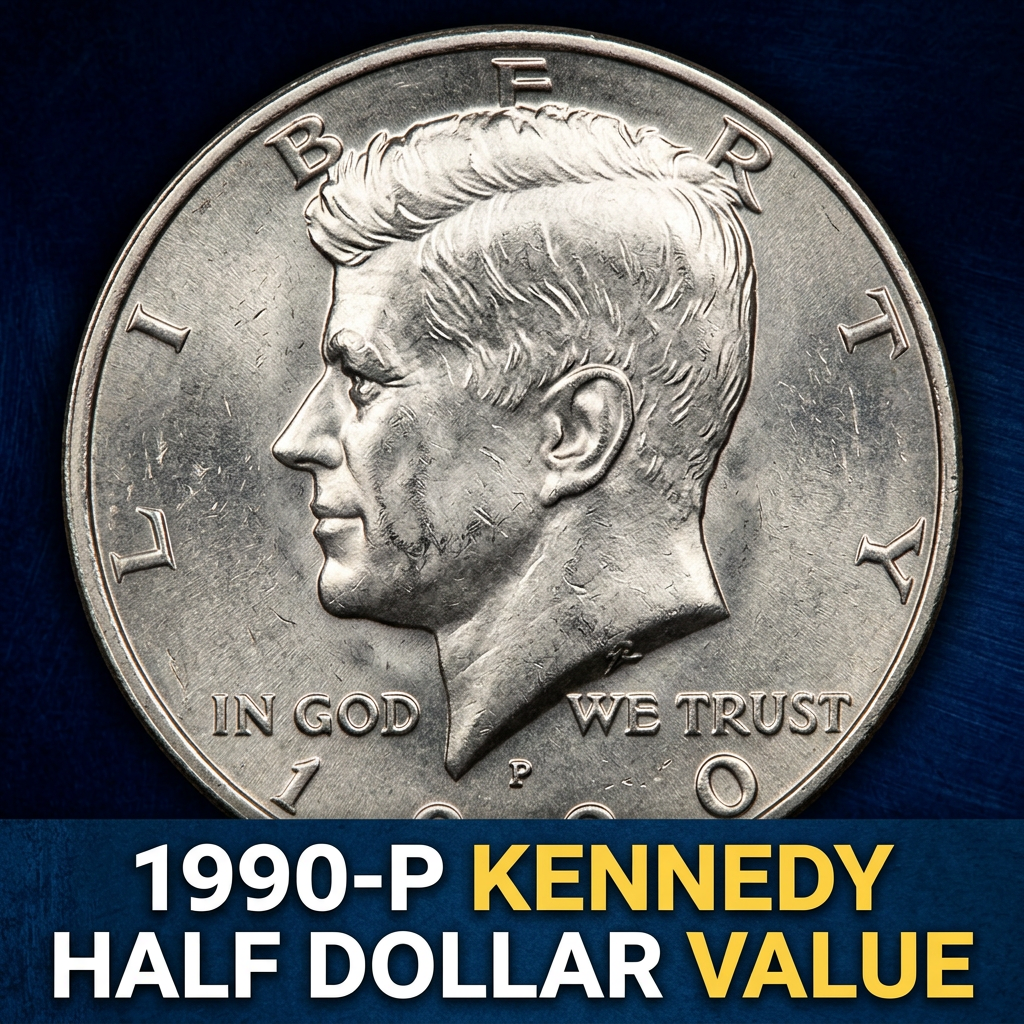
The 1990-P Kennedy Half Dollar is worth anywhere from 50 cents in heavily circulated condition to over $20 or more in pristine mint state — and a few exceptional examples have sold for significantly higher at auction. If you’ve stumbled across one of these coins in an old jar, a drawer, or inherited collection, you’re in the right place to find out exactly what it’s worth.
What Is the 1990-P Kennedy Half Dollar?
The 1990-P Kennedy Half Dollar was minted at the Philadelphia Mint, which is what the “P” mint mark stands for. This coin is part of the long-running Kennedy Half Dollar series, which began in 1964 as a tribute to President John F. Kennedy following his assassination.
By 1990, the half dollar was rarely used in everyday commerce, so many of these coins never left the mint bags they were shipped in. That actually works in your favor — coins that haven’t been passed around in pockets and cash registers tend to survive in much better condition.
The coin is composed of 91.67% copper and 8.33% nickel, which is a clad composition used since 1971. It’s not silver, so don’t get too excited about precious metal value — but the numismatic (collector) value is a different story. If you’re not sure what you’ve got, a coin identifier and value app can help you quickly figure out the mint mark, condition, and approximate value right from your phone.
How Much Is the 1990-P Kennedy Half Dollar Worth?
Here’s the honest truth: most circulated 1990-P Kennedy Half Dollars are worth their face value or just a tiny bit more. A worn coin pulled from circulation is typically worth around 50 cents to $1.
Where things get more interesting is in uncirculated grades. Coins that have never been used and show no wear can be worth several dollars to tens of dollars depending on their grade. Certified high-grade examples — especially those graded MS67 or above by PCGS or NGC — can command $15 to $50 or more. True supergrade specimens (MS68+) have sold for hundreds of dollars at major auction houses.
| Condition / Grade | Estimated Value |
|---|---|
| Circulated (worn) | $0.50 – $1.00 |
| Uncirculated (MS60–MS63) | $2 – $5 |
| Choice Uncirculated (MS64–MS65) | $5 – $12 |
| Gem Uncirculated (MS66–MS67) | $12 – $50 |
| Supergrade (MS68+) | $100 – $400+ |
For the most up-to-date pricing data, you can check out the latest 1990-P Kennedy Half Dollar MS grade price records to see what certified examples are actually selling for right now.
Factors That Affect the 1990-P Half Dollar Value
Condition is king when it comes to coin values. Even a small difference in grade — say MS65 versus MS67 — can mean a big jump in price. Collectors pay premiums for coins with sharp strikes, original luster, and no distracting contact marks or scratches.
Eye appeal also matters. A coin with bright, flashy luster and well-struck details from the dies will always attract more buyer interest than a dull or weakly struck piece, even if both technically grade the same.
Population reports from grading services like PCGS and NGC matter too. If only a handful of coins exist in MS68, those coins become genuinely rare and collectible. CoinHix is a great tool for checking current population data and sale prices all in one place — it’s especially useful if you’re trying to figure out whether your coin is worth submitting for professional grading.
Should You Get Your 1990-P Half Dollar Graded?
Professional grading by PCGS or NGC adds credibility and often increases the resale value of a coin. For most circulated 1990-P Kennedy Half Dollars, grading fees won’t make financial sense because the coin is worth less than the grading cost.
However, if your coin looks like it was never touched — sharp details, original shine, no visible marks — it might be worth having an expert take a look. A coin grading MS67 or above could easily pay for the submission fee and then some.
Not sure what grade your coin might be? The CoinHix app lets you browse certified sale records and compare photos to get a realistic sense of where your coin lands before you spend money on grading. You can also review a complete breakdown of 1990 half dollar values by grade and mint mark to help you make a smarter decision.
Where to Sell Your 1990-P Kennedy Half Dollar
If you decide to sell, you have several solid options. eBay is one of the most popular platforms for selling individual coins, and the “sold listings” filter shows you exactly what buyers are actually paying — not just what sellers are asking.
Coin dealers are another option, though expect to receive less than retail value since they need to make a profit on resale. Local coin shows can also be a fun and rewarding way to connect with collectors who might pay fair market value.
For high-grade certified coins, major auction houses like Heritage Auctions or Stack’s Bowers can yield the best results. And before you go anywhere, use CoinHix to do your homework so you walk in knowing what your coin is worth.
—
FAQ
Q: Is the 1990-P Kennedy Half Dollar made of silver?
A: No. The 1990-P Kennedy Half Dollar is made of a clad composition — 91.67% copper and 8.33% nickel. Silver Kennedy Half Dollars were only minted from 1964 to 1970, and special silver proof versions were produced for collectors after that. Your 1990-P is clad, not silver.
Q: How many 1990-P Kennedy Half Dollars were minted?
A: The Philadelphia Mint produced approximately 22,278,000 Kennedy Half Dollars in 1990. That’s a fairly modest mintage for a modern coin, which is part of why high-grade examples can attract collector interest.
Q: What’s the difference between a 1990-P and a 1990-S half dollar?
A: The 1990-P was struck at the Philadelphia Mint for general circulation, while the 1990-S was a proof coin made at the San Francisco Mint exclusively for collector sets. The “S” proof version has a mirror-like finish and was never meant for everyday use. Proof versions are generally more attractive to collectors but don’t necessarily command dramatically higher prices in the modern era.