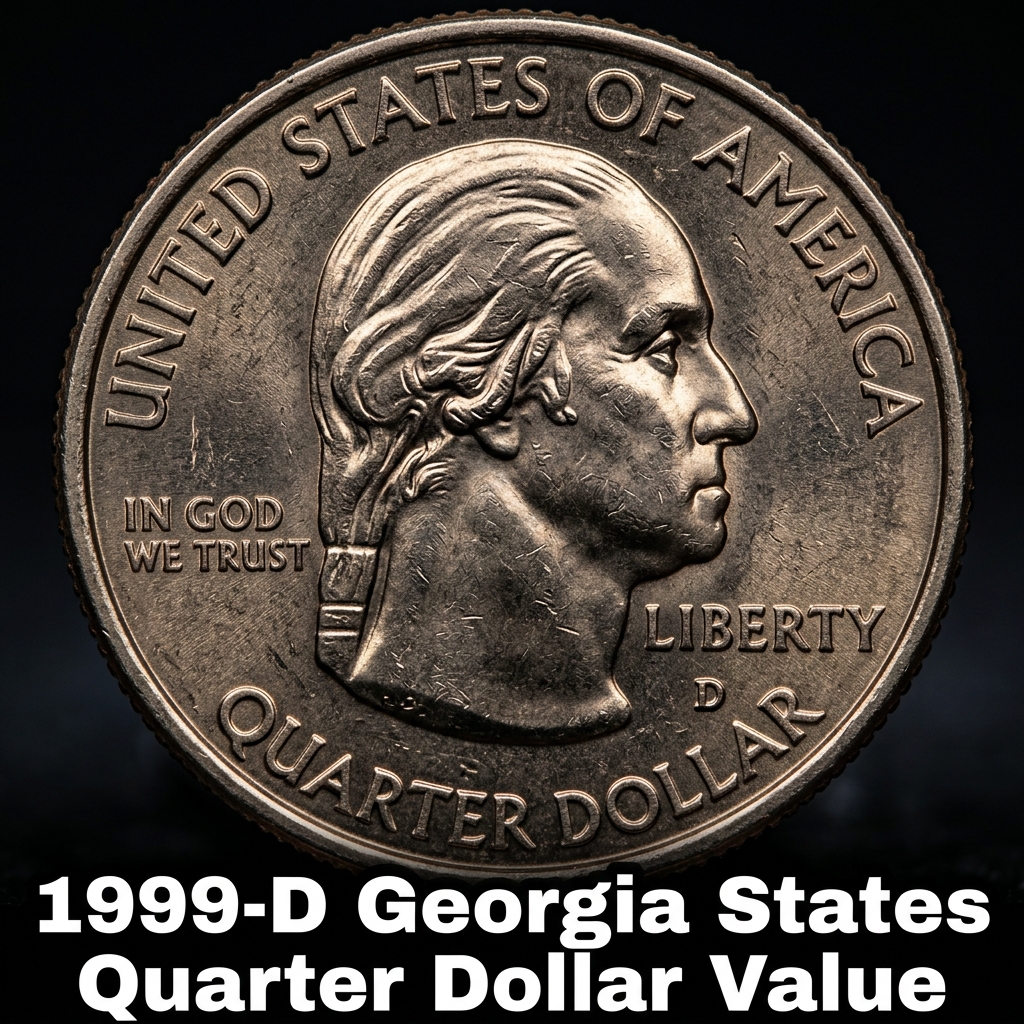
The 1999-D Georgia State Quarter is worth anywhere from 25 cents in circulated condition to $15 or more in mint state — and certain high-grade examples have sold for well over $100 at auction. If you found one of these in your pocket change or a coin jar, you might be sitting on more than just a spare quarter.
What Is the 1999-D Georgia State Quarter?
The 1999-D Georgia State Quarter was struck at the Denver Mint and was part of the historic 50 State Quarters Program launched by the U.S. Mint in 1999. The “D” mint mark on the reverse tells you it came from Denver, as opposed to the Philadelphia Mint which produced the “P” version.
The coin features a peach — Georgia’s famous state fruit — along with an outline of the state and the phrase “Georgia 1788.” On the obverse is the familiar portrait of George Washington. The program was designed to celebrate each of the 50 states, and Georgia was one of the first five states featured in 1999.
Over 488 million of these coins were minted, which means they’re not rare in circulated grades. However, coins in gem uncirculated condition — especially those graded MS-67 or above — can be surprisingly valuable. If you want a quick way to figure out what your coin might be worth, using a coin identifier and value app can save you a lot of time and guesswork.
How Much Is the 1999-D Georgia Quarter Worth in Different Conditions?
Coin value depends heavily on condition, also known as “grade.” A heavily worn coin pulled from everyday circulation is typically only worth face value — 25 cents. But the cleaner and sharper the coin, the more collectors are willing to pay.
Here’s a general value breakdown for the 1999-D Georgia State Quarter based on grade:
| Grade / Condition | Estimated Value |
|---|---|
| Circulated (Good to Fine) | $0.25 – $0.50 |
| Extremely Fine (EF-45) | $0.50 – $1.00 |
| Mint State (MS-63) | $3 – $7 |
| Mint State (MS-65) | $8 – $15 |
| Gem Mint State (MS-67+) | $50 – $150+ |
If you want to dig into detailed price records and auction results, you can check out current market price data for 1999 State Quarters graded in mint state to better understand where your coin might fall.
What Makes a 1999-D Georgia Quarter More Valuable?
Most 1999-D Georgia quarters you come across will be well-circulated — meaning they’ve been used as pocket change for years. These show wear on the high points of the design and are worth very little above face value. But there are a few things that can make a specific coin worth significantly more.
First, eye appeal matters. Coins with strong strikes, no contact marks, and original luster are graded higher and priced accordingly. A coin graded MS-67 or MS-68 by a professional grading service like PCGS or NGC can fetch serious money from collectors.
Second, error coins. Occasionally, quarters leave the mint with mistakes — doubled dies, off-center strikes, or die cap errors. These are rare, but they can turn a 25-cent coin into a $50 or $200 piece. Always examine your coins carefully under good light and a loupe.
CoinHix is a great tool for looking up specific coin grades and seeing what comparable examples have sold for at recent auctions — it’s the kind of data that helps you know whether you have an ordinary coin or something worth holding onto.
Should You Get Your 1999-D Georgia Quarter Professionally Graded?
If your coin looks like it came straight from a mint roll — bright, shiny, no scratches — professional grading might be worth considering. Services like PCGS and NGC charge anywhere from $20 to $50+ per coin to evaluate and encapsulate it in a tamper-evident holder.
For most circulated 1999-D Georgia quarters, professional grading doesn’t make financial sense. But if your coin looks truly pristine, even to an untrained eye, the added value from a high grade can more than cover the cost of submission.
Not sure whether your coin is worth grading? You can explore detailed value information for 1999 State Quarters across all grades and mint marks to get a realistic sense of what yours might be worth before spending on professional services.
And for a fast, convenient way to identify and value coins right from your phone, CoinHix lets you scan your coin and get instant results — ideal if you’ve got a whole jar of old change to sort through.
Tips for Storing and Selling Your 1999-D Georgia Quarter
If you believe your coin has collector value, handle it carefully. Hold coins by the edges, never touch the face, and store them in acid-free coin flips or a quality album. Exposure to moisture, fingerprints, and air can lower a coin’s grade — and its value.
When it’s time to sell, you have several options: local coin shops, online platforms like eBay, or coin shows. If your coin is graded by a major service, it will typically command higher buyer confidence and a better sale price.
For everyday sorting and identification, CoinHix is a smart starting point — it helps you separate the coins worth keeping from the ones that are still just a quarter.
FAQ
Q: How many 1999-D Georgia State Quarters were minted?
A: The Denver Mint produced approximately 488,744,000 of the 1999-D Georgia State Quarters. Because of this high mintage, circulated examples are common and generally worth face value, though uncirculated specimens can still command collector premiums.
Q: Is the 1999-D Georgia quarter rare?
A: No, it’s not considered rare in most conditions due to its very high mintage. However, coins graded MS-67 or higher are significantly scarcer, and those certified by PCGS or NGC in top grades can be genuinely hard to find and worth considerably more.
Q: Where can I find the current value of my 1999-D Georgia quarter?
A: You can check recent auction records on major coin pricing sites, or use an app like CoinHix to quickly look up current market values based on grade and mint mark. A coin dealer can also give you a hands-on estimate if you bring the coin in for a visual inspection.