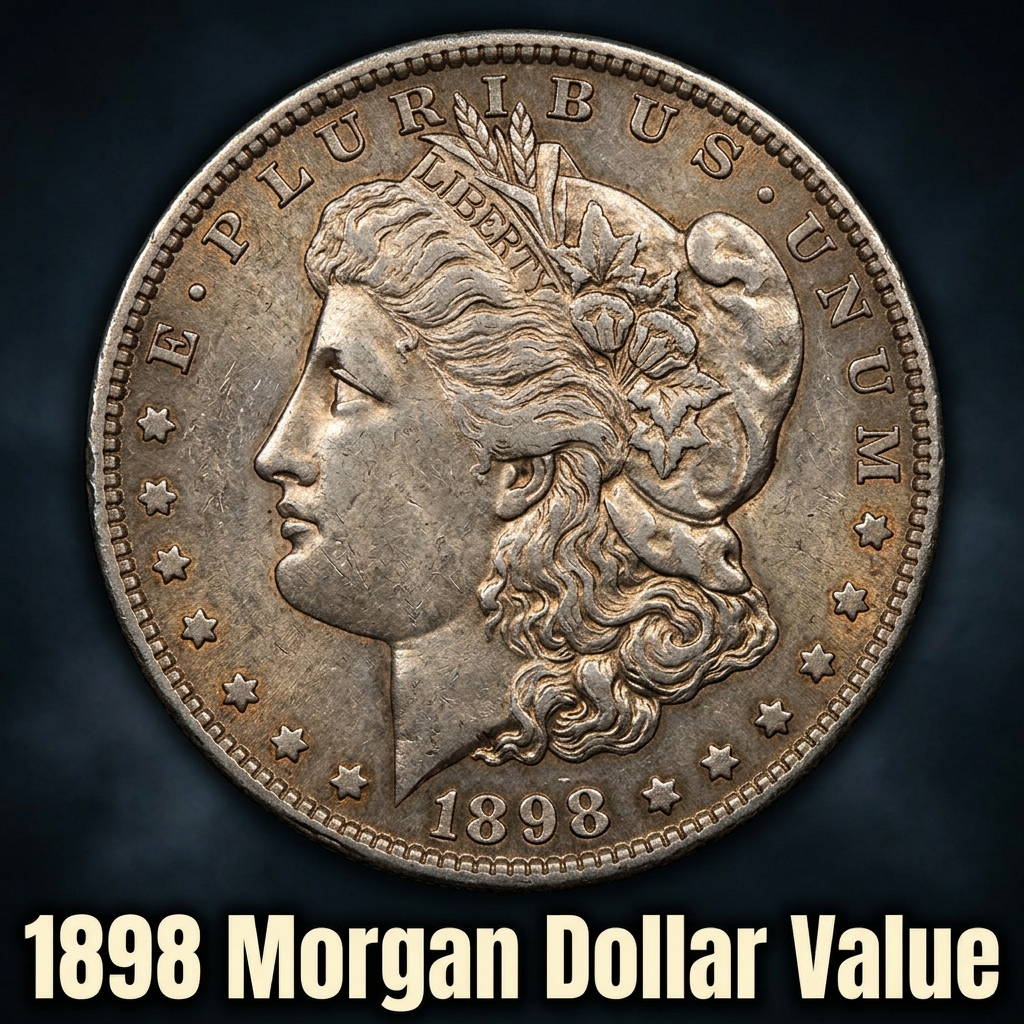
The 1898 Morgan Dollar is worth anywhere from $35 in heavily worn condition to well over $500 or more in pristine mint state — and certain rare varieties can push that number even higher. If you found one of these silver dollars tucked away in a drawer, a coin purse, or an old family collection, you may be sitting on more than you think. Let’s walk through exactly what affects the value and what you should do next.
What Makes the 1898 Morgan Dollar Special
The 1898 Morgan Dollar is a 90% silver coin struck during one of America’s most celebrated eras of coin production. Designed by George T. Morgan and first minted in 1878, the Morgan Dollar series ran for decades and remains one of the most popular collectibles in U.S. numismatic history.
The 1898-dated coins were produced at three mint facilities: Philadelphia (no mint mark), New Orleans (O), and San Francisco (S). Each mint produced a different number of coins, which directly affects rarity and value today.
If you’re not sure which version you have or want a fast estimate, using a coin identifier and value app on your phone is one of the easiest ways to get started without needing any coin expertise.
1898 Morgan Dollar Value by Mint Mark and Grade
Coin grade — essentially how worn or preserved your coin is — plays the biggest role in determining what your 1898 Morgan Dollar is worth. A coin in Good (G-4) condition looks very different from one graded Mint State (MS-63 or higher), and the price gap between them can be hundreds of dollars.
Here’s a general value breakdown based on current market data:
| Mint Mark | Good (G-4) | Fine (F-12) | Extremely Fine (EF-40) | Mint State (MS-63) |
|---|---|---|---|---|
| 1898 (Philadelphia) | $35–$40 | $45–$55 | $75–$100 | $175–$300 |
| 1898-O (New Orleans) | $35–$45 | $45–$60 | $75–$110 | $200–$500+ |
| 1898-S (San Francisco) | $55–$75 | $100–$150 | $200–$350 | $600–$1,500+ |
The 1898-S is notably scarcer in high grades, which explains why collectors are willing to pay a significant premium for well-preserved examples. For the most up-to-date pricing, you can check current 1898 Morgan Dollar MS grade price data to see how recent auction results compare.
How to Identify Your 1898 Morgan Dollar
Flip the coin over to the reverse (eagle) side and look at the bottom, just beneath the eagle’s tail feathers. If you see a small letter “O,” it came from New Orleans. An “S” means San Francisco. No letter at all means it was struck in Philadelphia.
Next, look at the overall condition. Does Lady Liberty’s hair show full, sharp detail? Are the eagle’s feathers crisp or mushed together from wear? These details determine your coin’s grade, which as we saw above, can mean the difference between a $40 coin and a $1,000+ coin.
If you’re having trouble identifying the mint mark or condition, CoinHix offers a clean, user-friendly way to look up Morgan Dollar values by date, mint mark, and grade — all in one place.
Silver Melt Value vs. Collector Value
Even in the worst condition, your 1898 Morgan Dollar has intrinsic value because it’s made of 90% silver. Each coin contains approximately 0.7734 troy ounces of silver. With silver prices fluctuating around $28–$32 per ounce in recent years, the melt value alone is roughly $22–$25 per coin.
That means even a battered, barely-readable 1898 silver dollar is worth real money — and a nicer example can be worth many times that.
This is why it’s always worth checking actual coin market values rather than just silver spot price. For a detailed breakdown of 1898 silver dollar value across all grades and mint marks, including what to expect if you bring yours to a dealer, that resource is a great place to start.
Should You Clean or Grade Your 1898 Morgan Dollar?
Here’s one of the most important things any new collector or coin finder should know: do not clean your coin. Even gentle cleaning with a cloth or mild solution can permanently damage the coin’s surface and dramatically reduce its value in the eyes of collectors and dealers.
If your 1898 Morgan Dollar appears to be in excellent condition — sharp details, original luster, minimal contact marks — it may be worth submitting to a professional grading service like PCGS or NGC. A certified grade increases buyer confidence and can significantly boost resale value.
CoinHix can help you track the certified coin market so you know whether grading costs are worth it for your specific coin before you spend the money.
—
FAQ
Q: How do I know if my 1898 Morgan Dollar is real?
A: Real Morgan Dollars weigh 26.73 grams and are made of 90% silver. You can use a precision scale and a magnet — genuine silver is not magnetic. A reputable coin dealer can also authenticate it in person for free or a small fee.
Q: Is a 1898-O Morgan Dollar worth more than a Philadelphia version?
A: In circulated grades, they’re similar in value. But in high mint state grades (MS-64 and above), the 1898-O can carry a premium because of its strike quality and eye appeal. The 1898-S generally commands the highest prices in all grades due to lower surviving populations.
Q: Where is the best place to sell a 1898 Morgan Dollar?
A: Your best options are reputable coin dealers, established auction houses like Heritage Auctions, or well-known online platforms such as eBay (with caution). Always get at least two or three offers before selling, and use tools like CoinHix to research current market values so you don’t leave money on the table.